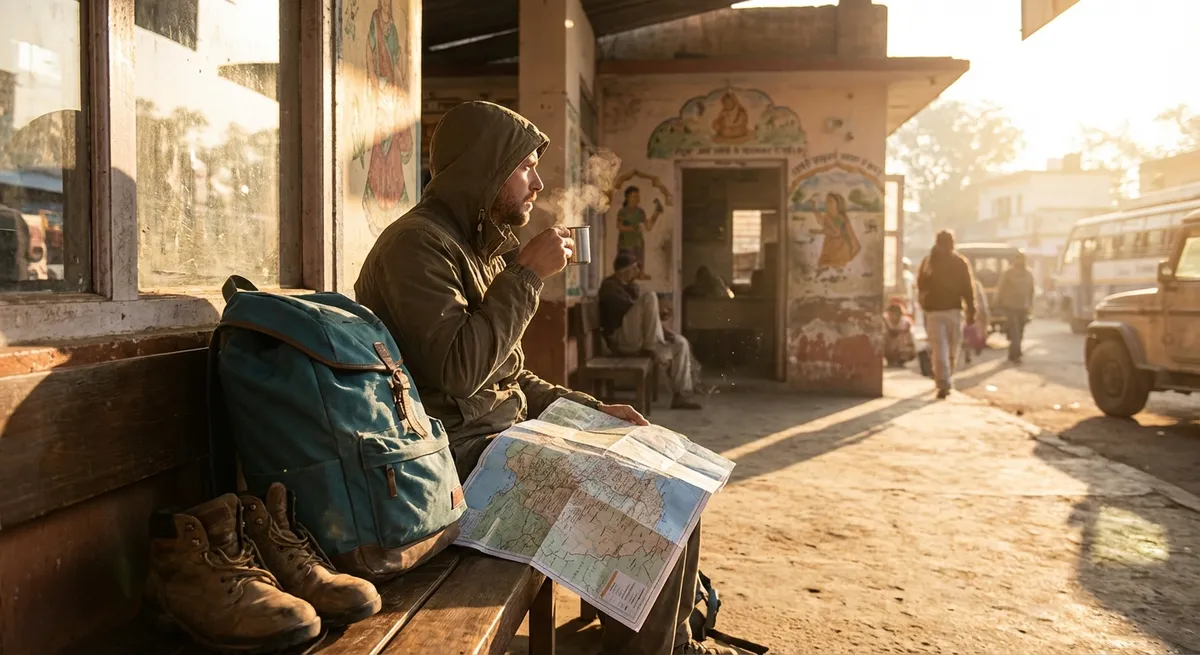
This is your invitation to travel lighter, farther, and more freely—without waiting for “someday” or a bigger bank account.
1. Trade Price Tags for Stories: Choosing Destinations Differently
Instead of starting with “Where’s cheap?”, begin with “What kind of story do I want to live?” Then use price to refine, not define.
Maybe you crave sea-salt air and cliffside trails. That doesn’t have to mean Santorini in high season. It might be the quieter coasts of Albania, the rugged shores of Portugal in shoulder season, or the islands of the Philippines where boats double as buses and sunsets cost nothing. Once you know the feeling you’re chasing—mountain solitude, old-city cobblestones, night markets—you can hunt for regions that deliver that energy without the premium price.
Look for:
- Countries with favorable exchange rates where your currency stretches naturally.
- Shoulder seasons (just before or after peak times) when crowds thin and prices drop.
- Underrated neighbors of famous hotspots—think Slovenia instead of Switzerland, Oaxaca instead of Tulum.
Choosing like this turns your itinerary into a collection of lived experiences instead of a checklist of expensive “must-sees.” Your budget stops being a limitation and becomes a creative constraint—one that pushes you into more authentic corners of the world.
2. Make the Journey Part of the Adventure, Not Just the Cost
Transport is usually one of the biggest expenses—but it’s also where the adventure begins if you let it.
Slow travel often costs less and gives you more. Overnight trains become moving hostels under the stars, long-distance buses become language classrooms and snack-tasting labs, and shared rides turn strangers into guides who point out their favorite roadside café you’d never find on a blog.
Elevate the journey by:
- Booking overnight transport where safe and available, letting one ticket cover both travel and a night’s accommodation.
- Using regional passes (like rail or multi-city bus passes) instead of piecing together last-minute fares.
- Saying yes to local transport—jeepneys, tuk tuks, colectivos, ferries—where they’re common and reputable.
When you stop rushing to “arrive,” even a cramped bus becomes a front-row seat to daily life in a new place. Budget travel rewards the traveler who is willing to move at the pace of the country they’re visiting.
3. Sleep Where Life Happens, Not Where the Lobby Is Glossy
You don’t need a rooftop pool to feel rich; you need a place that feels alive.
Budget-friendly stays—family-run guesthouses, homestays, hostels, and simple apartments—often drop you straight into the rhythm of real life. The host who teaches you how to order coffee like a local, the dorm mate who shares their secret noodle spot, the courtyard where everyone dries laundry and trades stories in three languages—that’s the kind of richness no luxury hotel can manufacture.
To make your money go further:
- Prioritize location over luxury: a clean room near a market or metro station beats a fancy hotel far from everything.
- Balance privacy and community: mix private rooms with occasional dorms or shared spaces to keep costs low and connections high.
- Stay longer in fewer places: weekly or monthly discounts often save more than hopping between five different cities.
When your accommodation is more crossroads than cocoon, every hallway conversation or shared kitchen becomes part of the journey. You’ll remember the laughter and late-night tea long after you’ve forgotten the thread count of any hotel sheets.
4. Let Your Taste Buds Lead the Way—Without Draining Your Wallet
Some of the most unforgettable meals in the world are served on plastic stools, out of small windows, or in bustling markets where menus are handwritten and change with the daylight.
Eating on a budget doesn’t mean settling for bland or basic. In fact, it often means eating where locals actually dine: bakeries at dawn, street food stalls at dusk, and family-run cafés where the menu is short and the flavors are fierce.
Feed both your curiosity and your wallet by:
- Making lunch your main “splurge” meal: set menus and lunch specials often offer the same quality as dinner at a far lower price.
- Shopping local markets for fruit, bread, cheese, and snacks to build simple picnic-style meals.
- Following the crowds, not the ads: a steady line of locals is better proof of safety and quality than any slick sign.
When you eat this way, every bite becomes a lesson in place and culture. You’re not just tasting food—you’re tasting seasons, history, and family recipes that have survived because they’re loved, not because they’re expensive.
5. Collect Moments, Not Merchandise
The more you travel on a budget, the more you realize the world’s greatest experiences cost little or nothing at all.
Think of sunrise hikes where the city wakes beneath you, free walking tours led by locals eager to tell the stories behind the architecture, public parks where entire neighborhoods gather at sunset, beaches that glow in the last light of day, and museums with free-entry days if you time it right. These are the kinds of moments that don’t fit in a suitcase—but they’ll outlast any souvenir.
Make your trip richer without making your wallet poorer:
- Embrace free and low-cost experiences: city parks, viewpoints, free museum days, local festivals, and community events.
- Learn one local skill—a few phrases in the language, a basic dance step, how to bargain at a market respectfully.
- Use your camera like a journal, not a checklist, capturing small details: the pattern of tiles on a stairway, the way light hits an alley, the handwriting on a café chalkboard.
Your most precious “purchases” will be the morning you found the best coffee for a dollar, the bus ride that turned into a road-trip choir, and the kindness of the stranger who walked you three blocks out of their way so you wouldn’t get lost.
Conclusion
Budget travel isn’t about what you give up; it’s about what you choose to value.
When you design your journeys around connection instead of prestige, around curiosity instead of comparison, suddenly the world stops being something you only see on screens. It becomes a place you move through with intention—one modest guesthouse, market meal, and sunrise at a time.
You don’t need more money to start traveling; you need a different script. One where you trade excess for depth, hurry for presence, and souvenirs for stories that belong only to you.
Your next adventure doesn’t have to wait. It just has to begin—lightly packed, eyes wide open, ready to discover how far your courage can carry you when your budget is no longer the boss of your dreams.
Sources
- U.S. Department of State – Travel Advisories - Official safety and advisory information to check before choosing budget-friendly destinations
- OECD – Purchasing Power Parities (PPP) - Provides context on how far your money can go in different countries
- European Commission – DiscoverEU & Rail Pass Info - Insight into rail-based travel in Europe and how passes can reduce transportation costs
- UNESCO World Heritage Centre - Reference for culturally significant sites, many of which have low or no entrance fees
- Lonely Planet – Budget Travel Tips - Practical suggestions and examples of how to save on accommodation, food, and transport while traveling