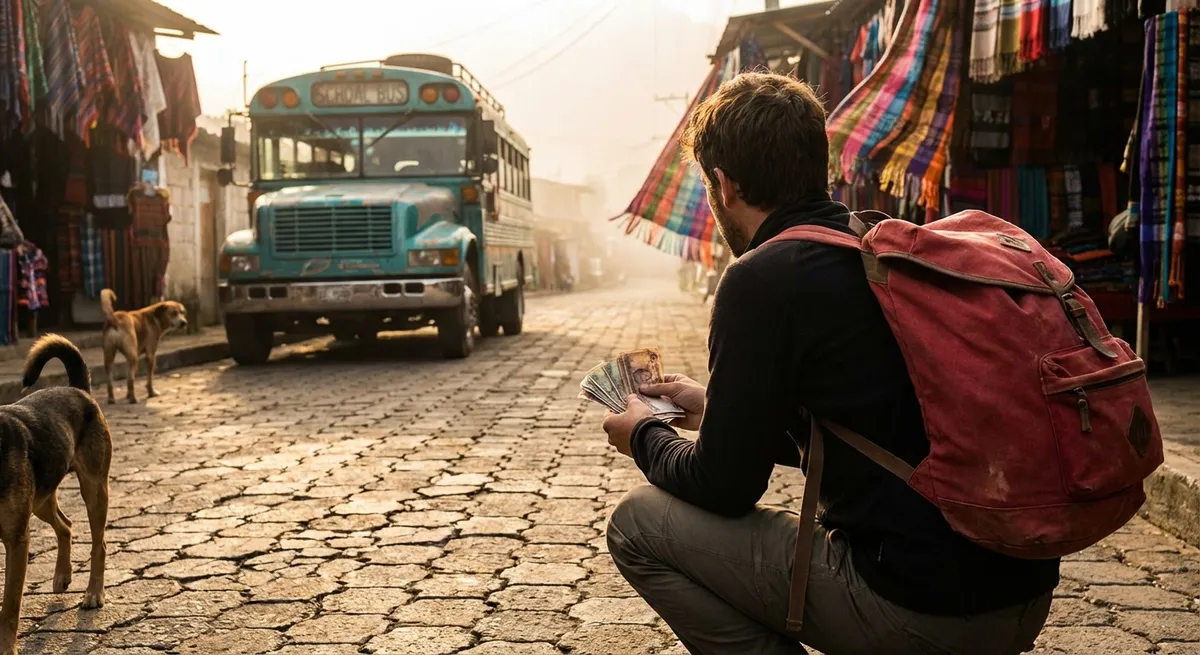
Redefine Luxury: Comfort in the Right Places, Adventure Everywhere Else
The secret of budget travelers who seem to be everywhere at once? They don’t chase hotel stars—they chase the right kind of comfort.
Instead of paying for a flawless lobby and a fancy logo, choose places that make you feel safe, rested, and close to the action. A clean hostel near a night market, a small guesthouse run by a local family, or a simple Airbnb with a balcony overlooking the city can feel more “luxurious” than any five-star tower if it puts you in the heart of real life.
Think of luxury as having:
- A good night’s sleep
- Easy access to public transport
- A neighborhood where you can walk and explore
- People around you who know the city and are happy to share tips
Spend where it multiplies your adventure: decent shoes, a comfortable daypack, and a SIM card or eSIM so you’re never lost longer than you want to be. Let go of the rest. When you stop trying to “keep up” with glossy travel feeds and start chasing the experiences that move you, your budget stretches in ways that feel like magic.
Make the Journey the Playground, Not Just the Price You Pay
Budget travel becomes exciting when you treat the journey as part of the adventure, not a chore between airports.
Lean into:
- Long-distance trains where you watch entire countries unfold outside your window
- Overnight buses that double as transport and “accommodation” for the night
- Regional ferries or slow boats that reveal coastlines and river life
These options often cost less than flights and give you something money can’t buy: a sense of scale. You feel the distance, the shift in language, the change in landscape. You notice the way a sunrise looks from a train station platform and the way a roadside café smells at 4 a.m.
Travel days become story days instead of wasted days—especially if you:
- Pack snacks instead of buying overpriced meals on board
- Download offline maps and books
- Carry a light scarf or hoodie as a universal pillow/blanket
- Keep a small notebook to capture overheard phrases, scenes, and ideas
When you start enjoying how you move, not just where you arrive, your cost-per-memory plummets—and your sense of adventure skyrockets.
Eat Like You Live There: Markets, Mom-and-Pop Spots, and Street Food
Nothing stretches a budget and expands your world like eating where locals eat.
Skip the restaurants with photos of every dish and oversized “TOURIST MENU” signs. Instead, follow the steam, the queues, and the noise. Busy street stalls, market counters, and tiny neighborhood restaurants are often safer, tastier, and dramatically cheaper than glossy, tourist-focused venues.
Key moves:
- Head to local markets early: breakfast is usually the cheapest and most authentic meal.
- Eat what you can see being cooked fresh in front of you.
- Look for short menus—places that cook a few things very well.
- Watch what locals order, then point and say, “Same, please.”
- Choose vendors with a steady flow of customers (high turnover means fresher food).
- Go for cooked, hot dishes if you’re unsure about tap water or hygiene.
- Use hand sanitizer before you eat when sinks are hard to find.
Bring your sense of curiosity, but also basic food smarts:
You’ll spend far less than you would in tourist restaurants, and you’ll leave with knowledge that doesn’t fit on a receipt: how a city tastes at night, what families eat on ordinary days, and which spices mean “home” in a new corner of the world.
Let the Calendar Cut Your Costs (And Crowds)
Your budget has a secret ally: timing. The same room, flight, or tour can cost double simply because you showed up when everyone else did.
Instead of asking, “Where’s hot right now?” ask:
- “When is it just after peak season?”
- “When do the kids go back to school?”
- “When is the weather still good but the crowds are gone?”
- Cheaper flights and accommodation
- Fewer crowds at major sights
- More time and attention from guides, hosts, and locals
- The sense that you’re stepping into real life, not a theme park
Traveling in shoulder seasons—those sweet spots between high and low season—can transform your trip:
Use fare alerts and flexible dates to your advantage. Sometimes shifting your departure by a day or two can save enough to cover several nights of accommodation or a special excursion you thought you couldn’t afford.
Think of time as a powerful currency. If you can be flexible with dates, you’re already a step ahead of most travelers—and your money goes further simply because you were willing to wait a week or arrive a few days earlier.
Unlock Free and “Almost-Free” Experiences That Feel Priceless
The most powerful moments of a trip rarely come from the most expensive experiences. They’re usually hidden in plain sight, waiting for anyone willing to look beyond the ticket booth.
Build your days around:
- City walking tours (many operate on a tip-only basis)
- Free museum days and discounted evenings
- Public parks, riverfronts, and viewpoints
- Temples, churches, mosques, and historical quarters open to visitors
- Local festivals, parades, and cultural events
- Free concerts in churches or public squares
- Outdoor movie nights
- Art walks and gallery openings
- Neighborhood celebrations open to all
- Watching sunset from a hill, bridge, or rooftop
- Taking a self-guided photography walk
- Riding public transport to the end of the line and exploring
Before you arrive, check city tourism sites, cultural calendars, and local event listings. You may find:
Pair these with simple, budget-friendly rituals:
These experiences cost little to nothing, but they embed you in the rhythm of a place. You’re no longer just “visiting sights”; you’re participating in a city’s everyday magic. And that’s something no price tag can measure.
Conclusion
Budget travel isn’t about surviving your trip on as little as possible. It’s about directing your courage and your cash toward what actually sets your soul on fire: meaningful encounters, unscripted moments, wide-open landscapes, and cities that hum with possibility.
When you redefine luxury, treat the journey as part of the fun, eat where the city truly lives, let timing work in your favor, and hunt down free experiences with a sense of play, the world stops looking exclusive—and starts feeling incredibly available.
Your passport doesn’t care what’s in your bank account. It only cares whether you use it. The rest is strategy, curiosity, and the willingness to say, “I’m going now,” instead of waiting for the perfect moment. Because the perfect moment is the one where you decide to go.
Sources
- U.S. Department of State – Travel Advisory & Safety Tips - Official guidance on staying safe abroad, useful for planning budget trips responsibly
- Lonely Planet – Budget Travel Advice - Practical tips on saving money while maximizing experiences on the road
- Rick Steves – Money-Saving Travel Tips - Detailed strategies for cutting costs on transportation, lodging, and daily expenses
- National Geographic – How to Travel More Sustainably - Insights on making low-budget travel more sustainable and responsible
- European Commission – Passenger Rights for Air and Rail - Information on traveler rights, useful when using budget transport options