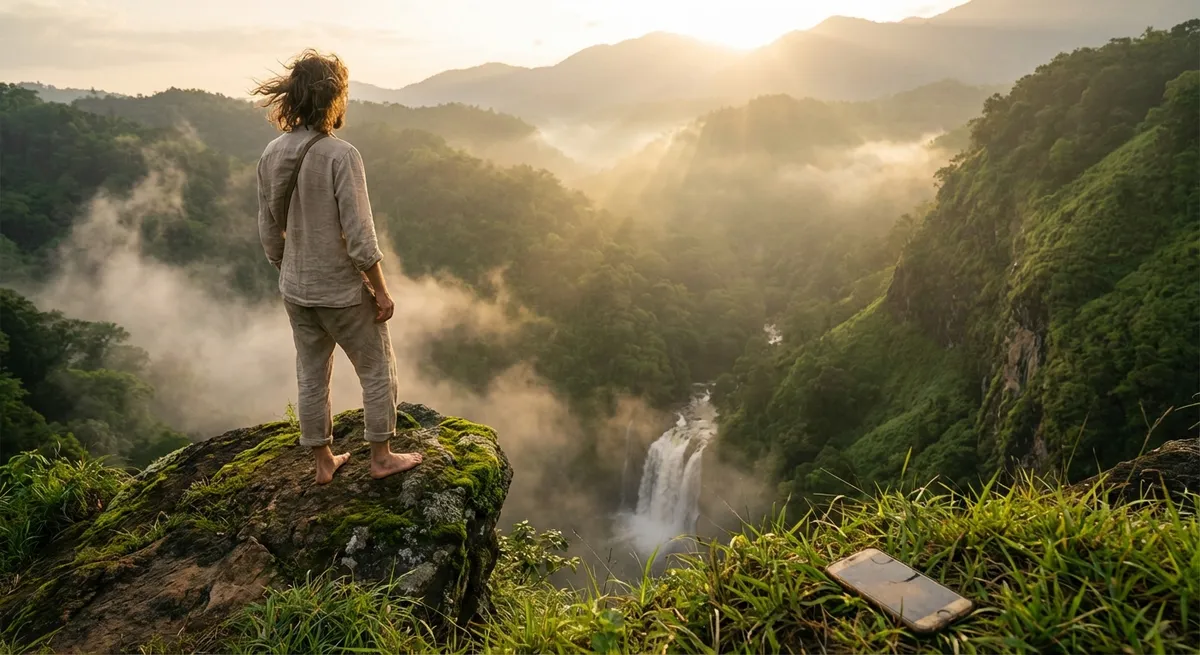
1. Dawn Starts: Chasing First Light Instead of Wi‑Fi
There is a special kind of quiet that lives just before sunrise—the hour when the world holds its breath and everything feels possible. Trading late-night scrolling for a dawn start can turn even a familiar place into uncharted territory.
Pick a summit, a city rooftop, a coastal trail, or a desert lookout point and commit to reaching it before the first streak of color cracks the sky. Pack your gear the night before: headlamp, layers, a thermos of something hot, and a simple breakfast. Start hiking or walking in the dark, guided only by your beam of light and the crunch under your boots. As the horizon brightens, your senses tune in: the chill on your skin, the change in birdsong, the slow reveal of the landscape.
The reward is more than a photo. Sunrise adventures reset your internal clock and your perspective. You step into the day not reacting, but arriving—with a clear head, a full heart, and the deep satisfaction of having done something bold before most alarms even go off.
Practical tip: Check sunrise times and weather in advance, and tell someone your plan. Urban explorers can look for public viewpoints, pedestrian bridges, or waterfront promenades that are safe and accessible in the early morning.
2. Water Lines: Letting Rivers, Coasts, and Lakes Shape Your Route
Follow water and you’ll rarely be bored. Oceans, rivers, and lakes carve wild, surprising paths through landscapes—and they’re magnetic adventure lines you can trace on foot, by paddle, or on two wheels.
Maybe it’s a multi-day kayak trip through a chain of islands, camping on empty beaches under thick scatterings of stars. Maybe it’s cycling along a dramatic coastline where sea spray hits your face and every bend exposes a new cliff or cove. Or it might be a slow, contemplative walk along a river trail in your own region, using each bridge as a milestone and each confluence as an excuse to linger.
Water adventures pull your focus into the present because conditions are always shifting: tides, currents, wind, and weather keep you reading and responding to the moment. You learn to time crossings, to read the color and texture of the surface, to notice how the sky reflects different moods on the water.
Practical tip: Always check local safety guidance—tide tables, current strength, and recommended routes. If you’re new to paddling or open water, start with guided trips or rentals that include short lessons and proper safety gear.
3. Micro-Expeditions: Turning Ordinary Weekends Into Epic Chapters
You don’t need a sabbatical or a round-the-world ticket to live bigger. Micro-expeditions shrink the logistics but keep the spirit of exploration fierce. They’re short, intentional adventures that fit into a weekend—or even a single day—but carry the emotional weight of a full-blown odyssey.
Think: sleeping under the stars in your local hills instead of in a polished hotel. Riding a train to the last stop on the line, then walking back toward the city over the course of a day, discovering forgotten pockets and viewpoints along the way. Or planning a 24-hour loop: leave home at noon, camp or stay somewhere unusual, and return by noon the next day with a new story stitched into your memory.
The key is to impose a simple, playful constraint: no cars, only one backpack, no screens after sunset, or a rule that you must sleep somewhere you’ve never stayed before. Constraints force creativity—and creativity is the fuel of adventure.
Practical tip: Start with what you already have—a nearby park that allows overnight camping, a regional trail system, or a neighboring town reachable by public transport. Pack light, carry a basic first-aid kit, and let curiosity be your compass.
4. Skill-Driven Journeys: Let a New Ability Guide Your Map
Some adventures don’t begin with a destination; they start with a skill you want to master. When you choose a journey around what you want to learn—instead of just where you want to go—the road becomes a training ground and every challenge feels like an upgrade instead of an obstacle.
Maybe you’ve always wanted to navigate by stars, handle a mountain bike on technical trails, free-dive in clear blue water, or speak survival-level phrases in a new language. Instead of waiting to “be ready,” you build a trip around the learning itself: a week at a backcountry navigation course that ends with a self-planned route, or a coastal stay where each day begins with surf school and ends with practicing tide awareness and board repair.
Skill-driven adventures are powerful because the souvenirs you bring home aren’t just photos—they’re capabilities. You return with new confidence: you can read a map without service, fix your own gear, order food in a different tongue, or plan safe, independent trips you never would have attempted before.
Practical tip: Look for accredited courses and guides with solid safety records. Break learning into stages: take an intro class at home, then complete a more immersive, destination-based session where the environment deepens your practice.
5. Cultural Immersions: Saying Yes to Other People’s Everyday
Not all adventures are defined by altitude or distance. Some of the most transformative ones happen when you immerse yourself in someone else’s “ordinary” day and discover how wildly different it feels from your own.
Instead of staying sealed in the traveler bubble, design your journey around local rhythms. Visit markets at opening time and watch the choreography of vendors getting ready. Learn a simple phrase like “What do you recommend?” in the local language and use it at neighborhood cafés. Join a public festival, a community hike, a volunteer beach cleanup, or a traditional cooking class where the recipes come with family stories attached.
These adventures ask for openness rather than adrenaline. You might be invited into a home, handed a dish you can’t pronounce, or taught a custom you’ve never heard of. The reward is a deeper connection—a sense that the world isn’t just a backdrop for your photos, but a web of real lives you briefly get to step inside.
Practical tip: Stay in locally owned guesthouses or homestays when possible, and use trusted platforms or tourism boards to find legitimate community-based experiences. Learn and respect local customs—read up before you go so your curiosity comes paired with cultural sensitivity.
Conclusion
Adventure doesn’t always announce itself with a stamp in your passport or a dramatic skyline. Sometimes it’s as simple as setting your alarm for before dawn, following the curve of a river instead of a schedule, or letting a new skill or culture shape the way you move through a place.
The common thread is this: you choose to step across a threshold—out of comfort, out of routine, out of half-attention—and into something vivid and unrepeatable. From micro-expeditions in your own backyard to skill-driven journeys and deep cultural immersions, the world is offering you countless chances to feel fully, unmistakably alive.
Your next adventure doesn’t have to wait for “someday.” It can start with the next sunrise, the next shoreline, the next brave yes.
Sources
- U.S. National Park Service – Hiking Safety & Trip Planning – Guidance on preparing for hikes, including gear, timing, and safety considerations
- American Red Cross – Wilderness & Remote First Aid – Information on training and skills useful for backcountry and micro-expedition adventures
- Leave No Trace Center for Outdoor Ethics – The 7 Leave No Trace principles for minimizing impact during outdoor and water-based adventures
- Adventure Travel Trade Association – Adventure Travel Trends – Research insights on skill-based travel, cultural immersion, and adventure tourism patterns
- UNESCO – Intangible Cultural Heritage – Background on living cultural traditions that can inform respectful, immersive cultural adventures