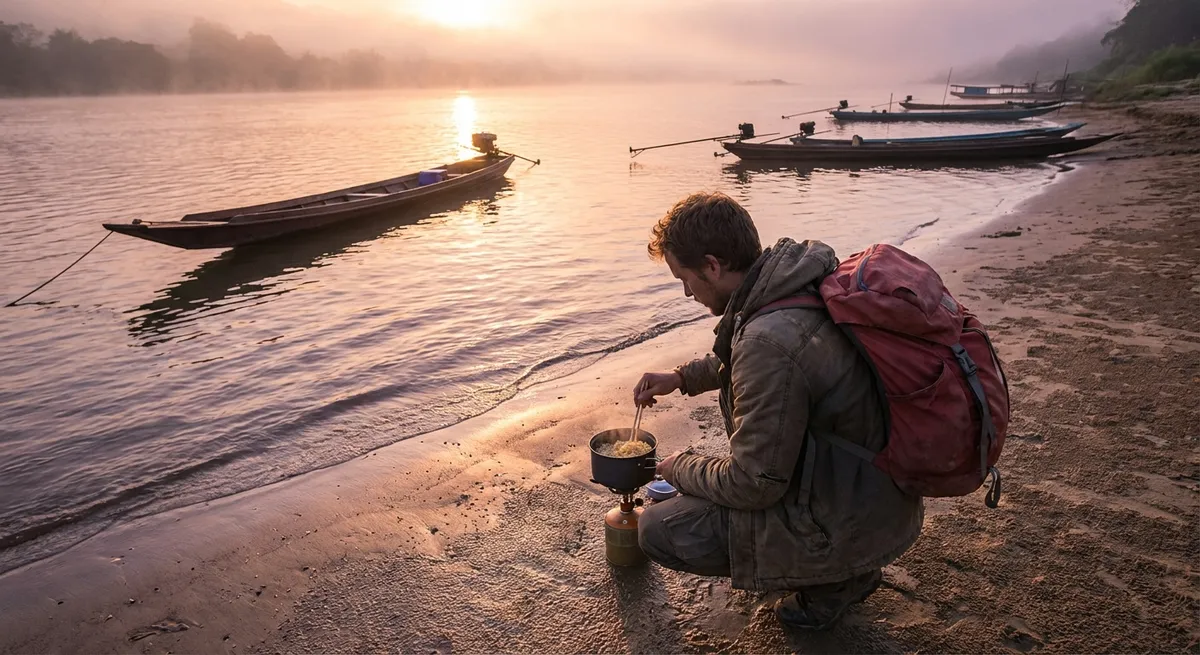
This is your invitation to trade “maybe someday” for “I can make this work.” Let’s turn tight budgets into wide-open possibilities—with five powerful shifts that make budget travel feel rich, not restricted.
Point 1: Let Your Budget Choose the Destination, Not the Other Way Around
Most travelers pick a destination first, then panic when they see the prices. Flip that script: start with what you can realistically spend, then hunt for places where your money goes the furthest.
Look for regions where the cost of living is significantly lower than at home—think parts of Southeast Asia, Eastern Europe, or Central and South America. A modest budget that barely covers a weekend in a major Western city might stretch into weeks elsewhere. Use fare calendars and flexible search tools to let cheap flight dates and routes guide you; you’ll discover cities you never would have considered if you only chased the “big name” spots.
Lean into this flexibility like it’s a superpower. Maybe you didn’t grow up dreaming about Tbilisi or Oaxaca or Da Nang—but those are the kinds of places where your daily budget can cover street food feasts, local buses, a guesthouse with character, and a few splurge moments. By letting prices steer the ship, you’ll end up in destinations that feel more surprising, more authentic, and far less crowded than the usual hotspots.
Point 2: Sleep Smart: Stay Where the Stories Are, Not the Status
On a budget, where you sleep can either drain your funds or amplify your experience. Instead of defaulting to standard hotels, look for places that offer connection and character for less.
Hostels aren’t just bunk beds and noisy dorms anymore. Many offer private rooms, co-working spaces, rooftop terraces, and free events like walking tours or family dinners. Guesthouses and homestays often put you inside real neighborhoods, where you’ll hear real stories—from a host who’ll tip you off to the cheap bakery down the street or the hidden viewpoint the guidebooks missed.
If you’re staying longer, consider house-sitting or work exchanges: a few hours helping at a hostel, farm, or community project in exchange for a bed. It’s not just about saving money; it’s about weaving yourself into the local rhythm. When your “hotel lobby” is a shared kitchen filled with travelers trading tips over simmering pots, your budget stay becomes the heart of your adventure, not a compromise.
Point 3: Eat Like You Live There: Markets, Side Streets, and Tiny Chairs
Food is where budget travel quietly becomes luxury. When you skip the tourist strip and eat where locals actually gather, your money buys flavor, not markup.
Start your day in local markets: pick up fresh fruit, bread, cheese, or local snacks to build simple breakfasts and picnic-style lunches. Watch where people line up on their work breaks—those unassuming street stalls and corner joints usually serve the most authentic, affordable dishes in town. If the menu isn’t in your language, even better; point, smile, and trust the process.
Look for set lunch menus, “menu del día” deals, or canteens near universities and business districts; they’re designed to feed people daily without breaking their budgets. And every once in a while, funnel what you’ve saved into one memorable meal—a rooftop view, a tasting menu, a cooking class. When you’ve been eating well for a fraction of the usual cost, those rare splurges feel like a celebration, not a financial mistake.
Point 4: Turn Transit into Adventure, Not Just a Line Item
Transportation can swallow your budget—or become one of the most vivid parts of your trip. Slow down, and suddenly the cheapest options start looking like the most interesting ones.
Night trains and buses can double as your accommodation, saving you the cost of a room while you cross borders in your sleep. Local buses and shared minibuses show you the spaces between destinations: villages sliding by the window, markets buzzing at random roadside stops, kids piling in after school. Ferries, bikes, and even walking between nearby towns can turn a simple transfer into a story you tell for years.
Use budget airlines strategically, but always factor in hidden costs like baggage and airport transfers. Often, a slightly longer train ride ends up cheaper, calmer, and more scenic. When you start seeing transit days as part of the journey instead of “wasted time,” you’ll feel less pressure to race through your itinerary—and your budget breathes easier, too.
Point 5: Travel With a “Rich in Moments” Mindset, Not a “Checking Boxes” One
The fastest way to burn through money is to treat travel like a shopping list of must-see attractions. Budget travel asks a different question: what actually makes a day feel unforgettable to you?
Maybe it’s hiking to a hilltop at sunrise instead of paying for a crowded observation deck. Maybe it’s a free walking tour that ends with new friends and a scribbled list of local tips. Maybe it’s browsing a tiny bookshop, joining a pickup game at a local park, or wandering errands-filled backstreets long after you’ve snapped the “big” sights.
Set a loose daily spending number and treat it like a game: how many rich moments can you fit into that limit? You’ll start prioritizing experiences over souvenirs, conversation over queues, and exploration over expensive packages. The irony is that by spending less, you pay more attention—and that’s when travel stops being something you purchase and starts being something you live.
Conclusion
Budget travel isn’t a downgrade; it’s a different way of moving through the world—slower, closer to the ground, more awake to the details most people rush past. When you let your budget choose the destination, sleep where connections happen, eat where the city truly lives, treat transit as part of the narrative, and chase moments instead of markers, you discover something powerful: you didn’t need more money to travel “for real.” You just needed a new approach.
Your next adventure doesn’t have to wait for a better job, a bigger raise, or a lucky windfall. It can start with what you have right now and a decision to stretch your world, not your wallet. The map is wide open—pick a corner, play it smart, and let the road show you how far your courage and creativity can really go.
Sources
- U.S. Bureau of Labor Statistics – Consumer Expenditures for Travel - Data on typical travel-related spending to help understand where budgets go
- Lonely Planet – Budget Travel Tips - Practical, globally focused advice on saving money while traveling
- Nomadic Matt – How to Travel the World on $50 a Day - Long-running budget travel resource with real-world cost breakdowns
- European Commission – Passenger Rights for Air and Rail - Official information on traveler rights when using budget-friendly transport options
- World Bank – Cost of Living and Purchasing Power Parity Data - Country-level figures that help travelers identify destinations where their money goes further