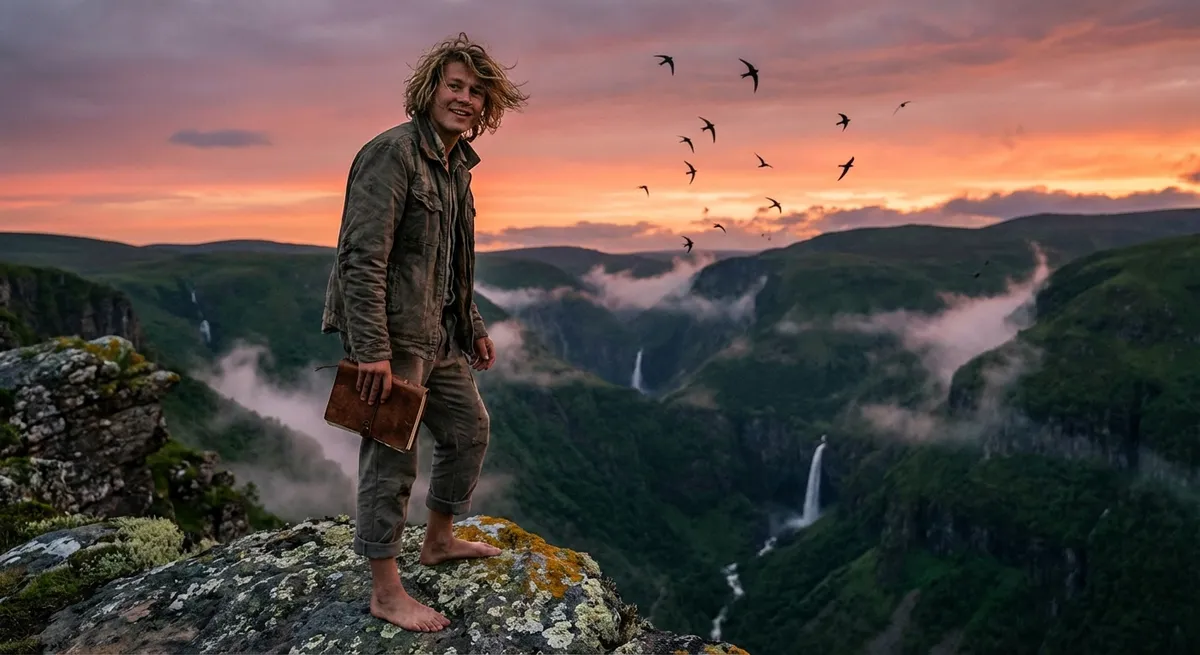
This is your invitation to start chasing the kind of adventures you can still feel when you close your eyes. Not someday. Not when life is “less busy.” Now.
Below are five kinds of travel moments that don’t just look good in photos—they rewire how you see the world and your place in it.
1. Chase Sunrise From a Height That Makes Your Heart Hammer
There’s a special kind of magic that lives in the hour before sunrise—when cities whisper instead of shout and mountains glow instead of loom. Finding a high vantage point at dawn isn’t just about a pretty view; it’s about catching a place in the act of becoming itself.
Maybe it’s climbing a pre-dawn trail to a lookout above a fog-filled valley, the beam of your headlamp cutting through the dark while the air bites your cheeks awake. Maybe it’s a rooftop in a foreign city where church bells and call to prayer rise together as the first light hits the windows. Or a coastal cliff where the ocean looks almost black until the horizon catches fire.
The practical move: whenever you land somewhere new, scan for height. Ask locals or your host for a safe sunrise spot—viewpoints, hills, church towers, rooftop cafés that open early, or even public parks with a ridge. Check sunrise time the night before and set two alarms. Lay out your clothes, pack water and a light snack, and bring a layer; it’s usually colder than you think.
This kind of adventure doesn’t require epic fitness or expensive gear—just the courage to get up when most people don’t. On the way back down, while the world is just starting to wake, you’ll already feel like you’ve stolen an extra day from your trip.
2. Learn One Skill Locals Are Proud Of—and Get Your Hands Messy
Every place on earth is secretly a classroom, and the locals are holding the lesson plan. The quickest way to turn a destination from background scenery into a living, breathing relationship is to learn something people there care about enough to pass down.
It could be rolling fresh pasta in a warm Italian kitchen where the air smells like flour and basil, your hands dusted white as a grandmother laughs at your first crooked attempts. It might be joining a surf lesson in a windy beach town, paddling out with shaky arms while an instructor yells encouragement over the waves. Or sitting in a dusty workshop learning basic woodcarving, the rhythmic scrape of the blade louder than the traffic outside.
Instead of asking, “What should I see?” ask, “What do people here love doing that I could try once?” Look for cooking classes run by families, community-organized dance or music lessons, sustainable craft workshops, or beginner-friendly outdoor schools. Read reviews carefully, and favor small-group or locally owned experiences over big bus tours.
Be ready to be terrible at it. That’s the point. Taking the risk to fumble in front of strangers builds a different kind of memory—less about perfection and more about connection. When you leave, you’re not just taking photos—you’re carrying a new skill, a story, and a deeper respect for the people who shared it with you.
3. Say Yes to One Unplanned Turn (and Stay Safe Doing It)
Some of the brightest travel memories start with five simple words: “We weren’t planning to, but…” The art is to invite spontaneity without throwing common sense out the window.
Maybe you’re wandering through a market and someone mentions a small festival in the next neighborhood over. Maybe a café owner scribbles a waterfall name on a napkin and says, “No tour buses yet—go today.” Or a fellow traveler invites you to join a group hike heading out at dawn. These moments are the cracks in your schedule where wonder sneaks in.
To make space for these detours, don’t overstuff your days. Leave open hours—blank space that can flex if something intriguing crosses your path. Build a mental checklist: Is it daylight? Can I easily get back? Do I have data, or does someone know where I am? Are others going? Does this feel sketchy or simply unfamiliar? Trust your instincts; excitement and unease feel very different in your body.
Say yes to the unplanned detours that pass your safety checks: a street performance that pulls you in for an hour, a tiny neighborhood restaurant that isn’t on any list, a side road that leads to a quiet viewpoint away from the crowds. These small, thoughtful risks turn a trip from “I followed the map” into “I followed my curiosity.”
4. Spend a Day Moving Only as Fast as Your Feet Can Carry You
Speed can blur a place until all cities feel the same and every coastline looks identical through a window. The antidote is beautifully simple: give yourself one day to travel at the pace of your own footsteps.
Pick a district, old town, or village that feels walkable. Start with a loose anchor—a museum you genuinely want to see, a local market, a public square—and then let your feet write the rest of the route. Follow side streets that smell good. Stop to read plaques you’d normally ignore. Linger on benches. Watch how kids play, how elders greet each other, how shopkeepers stand in their doorways and scan the street.
Walking reveals patterns you miss in transit: the rhythm of traffic lights, the way laundry hangs between buildings, the subtle shift of architecture from block to block. You notice where people line up, where they avoid, where they gather. The place stops being a backdrop and starts being a living system you’re gently woven into.
For comfort, wear your best walking shoes and pack water, snacks, sun protection, and a map app with offline access. Mark your accommodation pin so you can always find your way back. Plan rest stops—parks, libraries, quiet cafés—so your day feels like a glide, not a slog.
By nightfall, you’ll know that corner of the world not just by its landmarks, but by its heartbeat.
5. Build One Bold Story You’ll Tell for the Rest of Your Life
Every trip offers at least one opportunity to do something that makes your future self think, “I can’t believe I actually did that.” This doesn’t have to be extreme—no cliffs required—but it should feel just far enough beyond your comfort zone that your pulse quickens.
Maybe it’s backpacking into a hut for the first time and falling asleep to the sound of a storm battering the roof while strangers-turned-friends share headlamp-lit stories. Maybe it’s snorkeling over a reef when you’ve always been nervous in open water, gripping your guide’s float at first until your breath slows and the underwater world sharpens into color. Or standing up at an open mic night in a foreign language, voice shaking as you share a song or poem with a room full of strangers who clap like you just landed a plane.
To find your “bold story” moment, ask yourself: What have I always secretly wanted to try but never given myself permission to do? Then research: look for reputable operators, clear safety briefings, and gear that’s properly maintained. Start at an entry level—beginner routes, intro classes, guided experiences with small groups.
The goal isn’t reckless thrill-seeking. It’s choosing one moment per journey where you step over the line of who you think you are. Years from now, you won’t remember the check-in lines or taxi rides. You will remember the second before you leapt, spoke, paddled, or climbed—and the shock of discovering you could.
Conclusion
Adventures that stay with you aren’t measured in miles flown or countries ticked off; they live in the sunrise you actually got up for, the skill you were brave enough to learn badly, the side street you wandered down on a hunch, the neighborhood you walked until it felt familiar, and the one bold story you crafted on purpose.
You don’t need a new life to travel like this. You just need a new way of saying yes—yes to early alarms, awkward first attempts, small detours, slower days, and bolder choices.
The next time you plan a trip, don’t just list what you want to see. Decide what you want to feel—and build your journey around that. The souvenirs will gather dust. The moments you can feel in your bones? Those are yours forever.
Sources
- UN World Tourism Organization (UNWTO) – Global tourism statistics and trends that highlight how people are traveling and engaging with destinations
- Centers for Disease Control and Prevention – Travelers’ Health – Guidance on staying safe and healthy while traveling, including destination-specific advice
- National Park Service – Hiking Safety – Practical tips on preparing for early-morning hikes and outdoor adventures
- REI Co-op Expert Advice – How to Choose Hiking Boots – Detailed guidance on selecting comfortable footwear for full days on your feet
- Lonely Planet – Responsible Travel – Insight on engaging with local communities and experiences in a respectful, sustainable way