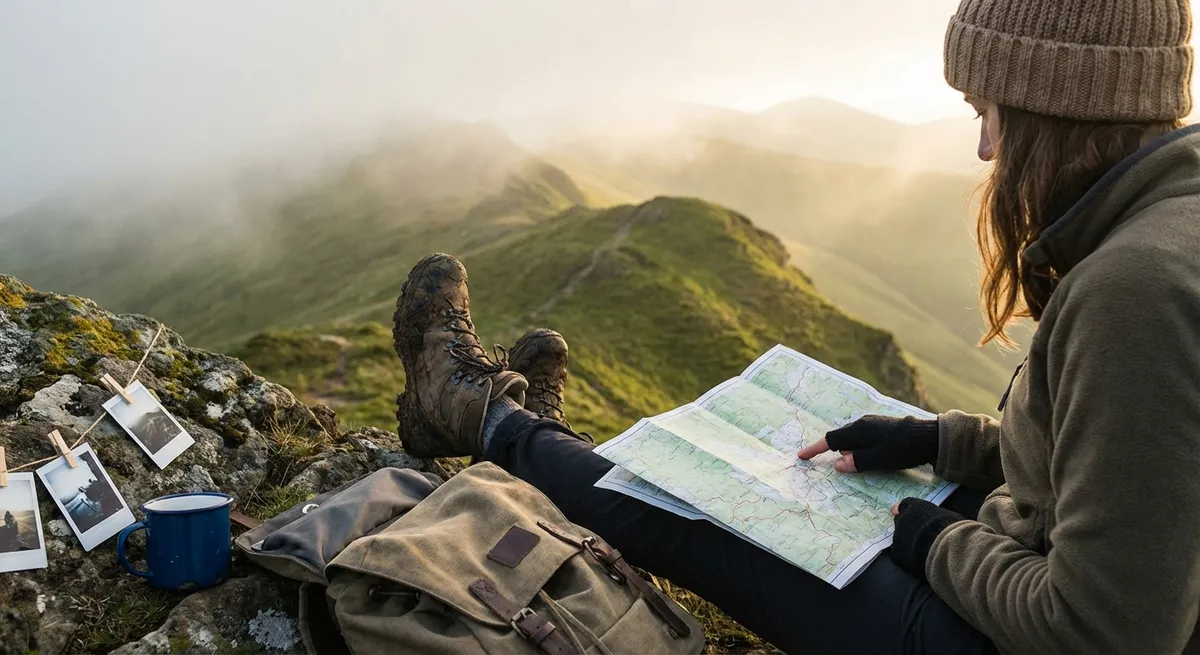
If you’re ready to travel in a way that leaves you wired with aliveness long after you unpack, these five adventure ideas will help you chase moments that cling to your memory, not your shelves.
1. Follow the First Light: Sunrise Missions in Wild Places
There’s a quiet rebellion in waking up before the world and chasing the horizon. A sunrise ascent, paddle, or ride turns ordinary landscapes into something almost mythic—clouds burning gold, air so still you can hear your own heartbeat, shadows stretching for miles.
Pick a vantage point that makes you work for it: a ridge trail above a alpine lake, a dune that hides the sea until the last step, a hilltop above a sleeping city. Hike or bike in the dark with a headlamp, thermos of coffee, and layers you can peel as the sky warms. The effort rewires your relationship with time; you stop being a spectator and become part of the scene.
Practical tips:
- Always check sunrise times and weather before you go.
- Pack a headlamp, extra battery, and a printed or offline map—phone batteries die faster in the cold.
- Start slower than you think you should; your night vision and balance need time to adjust.
- Stay for 30–45 minutes after sunrise—the most dramatic light often comes slightly after the sun appears.
You won’t remember the alarm clock. You’ll remember the exact second the horizon caught fire.
2. Choose the Longer Road: Overland Journeys that Stretch Your Sense of Distance
Flying gets you there; overland travel lets you feel the distance. Long train rides through mountain passes, overnight buses along coastal roads, slow ferries between islands—these are moving classrooms in geography, culture, and patience.
Instead of hopping the fastest connection, choose at least one route on your trip where the path itself is the experience. A trans-country train that glides past villages and farmland. A multi-day road trip along a legendary highway. A local bus where chickens, crates, and schoolkids all share the aisle. You start to see how landscapes flow into each other, how accents shift, how life unfolds between “must-see” sights.
Practical tips:
- Book major rail or ferry routes ahead of time, especially in peak season.
- Pack a “moving-day kit”: snacks, refillable water bottle, offline entertainment, a light scarf (for AC that’s always too strong).
- Travel during the day when possible to actually see the scenery, and for safety in unfamiliar regions.
- Use long stretches to journal, plot future adventures, or talk to locals instead of defaulting to your screen.
Each bend in the road becomes a small revelation: the world is much bigger—and closer—than you imagined.
3. Learn a Skill Far from Home: Adventures that Leave You More Capable
Instead of just collecting photos of a place, learn something there that you can carry for life. Sign up for a surf camp on a rugged coastline, a wilderness navigation workshop in a national park, a climbing course on real rock, or a freediving lesson in crystal water. Suddenly, the landscape is no longer background; it’s your training ground.
The thrill isn’t just in standing up on a board or topping out on a cliff. It’s in discovering that your body and mind can adapt faster than you thought. Fear gets a name (“the drop,” “the crux,” “the cold shock”), and once you name it, you can negotiate with it. Every scraped knee and wobbly first attempt becomes a receipt for courage.
Practical tips:
- Research certified instructors or schools with strong safety records and reviews.
- Start with beginner or intro sessions; mastering basics is more empowering than jumping ahead too fast.
- Be honest about your fitness level and any health conditions before you begin.
- Give yourself at least a few days in one location to practice repeatedly—that’s where the real confidence kicks in.
You return home not just with memories, but with a new way to move through the world.
4. Let the Weather Win Sometimes: Making Peace with Unpredictable Adventures
The forecast will eventually betray your plans. The hike disappears in fog, the beach day drowns in rain, the perfect stargazing night hides behind clouds. You can fight it—or treat weather as part of the adventure’s storyline.
Rain turns markets into neon reflection pools, alleys into rivers of color under umbrellas. Stormy coastal days make waves explode against cliffs in slow-motion drama. Fog transforms forests into something out of a fantasy novel. When you lean into the mood instead of resisting, you unlock a set of experiences fair-weather travelers never see.
Practical tips:
- Pack a lightweight waterproof shell and a dry bag for essentials, even in “dry season.”
- Carry a backup “weather plan” for each day: indoor museums, cooking classes, hot springs, bookstores, local cafes to hole up in.
- Keep electronics in ziplock bags or waterproof pouches.
- On trails, respect changing weather: turn back if visibility drops too low or storms roll in—safety first, pride second.
Years later, you’ll tell the story of the storm that changed your day and gave you a completely different kind of magic.
5. Say Yes to Small Invites: Micro-Moments that Become Core Memories
Not every adventure requires a summit or a long-haul flight. Some of the fiercest memories come from tiny yeses: joining locals for a pickup game in a dusty field, accepting an invitation to a neighborhood celebration, hopping on a bike to chase the sound of music down side streets.
These unscripted detours are where the rigid itinerary drops away and real connection steps in. You taste food that never makes it to tourist menus, learn hand gestures and jokes that don’t translate perfectly, and realize that curiosity is the best passport you’ll ever hold.
Practical tips:
- Stay in places that encourage interaction: small guesthouses, hostels with shared spaces, community-run homestays.
- Learn basic phrases in the local language—“hello,” “thank you,” “this is delicious,” “can you show me?” unlock a lot.
- Trust your instincts: genuine invitations feel different from pressure-sales tactics; if something feels off, politely decline.
- Keep your schedule flexible enough that you can follow a spontaneous lead without stress.
When you look back, the highlights reel rarely matches your original plan. That’s the point.
Conclusion
Adventure doesn’t always roar; sometimes it whispers: “Wake up earlier. Take the slower road. Try the hard thing. Let the weather surprise you. Say yes, even if you’re not quite ready.”
If you build your trips around these kinds of moments—chasing first light, stretching distance, learning skills, embracing unpredictability, and accepting small invitations—you won’t just return with stories. You’ll return with a slightly different version of yourself: braver, softer in the right places, sharper in others, and already plotting the next leap.
The world isn’t waiting in the big, obvious places. It’s scattered in fragments—on the wind before dawn, in the rhythm of train tracks, in the shy smile of someone handing you a cup of something hot. Go out and collect those fragments. Steal moments, not souvenirs.
Sources
- National Park Service – Hiking Tips - Practical safety guidance for sunrise hikes and backcountry adventures
- U.S. Department of State – Travel Safety Information - Up-to-date safety and advisory information for planning overland journeys
- International Mountaineering and Climbing Federation (UIAA) - Standards and resources on safe climbing and mountaineering practices
- American Hiking Society – Leave No Trace Principles - Responsible travel practices for minimizing your impact outdoors
- World Tourism Organization (UNWTO) – Tourism and Culture - Insights into engaging respectfully with local communities and cultures