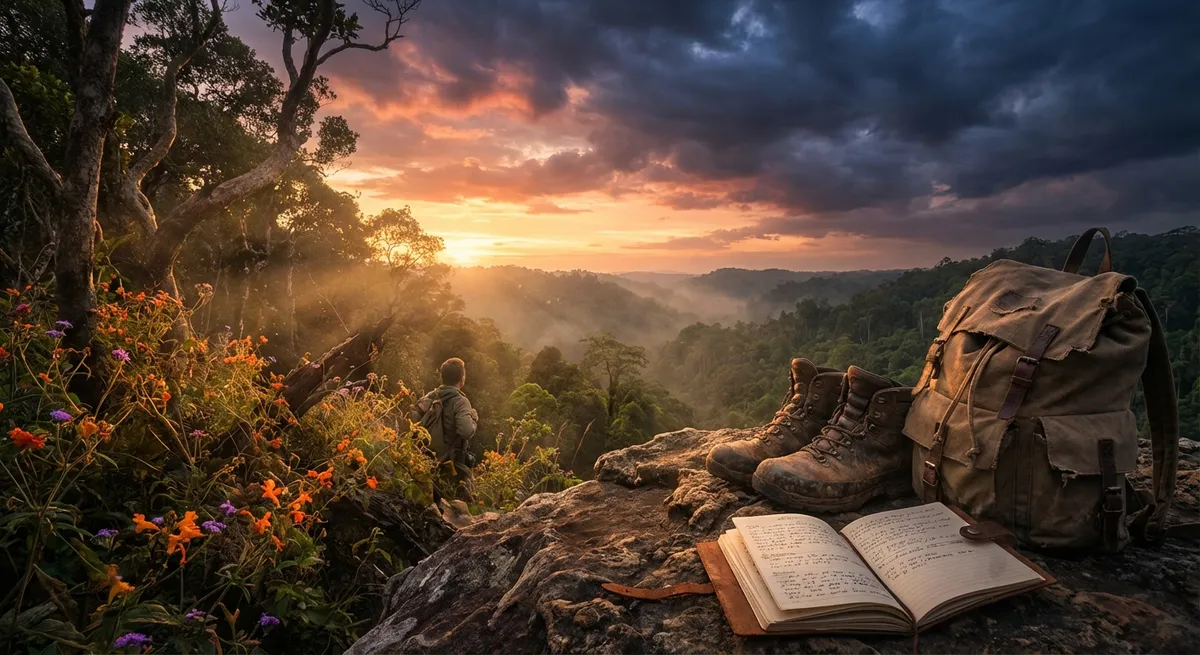
This is an invitation to chase those moments—5 kinds of experiences that leave sand in your shoes, smoke in your clothes, and a new story in your voice. No fake perfection, no staged sunsets. Just real, raw adventure you’ll feel every time you close your eyes.
1. Trade Spectator Seats for Front-Row Wild
Standing behind a railing, snapping photos, is fine. But the memories that really burn in are the ones where you cross the invisible line between “watching” and doing.
That might mean paddling a sea kayak alongside cliffs that glow gold at sunrise, feeling the slap of waves against your hull. Or joining a guided trek into a rainforest where the air is heavy with the smell of wet earth and you learn to spot camouflaged frogs and hidden orchids. In colder climates, it could be dog sledding across a snowfield, the only sounds are paws, runners, and your own breath hanging in the air.
To make this happen safely, look for local operators with clear safety standards, small group sizes, and licensed guides. Don’t be shy about asking questions: How experienced is the guide? What gear is included? What’s the backup plan if weather turns? The right outfit will welcome your curiosity. The goal isn’t reckless risk—it’s immersive engagement with the landscape, where your body is as involved as your eyes.
When you step off the sidelines and into the story, you stop being a visitor and start being a participant in the wildness of a place.
2. Say Yes to the Unscripted Side Quest
The memory you talk about for years will rarely be the one you meticulously planned. It will be the side road you followed “just to see,” the kitchen you were invited into, the tiny festival you stumbled across because you took a wrong turn.
Leave deliberate gaps in your itinerary: open mornings, unscheduled afternoons, “free roaming” evenings. Use those pockets for wandering local markets, lingering at a café, or following the sound of live music down an alley. Ask shopkeepers where they eat after work. Talk to the street vendor about how they make that dish. Say yes when a new friend suggests a local spot you can’t find on any app.
Protect your safety while staying open: share your location with someone you trust, keep basic boundaries (especially around alcohol and late-night invites), and trust your instincts. If something feels off, you owe nothing to politeness—walk away quickly and confidently.
The unscripted side quest is the antidote to copy-paste travel. That one hour you didn’t plan might become the story that rewires your entire idea of the world.
3. Chase Elements, Not Landmarks
Instead of asking, “What’s there to see?” start asking, “What’s there to feel?”
Let the elements design your adventure. Feel the burn of altitude on a mountain trail as clouds drag their shadows across the valley below. Let humid air wrap around you in a city where night markets sizzle and lanterns paint the streets in red and gold. Hear the hollow crash of waves echoing inside sea caves as you float beneath an overhang of rock older than history.
Pick one element—fire, water, air, or earth—and build an experience around it in each place you go. Water may mean wild swimming in a hidden cove, whitewater rafting with a helmet and life jacket on, or snorkeling above a riot of coral. Earth could be hiking a volcanic ridge, cycling through rice terraces, or learning from Indigenous guides about the land under your feet.
This lens does two things: it forces you out of checklist mode, and it links your journeys together. Years later, your memory won’t be “that country where we went.” It’ll be, “That time we huddled around a fire with strangers under a sky full of impossible stars—and suddenly the world felt smaller and bigger at the same time.”
4. Learn a Local Skill That Leaves a Mark on You
Souvenirs break, fade, or vanish into drawers. Skills travel with you forever.
Look for hands-on workshops or classes that tie you directly into the heartbeat of where you are. Learn how to cook a local dish with a grandmother who doesn’t measure anything but still nails it every time. Pick up the basics of a traditional dance form and feel your body mimic movements passed down through generations. Try your hand at batik, pottery, wood carving, or weaving, guided by craftspeople who’ve dedicated their lives to their art.
These experiences do more than keep your hands busy. They teach you what a culture values: patience, precision, rhythm, community, story. You’ll start to understand why certain spices are used, why that song is sung in that season, why that pattern appears in textiles across the region.
Book through reputable community-based programs that pay fair wages and center local instructors. Ask how your fee supports the people teaching you. When the trip ends, you won’t just have a recipe or a dance step. You’ll have a way to reconnect to that place every time you cook, move, or make.
5. Design One “Edge of Your Comfort Zone” Moment
The most powerful travel moments often sit just beyond your comfort line—not miles past it, just one deliberate step over.
For some, that’s a multi-day trek with everything you need on your back. For others, it’s sharing a dorm room with strangers in a hostel for the first time, or riding a motorbike as a passenger on busy streets. It might be ziplining across a canyon, diving into cold water, trying a dish you can’t identify, or striking up a conversation in a language you barely speak.
The trick is to choose your edge intentionally, not by comparison. Your adventure isn’t smaller because someone else climbed higher, went farther, or spent more. Decide what scares you a little but excites you a lot. Then prepare: read up on safety, double-check equipment, tell someone your plan, and know your exit strategy.
When you walk through that thin membrane between “I don’t know if I can” and “I did,” something shifts. You carry that tiny expansion back home. Suddenly, hard conversations, big dreams, and new projects feel just a bit more possible—because you remember how it feels to be nervous, and to move anyway.
Conclusion
Adventure isn’t measured in passport stamps or jaw-dropping photos. It’s measured in the stories that keep rising to the surface of your mind long after your tan fades and your jet lag settles. It’s in the smell of rain on hot stone, the burn in your legs on that last climb, the laughter that needed no shared language, the small brave yes that changed the whole day.
So the next time you hit “book,” don’t just plan where you’ll go. Plan how you’ll show up: as a participant, a learner, a co-creator of wild, unrepeatable moments.
Steal moments, not souvenirs—and let them follow you home, reshaping what you believe is possible every single day.
Sources
- U.S. National Park Service – Outdoor Safety Tips - Guidance on staying safe while hiking and exploring natural areas
- Adventure Travel Trade Association – Adventure Travel Definition & Trends - Industry perspective on what constitutes adventure travel and how travelers engage with it
- UNESCO Intangible Cultural Heritage - Information on traditional practices, skills, and cultural expressions around the world
- Centers for Disease Control and Prevention – Travelers’ Health - Practical health and safety advice for travelers planning active or remote adventures
- REI Co-op Expert Advice – How to Choose a Guide or Outfitter - Tips for selecting reputable adventure tour operators and guides