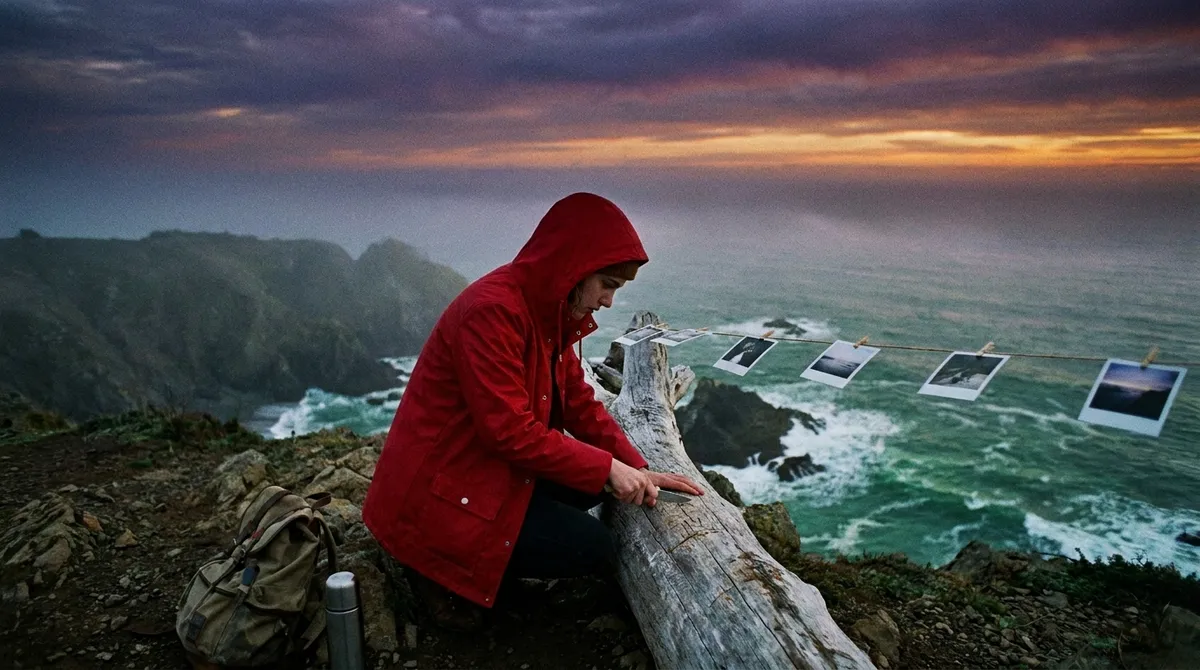
This isn’t about ticking off famous landmarks. It’s about collecting moments that rearrange how you see the world—and yourself. Below are five kinds of adventures that don’t just fill your camera roll; they shift your story.
1. Chase the Edges of the Day: Sunrise and Midnight Missions
There’s something electric about being awake when most of the world is sleeping. Dawn and deep night carve out a quieter version of any place—one where you can hear your own courage a little more clearly.
Slip out before sunrise in a new city and walk until the sky changes color. Watch fishermen prepare their boats on a Greek island, or see shopkeepers roll up shutters in Hanoi. At midnight in Iceland, step under a sky that refuses to go fully dark in summer—or bursts into northern lights in winter. These are the hours when cities and landscapes show you their unpolished, honest selves.
Practical moves: Pack a small headlamp, a light layer, and a fully charged phone. Ask locals (or your guesthouse) what areas are safe for early or late walks. Use a mapping app to download offline maps before you go. And always tell someone your rough route, especially if you’re solo.
2. Follow a Single Element: Wind, Water, Stone, or Fire
Instead of “doing” a destination, build your adventure around one wild element and let it guide you.
Choose wind: Learn to kite surf on the coasts of Portugal, sail between Croatian islands, or ride a rickety bus into Patagonia where the gusts feel like they might knock the map right out of your hands.
Choose water: Trace a river from its quiet mountain source to the bustling delta. Kayak calm lakes in Canada, backpack between waterfalls in Costa Rica, or island-hop in the Philippines where water is the main highway.
Choose stone: Walk ancient paths like Spain’s Camino de Santiago or trek in Nepal where the mountains rise like myth. Let cathedrals, ruins, and canyon walls be your checkpoints instead of famous city squares.
Choose fire: Build a route around volcanoes in Indonesia, geothermal pools in Iceland, or desert stars in Jordan where campfires are your evening entertainment.
Practical moves: Look up seasonal weather before you commit—wind and water especially can be brutal or perfect depending on the month. Start with one anchor experience (a trek, course, or guided day) and leave a few days open around it for spontaneous detours.
3. Say “Yes” to a Skill, Not a Destination
Pick a skill you’ve always been quietly curious about, then go where that skill is part of the local heartbeat.
Always wanted to cook properly? Head to a region where markets are the center of life—like Oaxaca for mole and masa, or Sicily for seafood and citrus—and sign up for a hands-on class in someone’s home kitchen.
Fascinated by climbing, freediving, or surfing? Go to communities built around those pursuits: Kalymnos for climbing, Dahab for freediving, Ericeira or Bali for surf. You won’t just learn a new ability; you’ll plug into a ready-made micro-tribe of people who shape their days around the same passion.
The adventure isn’t arriving; it’s slowly getting less clumsy, more confident. You’ll remember the first wave you stood up on or the first dish you nailed long after you’ve forgotten museum ticket stubs.
Practical moves: Look for locally run schools and workshops with strong reviews and ethical practices. Start small—book a two- or three-day course instead of your whole trip. Build in a “buffer day” to rest sore muscles or practice on your own without pressure.
4. Draw Your Own Line on the Map: Micro-Routes and Slow Crossings
Big overland journeys—like riding the Trans-Siberian or walking an entire national trail—sound epic, but they can feel unreachable. Shrink the concept and you unlock a powerful kind of adventure: the micro-route.
Pick two points that speak to you—a coastal town and a mountain village, an inland capital and a fishing port—and travel between them without flying. Bus by bus, train by train, hitchhiking where it’s safe and accepted, you stitch together a ribbon of landscapes most tourists never see.
In Europe, follow a rail line that hugs a river valley and hop off in tiny towns no one hashtags. In Southeast Asia, drift from one highland town to another by local buses, stopping wherever the scenery, a market, or a roadside stall tugs at you.
Practical moves: Use regional rail or bus websites to sketch a rough chain of connections. Don’t over-plan; commit only to your start, end, and first stop, then decide each next leg as you go. Keep your pack light—moving days feel freer when everything you own isn’t a burden on your back or shoulders.
5. Let Conversations Become Your Compass
The most life-altering adventures often start with an unexpected, “So, where are you headed next?”
Instead of clinging to a fixed itinerary, let chance encounters seed your route. If three different people in one week rave about the same hidden cove, tiny town, or mountain hut, treat that as your sign. A chatty barista drops the name of her favorite hiking trail? Ask her to draw it on your map. A fellow traveler tells you about a train that winds through misty tea fields or desert cliffs? Shift your plans and go find it.
Adventure isn’t only landscapes—it’s who you share them with. You might end up celebrating a local festival you didn’t know existed, eating at a family-run spot that doesn’t appear online, or watching a neighborhood football match where you’re the only outsider—and completely welcome.
Practical moves: Stay in social accommodations at least part of the time—guesthouses, small hostels, or locally run lodges. Learn a dozen phrases in the local language (hello, thank you, how much, very delicious, where is…?). Keep one or two nights in your calendar deliberately empty each week so you can say “yes” when conversations open doors.
Conclusion
Adventure doesn’t always roar in with a dramatic soundtrack. Sometimes it whispers: wake up a little earlier, stay out a little later, follow that river, try that class, trust that conversation.
The world is full of people who plan trips. Fewer plan to be changed by them.
Your next journey doesn’t have to be longer, farther, or more expensive. It just has to be braver in small, deliberate ways: one sunrise walk, one skill learned, one detour followed because a stranger’s eyes lit up when they talked about it.
Steal moments, not souvenirs—and let those moments rewrite the story you tell about who you are and what you’re capable of next.
Sources
- U.S. National Park Service – Safety Tips for Outdoor Activities – Practical guidance on staying safe during hikes, sunrise excursions, and other outdoor adventures
- Lonely Planet – How to Travel by Train in Europe – Useful overview of planning rail-based routes and slow overland journeys
- Camino de Santiago – Official Pilgrim Information – Example of long-distance routes and cultural walking journeys that inspire element- and route-based adventures
- Surfrider Foundation – Beach & Ocean Safety – Key information for water-based adventures like surfing, swimming, and coastal exploration
- Harvard Health Publishing – The Benefits of Trying New Activities – Research-backed insight into why learning new skills on the road can be mentally and emotionally transformative