This is your invitation to turn ordinary days into stories worth telling. These five kinds of micro‑adventures don’t require quitting your job, selling your stuff, or becoming “that” outdoors person. They only ask that you show up, say yes, and let your curiosity lead.
Redefine Distance: Treat One Hour From Home Like a Foreign Country
Most people think “farther” automatically means “better.” But adventure isn’t measured in miles; it’s measured in unfamiliarity.
Instead of dreaming about distant continents, draw a rough circle that’s one hour from your door—by bus, train, bike, or car. Inside that ring is your new “border.” Your mission: cross it with the same mindset you’d have landing in a brand-new country.
Look for trailheads you’ve ignored, industrial riverside paths you’ve never walked, small towns with only one café and a crooked main street. Visit them at strange times: dawn, late night, in the rain, or during a local festival. Ask someone for recommendations like you don’t live nearby: “If I only had three hours here, what shouldn’t I miss?”
Practical move: Pick a free or low-cost map app and mark everything within that one‑hour radius that looks even slightly interesting—cemeteries, old train stations, bridges, hills, odd museums, street art. Every weekend, pick one at random and go. Treat your own region with the reverence you usually reserve for “abroad.”
Flip the Clock: Chase Sunrises, Not Just Sunsets
Sunsets get all the love, but sunrise is where the quiet magic lives. While the world hits snooze, you get to slip into a version of your city or town most people never see.
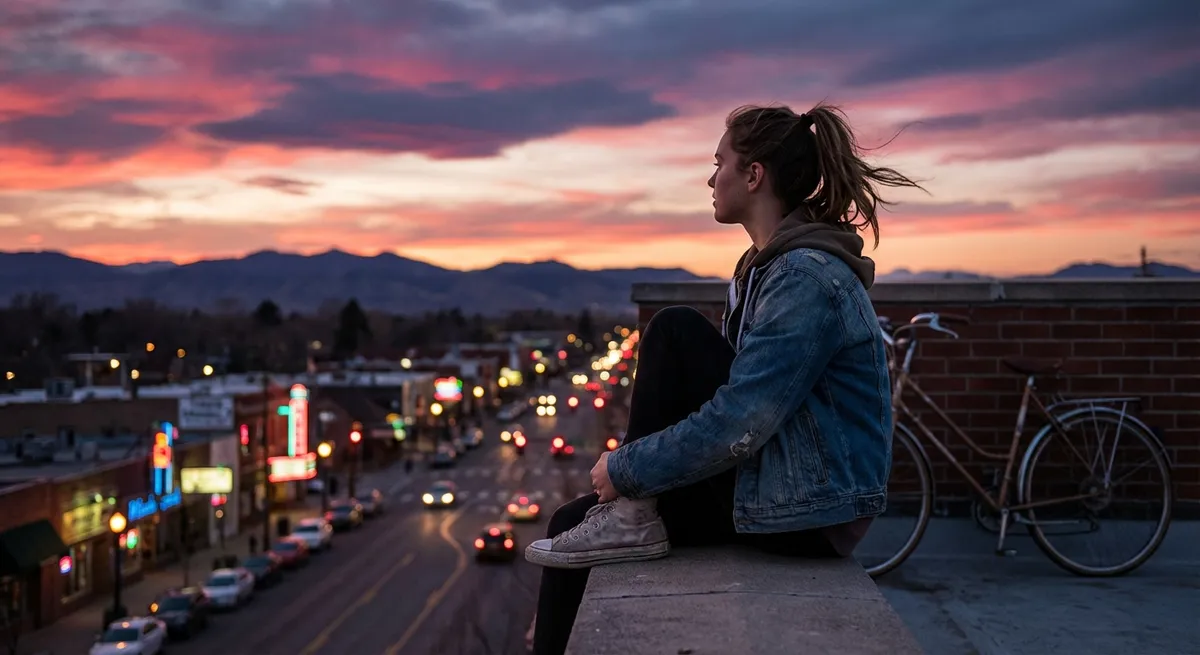
Set a single morning each week as your “dawn appointment.” It could be a rooftop, a lakeshore, a hill, or even just a balcony facing east. Pack a thermos of coffee or tea, a notebook, and something warm. Watch the sky shift from blue‑black to gray to soft gold and notice how the shapes of buildings or trees slowly reappear. This is the same place you see every day—but it feels like you’ve discovered a secret level.
Want to raise the stakes? Combine sunrise with motion. Bike through empty streets while traffic lights blink through their cycles with no one to obey them. Jog along the river before the rowers launch. Hike a short trail with headlamps and arrive at the lookout just as the horizon ignites.
Practical move: Check the sunrise time for your location and plan backward: how long it takes to get there, how much time to settle, how many layers you’ll need. Tell one friend and invite them along—shared early mornings can become a ritual that feels like your private adventure club.
Turn Ordinary Journeys Into Story Quests
You already move through your city every day. Commutes. Errands. Grocery runs. Instead of treating them as dead time, turn them into self-made expeditions.
Pick a theme for your day’s movements and chase it. Maybe you follow your city’s oldest street from end to end, noticing every plaque, mural, and side alley. Maybe you decide you’ll only turn right for an hour and see where you end up. Or maybe you trace the path of a river or tram line on foot, treating each stop as a “chapter” in a story.
Layer in small challenges: find three places you’ve never entered and walk inside (a gallery, a tiny grocery, a courtyard). Start one conversation with someone local—a barista, an elder on a bench, a bookstore clerk. Ask them what’s changed in the neighborhood or what they’d miss most if they had to leave.
Practical move: Document your “quest” like an explorer. Short video clips, voice notes about what you noticed, quick sketches, or photos of textures and colors instead of just selfies. At the end of the day, stitch them together into a micro‑documentary or a carousel post—because adventures that get shared are the ones you’re more likely to keep making.
Go Light, Go Farther: The Art of the One-Bag Escape
Most people pack like they’re moving houses. You’re going to do the opposite: compress your life into one small backpack and earn the freedom that comes with it.
Choose a single bag you can comfortably carry on your back for a few hours. Inside it, build a tiny “go kit” that’s ready at a moment’s notice: a compact water bottle, a warm base layer, a lightweight rain shell, a portable charger, a small first-aid kit, and one item that makes you feel bold (a journal, a camera, a worn-out novel, a sketchbook).
Then, any time a window of free time cracks open—a half day off, a canceled plan, a random weekday—you’re already packed. You can hop on the next bus out of town, walk until the sidewalks end, or ride the train to wherever the line stops, knowing you have what you need to wander without stress.
Traveling this light changes how you move. You take stairs instead of escalators. You say yes to last-minute detours. You don’t waste time guarding your stuff—you’re free to follow spontaneity instead of your suitcase.
Practical move: Run a “practice escape” this month. Pick a random Saturday, throw only your one-bag kit on your shoulders, and leave home with no more plan than this: “Go somewhere I’ve never been and be back by dark.” The confidence you gain from pulling that off will echo into every bigger trip you take.
Build a Personal Tradition in the Wild
Adventure feels richest when it becomes a rhythm instead of a one-off. Create a tradition that pulls you back into the wild on purpose, no matter how busy life gets.
This doesn’t have to mean climbing big mountains. It might be wild swimming in the same lake on the first day of each new season, watching how the water and trees change around you. It might be an annual solo night under the stars, even if it’s just in a nearby campground or your own backyard with a real tent and no screens. It might be hiking the same loop trail once a month and treating it like a living calendar.
Repeating the same wild ritual turns you into both participant and witness. You stop seeing nature as a backdrop for your selfies and start noticing migration patterns, how the evening light hits different in July than October, how the air smells before rain. These details anchor you in place and time in a way that no hotel lobby ever can.
Practical move: Choose one accessible natural area—park, coastline, trail, river—within reach of your normal life. Commit in writing to how often you’ll return (monthly, seasonally, annually), and what you’ll track: photos from the same spot, notes about plants you recognize, sounds you hear. Over time, this tradition becomes a personal epic, written in dirt and sky instead of ink.
Conclusion
Adventure isn’t waiting for you on some distant someday. It’s hiding inside the hour before work, the bus line you’ve never ridden to the end, the small town an hour away, the park you only ever cross on your way somewhere else. When you treat your free time like it’s treasure—not leftovers—you start to realize you don’t need a different life to feel more alive.
Start small, start scrappy, start now. Redefine distance. Flip the clock. Turn errands into quests. Pack lighter than feels comfortable. Build one wild tradition that belongs only to you. The more you move through the world with this kind of intention, the more you’ll discover the truth that matters most:
You were never waiting for the adventure. The adventure was waiting for you.
Sources
- National Park Service: Introduction to Microadventures & Nearby Nature - Discusses the benefits of short, local outdoor experiences for well-being
- American Psychological Association: How Nature Boosts Mental Health - Explores research on the psychological benefits of spending time outdoors
- REI Co-op Expert Advice: How to Pack a Lightweight Daypack - Practical guidance on packing efficiently for short adventures
- National Oceanic and Atmospheric Administration (NOAA): Sunrise and Sunset Calculator - Tool for planning dawn and dusk adventures based on accurate sun times
- Harvard Health Publishing: The Health Benefits of the Great Outdoors - Overview of physical and mental health improvements linked to time in nature