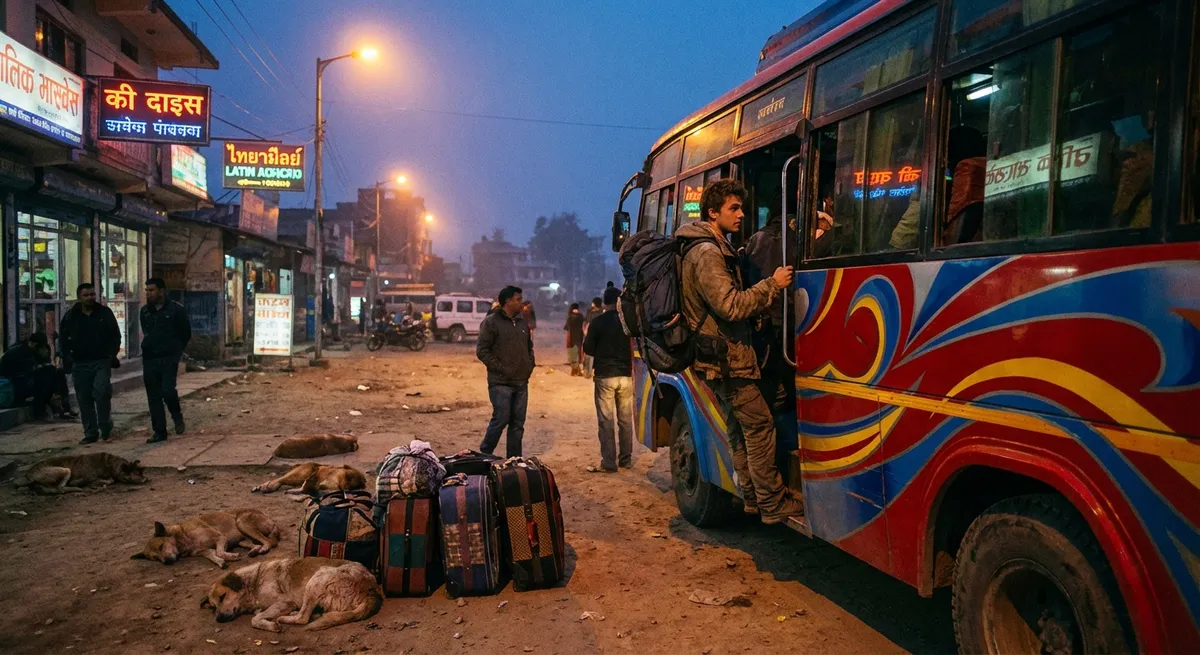
Below are five powerful shifts that can turn limited funds into limitless momentum.
1. Follow the Off-Peak Rhythm Instead of the Tourist Clock
Most travelers move in the same season, on the same days, at the same hours—and they all pay for it.
When you learn to travel against that current, the world opens up and prices quietly fall. Fly midweek instead of weekends. Aim for shoulder seasons—those sweet spots between high and low season—when skies are still clear but crowds and costs thin out. A Mediterranean coast in late October, a Japanese city in early December, or a national park in late spring can feel like a private invitation.
Off-peak doesn’t mean “worse time to go”; it means “less obvious time to go.” You might trade packed beaches for misty coves, or busy festivals for locals lingering over coffee. Use flight tools with flexible date searches to track how prices shift by day and month, then build your trip around the lowest dips. Night buses and red-eye flights can double as both transport and accommodation if you’re willing to trade a bit of comfort for a longer reach.
When you stop asking, “When does everyone go?” and start asking, “When could this place feel most like itself?” your budget starts working with you instead of against you.
2. Turn Where You Sleep into Part of the Story
On a tight budget, accommodation isn’t just a bed; it’s a character in your journey.
Hostels can be more than bunk beds and lockers. Many now offer free walking tours, communal dinners, and language exchanges that can fill your days without draining your wallet. Guesthouses and family-run inns often cost less than chain hotels while pulling you straight into local life—a courtyard breakfast, a handwritten city map, a conversation about the town’s real history.
House sitting and home exchanges can drop your lodging costs close to zero if you’re flexible with timing and location. You might find yourself feeding a cat in Lisbon, watering plants in Montreal, or watching the sun come up over a quiet neighborhood in Sydney—living a version of the city tourists rarely see.
If you’re open to it, sleeping “strangely” becomes part of the adventure: night trains across borders, hammock stays in jungle lodges, monasteries that rent out simple rooms, or farm stays where your morning chores are part of the price. Each option shifts your perspective from “rooms for the night” to “temporary lives you get to try on.”
The trick: be clear on your non-negotiables—safety, location, reviews—and then let everything else be an experiment.
3. Eat Like You Live There, Not Like You Just Landed
Food is where budgets usually explode—or where you quietly win.
In many destinations, the least expensive meals are the ones closest to everyday life. Street food stalls with steady local lines, markets buzzing at dawn, office-district lunch joints, bakery counters just before close—these are your allies. You’re not “missing out” by skipping the big-name restaurant if you’re sharing a plastic stool, tasting a city’s comfort food at half the cost.
Visit supermarkets early in your trip. Not just for cheap snacks, but to understand what locals actually eat: yogurt brands, bread types, fruits in season. Grab picnic ingredients and eat in parks, on sea walls, or at lookout points—your “restaurant view” becomes whatever horizon you choose.
If your accommodation has a kitchen, cook simple meals a few nights a week and splurge when it matters—a legendary local dish, a tasting menu with a story, a cooking class that teaches you techniques you’ll take home. Use lunch for your richer sit-down meals; lunch menus are often cheaper than dinner for the same plates.
When you frame food as both fuel and culture, every budget decision becomes: “Is this experience worth trading for something else later?” Often, a bowl from a street cart under neon lights tells a better story than a white tablecloth and a receipt you’d rather forget.
4. Let Local Transport Be Your Front-Row Seat
Taxis and rideshares feel easy—but they also seal you inside a moving bubble, separated from the city you came to see.
Buses, trams, subways, shared minibuses, and ferries are where a place reveals its rhythm. A late train in Italy, a packed jeepney in the Philippines, a silent metro in Tokyo—each ride is a crash course in how people move, wait, navigate, and coexist. And almost always, it’s the cheapest way to cross a city.
Grabbing a multi-day public transport pass can slash costs and erase the mental friction of buying single tickets. Long-distance buses and trains turn travel days into moving observation decks: villages, forests, and coastlines sliding by your window instead of disappearing beneath a plane’s wing.
Walking is the most underrated budget hack of all. Every kilometer you walk instead of rideshare is money saved and details earned: the smell of a bakery you would’ve sped past, the mural in an alley, the café terrace you mark for later. Bike shares and rented scooters extend your radius while still keeping you close to the ground.
Learn how locals actually get around, copy their routes, and your transportation bill shrinks as your understanding of place expands.
5. Trade Souvenirs for Skills, Moments, and Momentum
When money is tight, your best investment isn’t stuff—it’s stories and skills you can carry forward.
Instead of buying a suitcase of souvenirs, channel that same budget into experiences that change you: a surf lesson at sunrise, a local dance class, a pottery or textile workshop, a hike with a guide who grew up on the mountain you’re climbing. These cost money, yes—but they often cost less than a string of impulse purchases, and they last longer in your memory.
Seek out free or low-cost ways to steep yourself in the soul of a place. Many cities offer free museum days, community concerts, festivals, and public lectures. Parks, beaches, rivers, and trails rarely ask more than your time and energy. Libraries and cultural centers can point you toward events that don’t appear in tourist brochures.
Capture your journey in a way that doesn’t require constant spending: keep a daily travel journal, sketch street corners, record ambient sounds, or map your favorite walks. When you do decide to buy something physical, choose items that are useful back home—a spice you’ll cook with, a tool, a small artwork—as a trigger to remember the way you felt, not just the money you spent.
Over time, this shift rewires how you travel. You stop asking, “What can I afford to buy here?” and start asking, “How can I walk away from this place slightly more alive, more skilled, more awake?”
Conclusion
Budget travel isn’t a consolation prize—it’s an invitation to move through the world with intention. When you lean into off-peak rhythms, turn lodging into a character, eat like you live there, ride with locals, and trade stuff for depth, you discover that limited funds don’t shrink your adventure; they sharpen it.
You begin to see that “I can’t afford to travel” often really means “I haven’t yet learned to travel differently.” The moment you choose to slip through the cracks—taking the side streets, the slower trains, the early flights and late buses—you step into a version of travel that’s lighter, wilder, and far more your own.
The borders you feel aren’t just on maps; many of them are in your head. Budget travel is one of the most powerful ways to start crossing both.
Sources
- U.S. Department of State – Travel Planning Resources - Official guidance on safety, entry requirements, and general planning considerations for international travel
- OECD Tourism Trends and Policies - Data and analysis on tourism patterns, including seasonality and travel behavior
- European Commission – Passenger Rights for Air and Rail - Useful for budget travelers using flights and trains in Europe, outlining compensation and rights
- Hostelling International - Practical tips on using hostels, meeting other travelers, and stretching your budget through shared accommodation
- Lonely Planet – Budget Travel Tips - Curated advice on saving money on transport, food, and activities while still having meaningful experiences