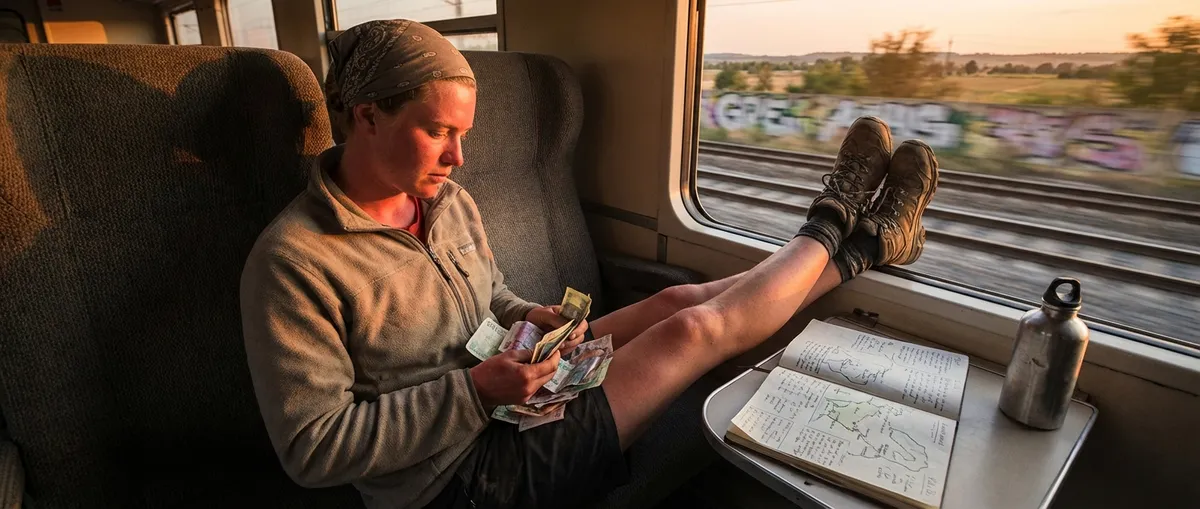
This is budget travel reimagined: not as sacrifice, but as a different kind of richness. Below are five powerful ways to stretch your money and amplify your experience—so you come home with unforgettable moments, not a forgettable credit card balance.
1. Sleep Where Stories Happen, Not Where Logos Glow
Big hotels buy you predictability; budget stays hand you a front-row seat to real life.
Hostels, family-run guesthouses, and homestays are where the trip stops being a brochure and starts being a memory. In a shared kitchen, you trade recipes with a traveler from another continent. In a modest guesthouse, your host circles secret waterfalls on a paper map and insists you “must go before the tour buses arrive.” In a homestay, you’re invited to a cousin’s wedding or a neighbor’s festival—and suddenly you’re not an outsider watching culture; you’re inside it.
To make this magic work without blowing your budget, think in layers:
- Location over luxury: Pick simple places within walking distance of markets, transit hubs, or old town centers. You’ll spend less on transport and see more of everyday life.
- Community-focused stays: Look for cooperatives, eco-lodges, or social enterprises that reinvest in the local area. Your room fee supports something bigger than a brand.
- Flexible comfort levels: Maybe you do a hostel dorm for three nights, then splurge one night on a private room with a view. Alternating keeps costs low while giving you rest days to recharge.
Your bed doesn’t need marble countertops. It just needs to be safe, clean, and close to the kind of people who make good stories.
2. Eat Like You Live There, Not Like You’re Passing Through
Your budget stretches furthest when you chase flavors instead of fancy.
Forget laminated tourist menus. The real feast is found where smoke curls over roadside grills, where locals line up before a tiny food stall even opens, where the “menu” is whatever grandma felt like cooking that day. This is where a handful of coins buys you a bowl of something so good you want to hug the chef.
Make your hunger part of the journey:
- Follow the lines, not the signs: A crowd of locals at a tiny, unassuming spot is a better signal than a perfect Instagram signboard.
- Early and often: Hit open-air markets in the morning for fresh, cheap breakfasts—fruit, pastries, rice dishes, local breads—and pick up snacks that double as lunch.
- Cook with the city: Book a low-cost cooking class or stay where you can use a kitchen. Shopping local markets and cooking a few meals can slice your food costs in half while teaching you how a place actually eats.
- Street food with sense: Choose busy stalls with high turnover, visible handwashing, and food cooked in front of you. Small vigilance, big payoff.
Every plate is a small adventure. On a budget, that adventure happens three times a day.
3. Trade Distance for Depth: Let One Place Fully Unfold
The most expensive part of many trips is movement: constant trains, flights, taxis, and “just one more” destination.
There’s another way: move less, feel more.
Slow travel is a budget traveler’s secret weapon. By staying longer in fewer places, you spend less on transit and tourist traps—and more on the kind of days that change how you see the world. When you walk the same street every afternoon, the fruit seller nods in recognition. When you show up twice to the same café, the barista remembers your order and asks where you’ve wandered today.
Here’s how staying put saves both money and sanity:
- Weekly or monthly deals: Many guesthouses and hostels offer sharp discounts if you stay longer. Ask directly; it’s often not listed online.
- Transit shrinkage: Fewer long-haul buses or flights mean more of your budget stays in your pocket instead of at the ticket counter.
- Deeper discounts: With time, you learn the “local prices”—whether that’s for produce, crafts, or attractions—and avoid the premium placed on rushed tourists.
- Richer routine: Finding a favorite park, café, or sunrise spot means you don’t chase novelty; you let familiarity deepen your connection to the place.
When you stop measuring your trip by how many pins you drop on a map, you start measuring it by how many lives briefly weave into yours.
4. Turn Skills Into Currency: Work, Volunteer, or Trade Your Way Further
Money is only one kind of currency. Your skills, time, and energy can carry you just as far.
On a tight budget, you can reduce accommodation and food costs by volunteering, working short stints, or skill-swapping. Maybe you help at a guesthouse for five hours a day in exchange for a bed and breakfast. Maybe you spend a month on an organic farm, trading weeding and harvesting for home-cooked meals and a countryside sunrise every morning. Perhaps your photography, language skills, or social media savvy earn you discounts from local businesses hungry for visibility.
To do this sustainably and ethically:
- Choose responsible programs: Look for organizations that clearly outline expectations, working hours, and impact. Avoid any arrangement that feels like exploiting local labor or communities.
- Respect local workers: Your free accommodation shouldn’t replace someone’s paid job. Seek roles that support, not displace, local people.
- Know your limits: Working or volunteering can be intense. Build in rest days and keep flexibility so travel still feels like exploration, not obligation.
- Bring your real strengths: Tutoring languages, teaching simple computer skills, gardening, cooking, design, or photography—any of these can be valuable.
Trading skill for experience transforms your trip from “I paid for this” to “I helped make this happen.” The memories hit differently when you’ve invested a part of yourself in the place.
5. Make the Journey the Prize, Not the Inconvenience
Fast travel is expensive; slow, inventive travel is where budget constraints become pure adventure.
A sleek bullet train might be quick—but the overnight bus with fold-out bunks and shared snacks becomes a rolling sleepover. A budget ferry across an island chain lets you watch the shoreline shift mile by mile instead of blinking from gate to gate in an airport. A rideshare or local minivan means swapping playlists, stories, and snacks with strangers headed roughly the same direction you are.
To turn transportation into a highlight instead of a headache:
- Night moves: Overnight trains and buses save you a night’s accommodation and deliver you to a new place as the day begins. Pack earplugs, an eye mask, and a lightweight scarf or hoodie.
- Local routes, local rates: Where safe and feasible, use public transit instead of tourist shuttles. You’ll spend a fraction of the cost and see how the city really breathes.
- Walk first, ride later: Before defaulting to a cab, ask: “Can I walk this?” Wandering on foot uncovers tiny temples, murals, side streets, and street musicians you’d never spot from a car window.
- Treat transit as a window, not a wait: Download offline maps, podcasts, or language lessons, but also spend time just watching landscapes and faces pass. Your “in-between” time becomes part of the story.
The moment you stop seeing cheap transit as something you endure and start treating it as a front-row seat to the world, your budget stops feeling like a limit and starts feeling like a lens.
Conclusion
Budget travel isn’t about scraping by; it’s about stripping away everything that doesn’t truly matter so what’s left can matter more.
When you sleep where stories live instead of where logos shine, when you eat what the city feeds its own, when you linger instead of sprint, when you trade your skills for connection, and when you treat every bus, boat, and backstreet as part of the show—you discover that the real luxury of travel is not five stars above you.
It’s five senses fully awake.
The question isn’t “Can I afford to go?” It’s “Am I willing to travel bravely enough that small money can buy big experiences?” Once the answer is yes, the world stops looking like something you watch on a screen and starts feeling like somewhere you belong.
Sources
- U.S. Department of State – Travel Advisory & Safety Information - Official guidance on safety, entry requirements, and country-specific travel info
- World Tourism Organization (UNWTO) - Insights on sustainable and community-based tourism, useful for ethical volunteering and local stays
- Lonely Planet – Budget Travel Tips - Practical strategies for saving on accommodation, food, and transport worldwide
- Rick Steves – Travel Skills: Eating and Sleeping - Advice on finding affordable local food and budget-friendly lodging in Europe
- Harvard Business Review – The Case for Slow Travel - Explores the benefits of slow, immersive travel, supporting the idea of staying longer in fewer places