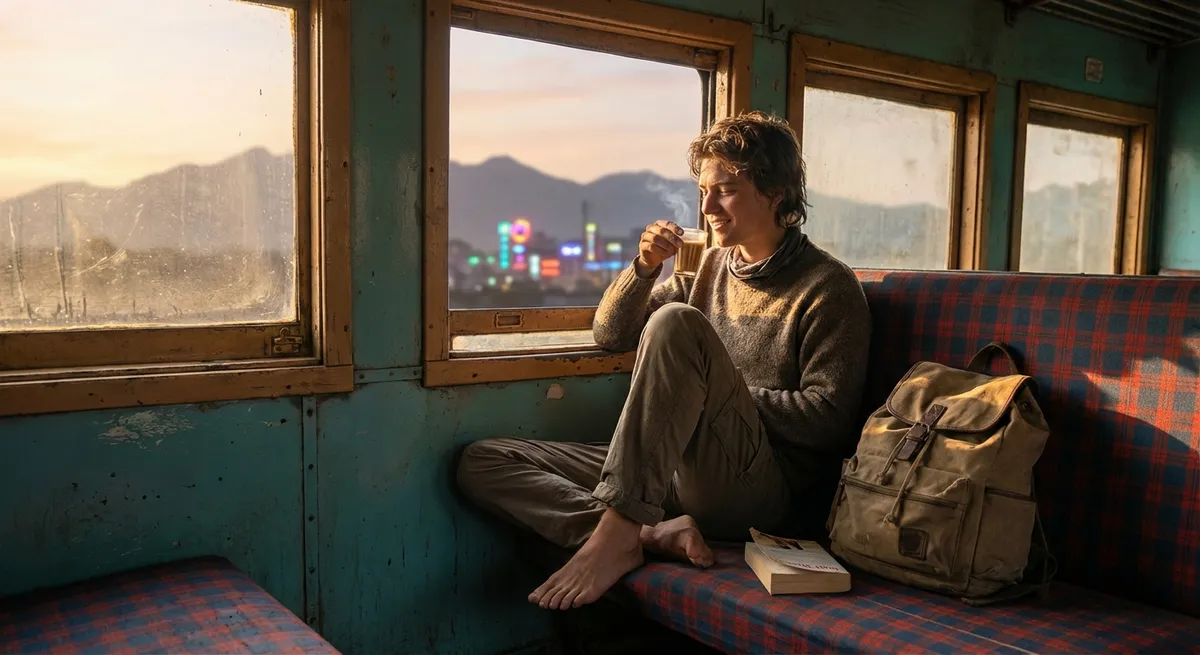
Below are five ways to make your budget trip feel richer, wilder, and more memorable than any luxury resort stay.
1. Chase the Local Clock, Not the Tourist Rush
If you want your money to stretch, stop moving like a tourist and start living like the city does.
Wake up with the bakers, baristas, and market vendors. Breakfast at the local market is often a fraction of the price of a hotel buffet and ten times more alive—plastic stools, sizzling pans, kids running between tables, and the hum of a place warming up for the day. In many cities, early hours also mean discounted entry to major sights, smaller crowds, and better light for those photos you’ll brag about later.
Shift your main meal to lunchtime, when restaurants often serve cheaper “menu of the day” specials. In southern Europe and much of Latin America, this can mean a starter, main, drink, and sometimes dessert for the price of a single à la carte dinner.
As night falls, follow the city’s rhythm instead of the nightlife brochures. Swap overpriced bars for:
- Public squares where families gather till late
- Free or low-cost outdoor concerts and festivals
- Supermarket picnic dinners in parks overlooking skylines or rivers
When you move on the local clock, your budget stops leaking—and you start hearing the heartbeat of the place you came to see.
2. Turn Getting There Into the Best Part of the Story
On a budget trip, transport isn’t just logistics; it’s your front-row ticket to a place’s soul.
Long-distance trains, overnight buses, ferries, and shared taxis can dramatically cut costs while adding layers to your story. That crowded minibus with chickens in the aisle and three generations sharing fruit? That’s the kind of memory that sticks far longer than a quick, sterile flight.
When possible, choose:
- Regional trains instead of planes: Often cheaper, far less stressful, and packed with scenery you’d never see from 30,000 feet.
- Night buses or sleeper trains: You save on a night of accommodation and arrive somewhere new as the sun rises—arguably the most magical time to see any city.
- Ferries and local boats: Especially in island nations and river cities, these can be the most economical and spectacular “tour” you take.
Make the journey itself an adventure: download offline maps, bring a journal, swap stories with seatmates, and taste whatever’s sold through the bus window. Every mile you travel slowly is another stitch in the tapestry of your trip—and your wallet will quietly thank you.
3. Stay Where Stories Happen, Not Where Towels Are Fancy
Budget accommodation doesn’t have to mean sacrificing comfort; it means prioritizing connection over thread-count.
Hostels, guesthouses, homestays, and budget boutique hotels can place you closer to the life you came to witness. Common rooms become idea factories where you swap tips, split taxi fares, and discover experiences that never appear on search engines.
To make your stay both affordable and unforgettable:
- Choose location over luxury: A simple room in a central or local neighborhood often beats a fancy hotel far from everything. You’ll save on transport and gain time on the ground.
- Look for shared kitchens: Cooking even one meal a day dramatically reduces spending and can turn into an impromptu cultural exchange if you’re sharing the space.
- Try work-exchanges or volunteering stints: A few hours of help per day in hostels, farms, or NGOs can cover your bed and sometimes food, with the bonus of built-in community.
In these spaces, you don’t just sleep—you meet. You absorb accents, road hacks, and half-whispered legends about hidden beaches and mountain passes. Your room becomes a base camp, not a bubble.
4. Eat Like You’ll Never Be Here Again (Without Breaking the Bank)
Your budget trip will be remembered in flavors: broth steaming under neon lights, grilled fish eaten with fingers, fruit you can’t even name. You don’t need white tablecloths for a world-class meal.
To eat richly on a lean budget:
- Follow the line, not the sign: A queue of locals at a tiny stall is a stronger recommendation than any online review.
- Embrace set menus and “business lunches”: Many restaurants offer cheaper fixed menus at midday that mirror their evening dishes.
- Shop like a resident: Markets and grocery stores are playgrounds for budget travelers. Fresh bread, cheese, olives, fruit, and a cheap bottle of local wine can turn a park bench into a sea-view restaurant.
Learn a few food phrases, ask vendors what they eat, and treat each meal as a small expedition. The less you spend on decor and presentation, the closer you get to the true flavors of the place. And when you do decide to splurge on that one iconic dish, it feels like a celebration—not a default.
5. Let Free Experiences Be the Backbone of Your Adventure
The world’s most unforgettable moments rarely come with ticket stubs. Budget travel shines when you lean hard into everything that costs little or nothing but attention.
Build your days around experiences like:
- City wandering: Pick a neighborhood and learn it block by block—street art, corner cafés, hidden courtyards, and tiny bookshops. You’ll see more than from any hop-on-hop-off bus.
- Nature as your playground: Public beaches, city parks, hiking trails, riverfront walks, and scenic viewpoints are almost always free. Sunrise and sunset cost nothing and feel like private shows if you choose your spot well.
- Free cultural windows: Many museums and galleries have free days or hours; universities host public talks; churches and temples often welcome respectful visitors without charge.
- Local events: Watch for posters, community boards, and social media groups advertising street festivals, markets, open-air cinema, or neighborhood celebrations.
Your budget doesn’t limit your story; it edits out the generic and pushes you toward the authentic. When money is tight, curiosity becomes your strongest currency—and that’s where adventure lives.
Conclusion
Budget travel is not about what you can’t afford; it’s about what you refuse to miss. By living on the local clock, turning journeys into stories, choosing connection over luxury, eating like you mean it, and building your days around free wonder, you unlock a version of travel that’s vivid, bold, and deeply yours.
You don’t need a limitless bank account to live a big life. You just need the courage to buy the cheap ticket, shoulder your bag, and step into the world as you are—open, resourceful, and ready for whatever the next corner reveals.
Your next unforgettable trip might be the one you almost didn’t book because you thought you couldn’t “afford” it. Go anyway. Let the underdog route show you how rich budget travel can really be.
Sources
- U.S. Department of State – Tips for Traveling Abroad - Practical guidance on planning, safety, and documentation for international travel
- European Commission – Rail Travel in Europe - Overview of rail options and benefits across European countries, useful for planning budget-friendly train journeys
- Hostelling International - Information about hostels worldwide, showcasing budget accommodation and community-focused stays
- UNESCO World Heritage Centre - Official list of cultural and natural sites, many of which have free or low-cost access for travelers
- Harvard T.H. Chan School of Public Health – The Nutrition Source - Guidance on building balanced, healthy meals, helpful when relying on markets and self-catering during budget travel