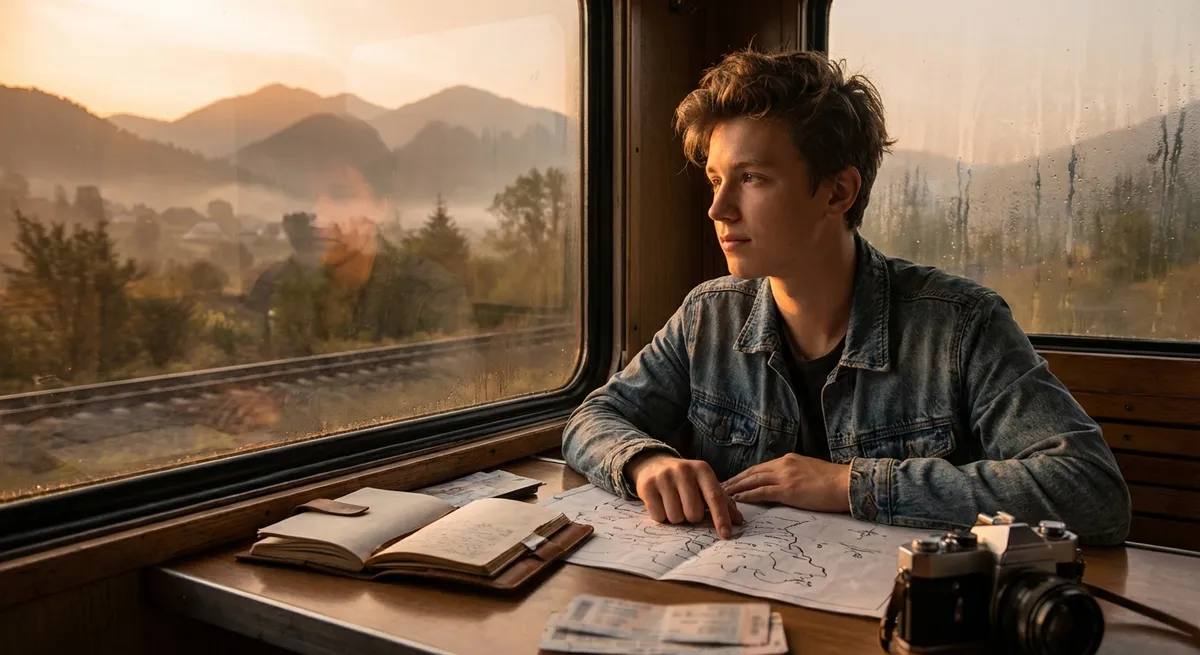
Below are five travel moves that flip the switch from “visit” to “experience”—so every journey feels bigger, bolder, and more alive.
1. Chase the Edges of the Day
There’s a kind of magic that only appears when most people are asleep. Dawn and dusk are the edges of the day—where a place reveals its quieter, truer self. The streets are soft with early light, shop shutters roll open, and the city stretches awake around you. In the evening, lights blink on, conversations spill out of doorways, and the day’s heat turns into a warm, electric hum.
Plan at least one “edge-of-day” ritual in each place you visit. Maybe it’s watching fishermen return to harbor at sunrise, or climbing a nearby hill to watch the city flicker to life below. Bring a simple kit: a light jacket, a reusable water bottle, and a small notebook. Use these moments to take stock—what surprised you, what scared you a little, what made you feel more alive than yesterday. These quiet edges anchor your trip and create memory “hooks” that make each destination unforgettable.
2. Turn Every Street Into a Storyline
The fastest way to flatten a destination is to treat it like a checklist of sights. The fastest way to make it unforgettable is to treat it like a story unfolding scene by scene. Instead of just walking from attraction to attraction, pick a theme for a day and let that guide you: “follow the color blue,” “track the city’s rivers,” “walk only where I can see a church spire,” or “find the oldest doorway on every block.”
Your theme turns wandering into a quest. You’ll notice tiny details—a faded mural behind a market stall, a cat sleeping on a balcony, a backstreet café with only three tables and a handwritten menu. Strike up small conversations: ask a shop owner how long they’ve been there, or a barista where they go on their day off. These micro-interactions weave you into the local fabric. By sunset, you won’t just remember that you “went to Lisbon” or “visited Seoul”—you’ll remember the exact alley where the city finally made sense to you.
3. Ask One Bold Question Everywhere You Go
Adventure doesn’t just live in mountains and oceans; it lives in conversations you’re not sure how to start. Commit to asking one bold, sincere question in each new place. It could be:
- “If I only had one day here, what should I absolutely not miss?”
- “What do locals love that tourists usually overlook?”
- “What’s something that’s changed a lot in this city in the last five years?”
Ask this to a bartender, a hostel receptionist, a street vendor, a taxi driver, or someone waiting in the same line as you. You’ll collect recommendations that rarely make it into guidebooks: a hidden cliffside path, a neighborhood night market, a bakery that sells out by 9 a.m. These questions also build connection—you’re not just a passerby; you’re a curious witness to their world.
To make it easier, learn a few key phrases in the local language using a language app before you land. Even a clumsy “Hello, I’m visiting—what do you love about this city?” opens doors that closed-off, rushed travelers never notice.
4. Build One Challenge Into Every Trip
Comfort is nice. Growth is better. To keep your travels from blending into one another, deliberately choose a personal challenge for each trip—something just outside your comfort zone, but fully within your capabilities if you lean in.
Your challenge might be:
- Navigating a full day using only public transit and your own sense of direction
- Ordering meals entirely in the local language, no translation apps
- Tackling a hike you’ve quietly wanted to attempt for years
- Attending a local event where you know absolutely no one—a festival, workshop, or community class
Prepare smart: research safety, local norms, and basic logistics. Then commit. The aim isn’t to collect bragging rights—it’s to prove to yourself that you can handle more than your familiar routines allow. These self-set quests become anchor moments, the stories you tell when you say, “That was the trip where I finally ___.”
5. Design a Souvenir That Doesn’t Fit in Your Bag
The strongest souvenirs aren’t things—they’re skills, rituals, and ideas you bring home and weave into your life. Instead of focusing on what you can buy, decide what you want to learn or adopt from each place.
Maybe you:
- Learn a local recipe and cook it for friends when you get back
- Adopt a small daily ritual you discover there—an afternoon tea, a slow evening walk, a way of greeting people
- Pick up a creative habit inspired by the trip: sketching doorways, journaling smells and sounds, recording short audio notes of street music
Take photos and notes—not just of monuments, but of process: how street vendors prepare your food, how locals greet one another, how families gather in public spaces. These observations give you raw material to reshape your day-to-day life. When home starts to feel too small, you won’t just scroll old photos; you’ll live differently because of where you’ve been. That’s when travel stops being an escape and becomes a quiet revolution in how you move through the world.
Conclusion
Adventure isn’t a line on a map—it’s a way of paying attention. When you chase the edges of the day, turn streets into storylines, ask bold questions, build in challenges, and collect souvenirs that live in your habits instead of your backpack, every trip becomes more than a break from routine. It becomes training for a larger, braver life.
The world isn’t waiting for you to be “ready.” It’s already in motion: doors opening, markets buzzing, first light hitting unfamiliar rooftops. All you have to do is step into the story differently—and let every journey teach you how big your life can be.
Sources
- U.S. Department of State – Traveler’s Checklist - Practical guidance on documents, safety, and preparation before international trips
- Centers for Disease Control and Prevention – Travelers’ Health - Up-to-date health advice, vaccines, and destination-specific recommendations to help you travel safely
- BBC Travel – How to Travel Like a Local - Insights on connecting with local culture and moving beyond standard tourist experiences
- National Geographic – The Art of Slow Travel - Explores immersive, mindful travel practices that deepen your connection to destinations
- Lonely Planet – Responsible Travel Tips - Practical ideas for engaging respectfully with people and places while on the road