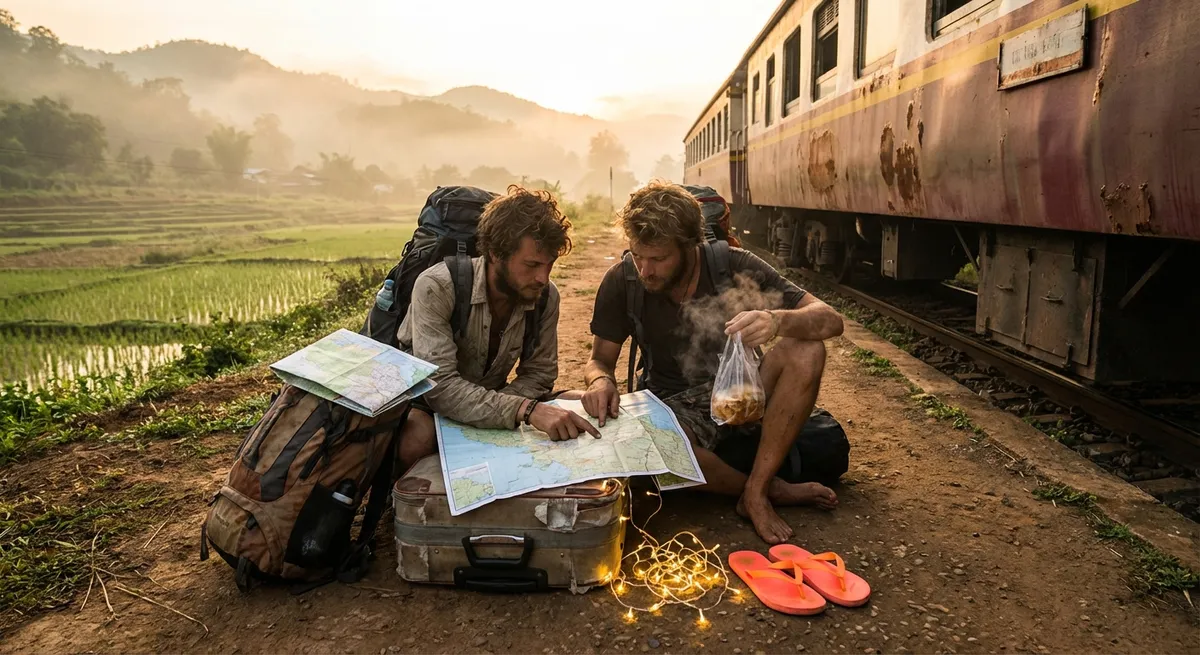
Point 1: Sleep Where the Story Is, Not Where the Lobby Shines
The most memorable nights rarely start at a hotel breakfast buffet.
Choose places that plug you straight into the local current: family-run guesthouses, hostels with communal kitchens, farm stays, monastery lodgings, and homestays where the living room is your briefing room for the next day’s adventure. Instead of paying for marble floors and mood lighting, you’re investing in balcony conversations, rooftop sunsets, and chance friendships that reshape your route.
Book directly with small properties when you can—often you’ll get better rates or local tips the big platforms never mention. Look for stays that include perks: free bike use, breakfast, laundry, or local discounts. A cheap bed that comes with a home-cooked meal and a host who circles secret spots on your map is worth far more than a “standard room with city view.”
When safety is a concern, trust your research and your instincts. Read reviews carefully, scan recent traveler photos, and favor places mentioned by multiple sources. The goal isn’t just to cut costs—it’s to sleep in places that feel like chapters in your story, not generic pit stops.
Point 2: Follow the Food Smoke, Not the Neon Signs
If you really want to know a place, follow the smells, not the billboards.
Skip the glossy tourist restaurants and wander where office workers eat on their lunch break, where families crowd around plastic stools, where the line stretches around a quiet corner instead of a main plaza. Street stalls, markets, food courts, and tiny local diners are where your budget stretches and your sense of place explodes.
Order what you see locals ordering. Point, smile, mispronounce, and learn. Ask vendors what they recommend rather than hunting for something familiar. Not only will you spend a fraction of what you’d pay at a tourist-facing spot, you’ll sample the dishes that actually live in people’s daily lives, not just on postcards.
To stay healthy while eating cheap, lean into fresh-cooked, high-turnover spots: crowded stands with sizzling grills, steaming pots, and a constant flow of customers. Carry your own reusable water bottle and, where tap water isn’t safe, buy large refill jugs to top up instead of endless small plastic bottles. Your wallet and the planet both get a win.
Point 3: Turn Transit Into the Main Attraction
The fastest route is rarely the richest one.
Instead of defaulting to flights and private transfers, build your journey around trains, night buses, shared vans, ferries, and local minibuses. Long-distance rail lines carve through countryside you’d never otherwise see. Slow ferries glide past fishing villages and cliffside towns. Night buses trade a hotel fee for 10 hours of moving scenery and a front-row seat to how a country actually moves.
Lean into these rides as experiences, not sacrifices. Pack layers, snacks, an eye mask, and entertainment. Download offline maps so you can track your progress and mark places you’d like to visit next time. Talk to the person beside you—bus buddies and compartment companions have a way of becoming impromptu guides, language teachers, or future hosts.
Local public transit inside cities is just as powerful. Mastering trams, metros, and buses turns you from a visitor into a temporary resident. It’s cheaper than taxis or rideshares, and every transfer is a tiny geography lesson: which neighborhoods hum late, which streets wake up early, where markets and parks anchor daily life.
Point 4: Build Your Days Around Free Riches, Not Paid Attractions
Every place has treasures that cost nothing and give everything.
Instead of designing your itinerary around ticket prices, build it around what’s naturally abundant: sunrises, public squares, street art, local parks, free museum days, church towers, beaches, hiking trails, and festivals that pour into the streets. Many world-class museums have free hours or reduced rates on certain days—arrange your week around those windows and save your budget for the experiences that truly must be paid for.
In cities, follow rivers, waterfronts, and green belts. They often lead you past viewpoints, public art, memorials, and neighborhoods that never make it into glossy brochures. Join free walking tours (and tip what you can), then take what you learn and wander deeper on your own. Volunteer meetups, language exchanges, and community events open doors to local life at zero cost, and they often come with new friends attached.
On the road, your curiosity is your actual currency. Ask: What can I experience here that doesn’t need a ticket? Maybe it’s joining sunrise tai chi in a park, watching pickup soccer at dusk, or sitting on church steps as bells ring and the town rearranges itself for evening. These moments don’t show up on your credit card statement—but they’re what you’ll remember first.
Point 5: Trade Skills and Flexibility for Experiences Money Can’t Buy
When money is limited, creativity becomes your superpower.
Your skills—teaching, photography, web design, social media, cooking, carpentry, language abilities—can become bargaining chips for deeper, longer stays. Work-exchange programs, farm stays, and volunteering opportunities sometimes cover accommodation and meals in return for a few hours of help each day. You’re not just cutting costs; you’re embedding yourself in the daily rhythms of a place.
Even without formal programs, flexibility itself has value. Traveling off-season or midweek opens up cheaper flights, quieter hostels, and last-minute deals. Being willing to pivot—choosing the country with a favorable exchange rate this year, or the city with a free festivals calendar—can double what your budget buys in experience.
Budget travel isn’t about scraping by. It’s about swapping cash for connection, status for story, speed for depth. When you stop asking “What can I afford?” and start asking “What can I contribute, notice, and explore?” the world stops feeling gated. You realize that the riches you’re chasing were never behind a paywall—they were always out where courage meets curiosity.
Conclusion
Your budget doesn’t get the final say on how big your life can be. Every cheap guesthouse, night bus, and market meal is a quiet rebellion against the idea that adventure is only for the wealthy. When you choose story-rich beds over polished lobbies, follow food smoke instead of neon, and let slow transit and free experiences shape your days, you’re not just saving money—you’re building a life thick with moments you actually feel.
Close your laptop. Open your map. The version of you that lives a little braver is already out there, waiting at a bus stop in a city you haven’t met yet. You don’t need more money to reach them—just the decision to start where you are, with what you have, and let the road teach you the rest.
Sources
- U.S. Department of State – Traveler’s Checklist – Official guidance on documents, safety, and planning for international trips
- Lonely Planet – Budget Travel Tips – Practical strategies for saving money on the road, from transport to accommodation
- Rick Steves Europe – Money-Saving Travel Tips – Detailed advice on cutting costs while maximizing cultural experiences, especially in Europe
- National Geographic – Guide to Street Food Safety – Evidence-based tips on enjoying street food while minimizing health risks
- Hostelling International – Why Stay in Hostels – Overview of hostel culture, safety, and benefits for budget-conscious, social travelers