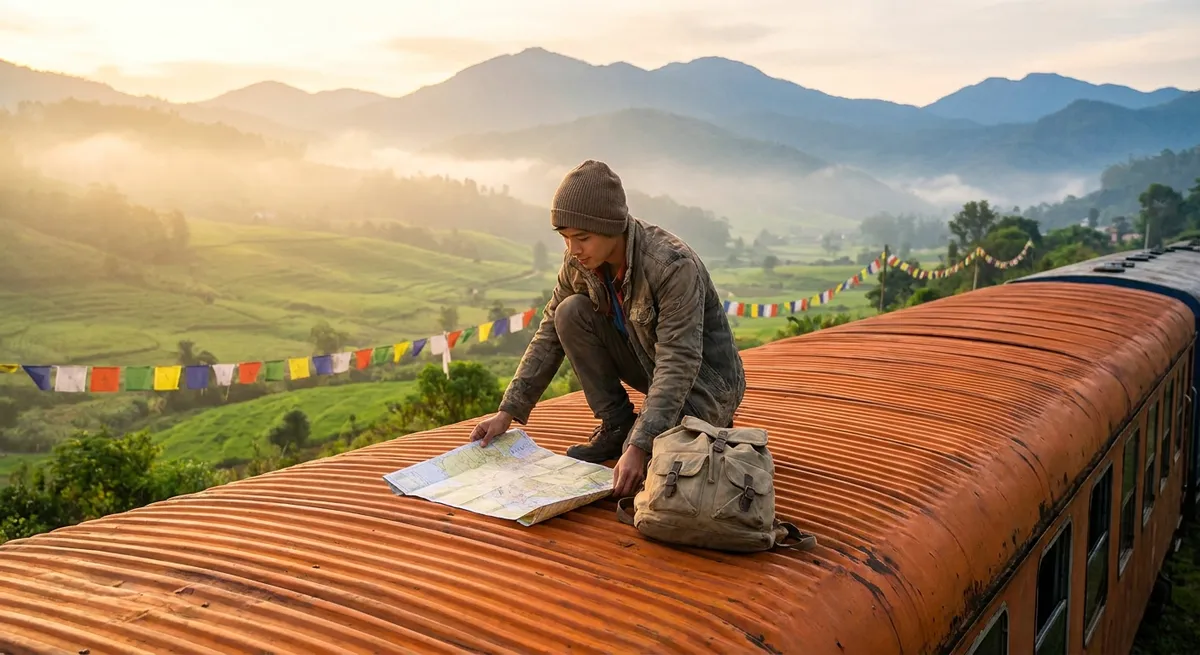
Below are five powerful shifts that turn any journey—budget or luxe, near or far—into an adventure that actually stays with you.
Turn “Getting There” Into the First Adventure
Most travelers treat transit days like dead zones: headphones in, world out. But the journey itself can be where the trip begins, not where it pauses.
Instead of zoning out at the airport, tune in. Notice the boarding gate energy: the overpacked family wrangling snacks, the solo traveler mapping train routes, the local businessperson already on tomorrow’s call. These are living previews of the place you’re flying toward.
On trains and buses, choose curiosity over autopilot. Glance out the window and trace the landscape’s story—rice paddies turning into neon skylines, desert giving way to ocean, suburbs washing into old stone streets. If it feels safe, ask the person next to you, “What’s your favorite part of living here?” That one question has launched countless invitations to local cafés, sunset viewpoints, and hole‑in‑the‑wall food spots that never make it to guidebooks.
Equip yourself like a traveler, not a commuter: pack a small notebook, a downloaded offline map, and a few phrases in the local language. When delays happen (and they will), treat them as bonus hours gifted to wander the terminal, try a regional snack, or strike up a short, respectful conversation. Every great story starts somewhere in the in‑between.
Let Your Taste Buds Lead the Way
If you want to understand a place quickly, eat what it feeds itself. Food is a fast track into local history, climate, and community—far more than a checklist of “must‑try” dishes.
When you arrive, skip the chain restaurants you recognize. Follow your nose toward sizzling street stalls, crowded bakeries, and plastic‑chair eateries where the menu might not be translated. Look for where locals queue on their lunch break or crowd around a single cart at dusk. That line is a compass.
Ask vendors simple, open‑ended questions: “What do you recommend?” “What’s special about this dish?” You’ll often get a mini‑history lesson with your meal. Be honest about allergies or dietary needs, but stay open—sometimes the best discoveries are the ones that weren’t on your radar at all.
To deepen the experience, book a local cooking class or food walk early in your trip. You’ll learn how ingredients move from market to table, how families eat at home, and which flavors signal celebration. Then, for the rest of your journey, every menu becomes a continuation of that story.
Carry a small “food journal” note on your phone. Jot down where you ate, what you tried, and how it felt: the smoky tang of grilled fish by a harbor, the sweetness of mango at a roadside stand, the first time you tried chili levels you were absolutely not prepared for. These details become the sensory anchors of your memories—far more vivid than a blurry photo of your plate.
Design One “Unplannable” Hour Into Every Day
It’s tempting to script every minute of a trip, especially in a new country or on a tight schedule. But adventure thrives where your plans run out. The secret: intentionally build in time for the unknown.
Once a day, schedule a single “unplannable hour.” No tickets, no must‑see attraction, no reservations. Just you, a general neighborhood, and your instincts. Start with a loose intention: “Follow the sound of music,” “Walk toward the highest point,” or “Turn left at every intersection for twenty minutes.”
Use your map only as a safety net, not a script. Wander until you find something that tugs at your attention: a courtyard where kids are playing football; a park bench under a tree older than your entire country; a doorway covered in local posters. Let curiosity, not checklists, lead.
Often, this is when you’ll stumble into small, magic moments: a street musician rehearsing in an empty square, a community festival you didn’t know existed, a quiet café full of locals reading the morning paper. These scenes won’t appear in any top‑10 list, but they’re what make a place feel real.
To keep it safe, share your general area and timing with someone (a travel companion or trusted contact back home), keep your phone charged, and stay aware of local norms. Within those boundaries, give yourself full permission to drift.
Travel With a Story You’re Actively Collecting
Trips blur together when everything is random. They sharpen into lifelong memories when you’re collecting something specific—a story only you can bring home.
Before you leave, choose a simple “story lens” for your trip. It could be:
- Doors & windows – Photograph the entrances that catch your eye and imagine the lives behind them.
- Daily rituals – Notice how different cultures take their morning coffee, their midday rest, their evening walk.
- Ways people say thank you – Learn and note local phrases, gestures, or customs of gratitude.
- Public art & graffiti – Let murals and street art tell you what matters to a city right now.
- Local sounds – Record short audio snippets (when appropriate): church bells, call to prayer, metro announcements, markets at full volume.
This doesn’t mean ignoring everything else. It means giving your attention a spine—a thread that connects Day 1 to Day 10. You’ll start noticing subtle patterns: how doors get taller in historic districts, how coffee orders shrink as the day gets hotter, how colors in street art change between neighborhoods.
Back home, your photos and notes naturally assemble into something shareable: a mini‑photo essay on Instagram, a short video montage, a blog post, or a simple story you tell friends over dinner. Instead of “Here are 500 random vacation pictures,” you’re saying, “Let me show you how this city wakes up,” or, “Here’s what gratitude looks like around the world.”
You haven’t just visited; you’ve observed. That’s what sticks.
Make Your Travel Footprint Part of the Adventure
The world you’re exploring is fragile—and being intentional about how you move through it doesn’t limit your adventure; it deepens it.
Start with transportation choices where you can. Trains, buses, and shared rides often provide richer slices of daily life than constant flights or private cars. They also tend to tread more lightly on the planet. Whenever possible, cluster nearby destinations instead of zigzagging by air.
Pack a small “impact kit” that fits easily into your day bag: a reusable water bottle, utensil set, tote bag, and maybe a small cloth for impromptu picnics. In many places, this single kit dramatically cuts your plastic use—and opens doors to spontaneous street‑food feasts without a trash trail.
Where you sleep matters, too. Look for locally owned guesthouses, homestays, or smaller hotels that support local staff and suppliers. Ask, respectfully, how they’re involved in the community. You might find volunteer opportunities, local tours with real depth, or cultural experiences that aren’t staged for mass tourism.
Treat wildlife and nature as something you’re lucky to witness, not consume. Keep your distance from animals, skip attractions that involve handling or performing creatures, and stick to marked trails in sensitive ecosystems. When in doubt, choose the option that allows a place to remain as wild and beautiful as you found it—for the next traveler, and for the people who call it home.
When you travel this way, your memories come with a quieter kind of pride: you didn’t just take from a destination—you met it halfway.
Conclusion
Every passport stamp fades. What doesn’t fade is the way a trip can rearrange something inside you: how you listen, what you notice, the size of the world you believe you belong to.
When you treat transit like a prologue, let food be your guide, build space for the beautifully unplanned, travel with a story lens, and move through places with respect, you step beyond tourism into something braver and more alive.
Your next journey doesn’t have to be farther, longer, or more expensive. It just has to be more attentive. Pack your curiosity first—and let everything else follow.
Sources
- U.S. Department of State – Traveler’s Checklist – Guidance on preparation, safety, and documents for international trips
- UN World Tourism Organization (UNWTO) – Tips for Responsible Travel – Practical advice on traveling responsibly and minimizing negative impacts
- UN Environment Programme – Sustainable Tourism – Background on how tourism affects the environment and how travelers can help
- Harvard T.H. Chan School of Public Health – Travel and Health – Evidence-based health and safety considerations for travelers
- National Geographic – Food Journeys: How Cuisine Tells the Story of a Place – Insight into how local cuisine reflects culture, history, and identity