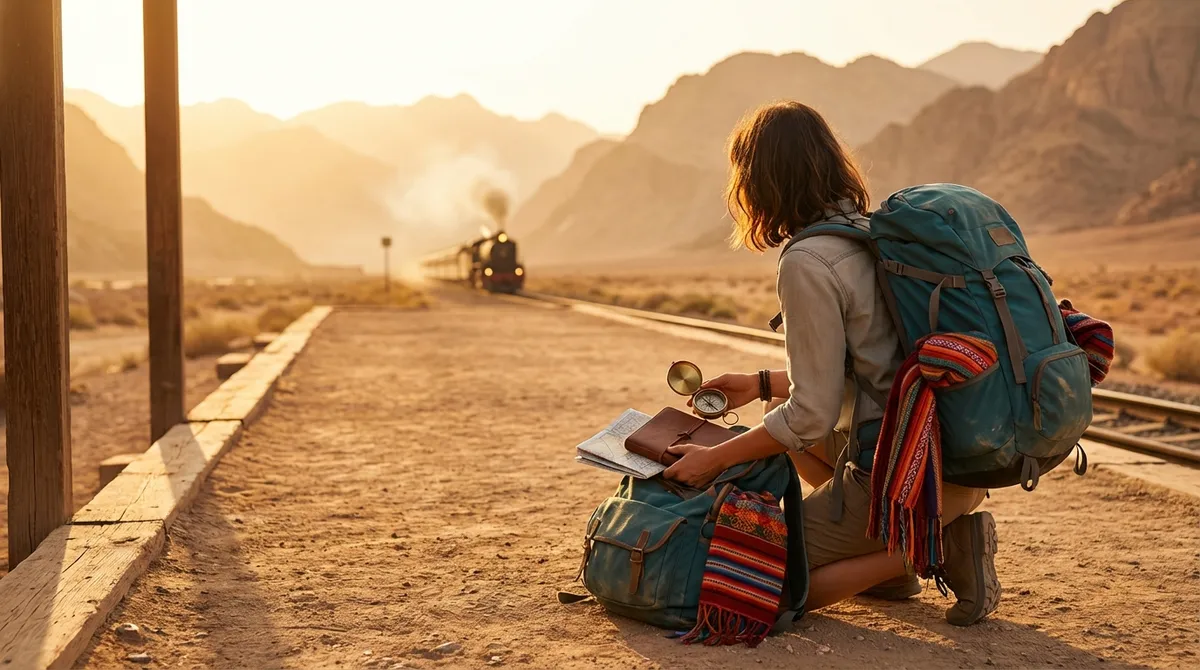
These five travel moves aren’t about bigger budgets or longer vacations. They’re about shifting how you move through the world so even a short getaway crackles with possibility.
1. Choose a Trip Theme That Sparks Your Curiosity
Before you book anything, give your trip a “north star” — a personal theme that guides your choices. Not an itinerary, but an obsession: street food, wild swimming spots, train journeys, mountain villages, urban art, volcanic landscapes, jazz bars, night markets, ancient trade routes.
A theme focuses your energy. It turns random wandering into a treasure hunt. Instead of ticking off the top 10 sights, you’re chasing a thread that pulls you through backstreets, small towns, and conversations you never would’ve had. A food-themed trip might have you following locals into tiny corner cafes and dawn markets. A music-themed trip can lead you to late-night basement venues or drumming circles in city squares.
The theme can be loose. “Chasing sunsets,” “lost railways,” “markets and makers,” “coffee and conversations”—anything that lights you up. Your map stops being a list of obligations and becomes a canvas for your curiosity.
2. Design One “Epic Anchor” and Let the Rest Stay Flexible
Build each trip around one powerful anchor experience—the thing that makes your heart race a little. It could be a multi-day trek, a sunrise kayak, a backcountry hut stay, a night train journey, or a long coastal cycle. That anchor gives your trip a sense of purpose and story.
Once you’ve locked in the anchor, loosen your grip on the rest. Leave empty space in your schedule—whole afternoons with nothing planned, open mornings with only a neighborhood in mind. Research shows travelers enjoy their trips more when they balance structure with spontaneity, instead of cramming every hour full of “must-dos.”
Use your anchor as a gravitational center: before and after it, keep plans soft. Ask locals what’s worth seeing nearby after you arrive. Follow a street because it smells like grilled fish. Detour to a viewpoint someone in a café drew on your napkin. The anchor keeps your trip from feeling aimless, while the looseness makes it feel alive.
3. Travel One Layer Deeper Than the Obvious Route
Most travelers move in the same visible layer: main avenues, famous viewpoints, top-rated restaurants, fastest connections. To make your trip feel adventurous, simply drop one layer deeper.
Take the slower connection once: a regional train instead of a domestic flight, a ferry instead of a highway, a tram instead of an Uber. Opt for the second-most central neighborhood, where real life hums a little louder. Walk one block behind the main square and let yourself follow whatever pulls you—a mural, the clang of dishes, a handwritten sign on a door.
When you’re tempted to say, “There’s nothing here,” stay ten minutes longer. Sit on a bench and just watch. That’s often when you notice the bakery everyone keeps ducking into, the trailhead sign half-hidden in the trees, the side door into a market hall you would’ve missed. Adventure isn’t always a distant summit; sometimes it’s the extra left turn you almost didn’t take.
4. Turn Encounters Into Stories: Ask Better Questions
The most powerful souvenirs are the stories you bring home, and those usually come from people, not landmarks. Instead of sticking to small talk—“Where are you from?” “How long have you lived here?”—try questions that invite real connection.
Ask, “If your best friend visited for one day, where would you take them?” or “What’s something people get wrong about this place?” or “What do you wish more visitors would notice?” These questions open doors. A barista might send you to a hidden rooftop; a park ranger might tell you about a forgotten trail; a street vendor might share a family recipe or festival custom.
Be generous in return. Share where you come from, what you’re exploring, and why you chose this place. When you treat locals as guides to a living culture—rather than information kiosks—you create the kind of human moments that linger long after your boarding pass fades.
5. Capture Your Trip Like an Explorer, Not a Tourist
Most of us come home with the same photos: famous buildings, plates of food, the occasional selfie. To turn your journey into a story you’ll actually want to retell, document it like an explorer.
Instead of just snapping landmarks, photograph patterns: doorways in different colors, street art in every neighborhood, reflections in puddles, market stalls at different hours. Keep a tiny “field notebook” on your phone or in a pocket journal. Jot down overheard phrases, the smell of the morning, a shortcut a stranger showed you, how the light hit the mountains at dusk.
This kind of attentive collecting pulls you into the present. You start seeing instead of skimming. Later, when you scroll through your notes and images, your trip feels textured and alive. It’s no longer “That time I went to X,” but “The city where the tram bells sounded like a song, the mountain wind smelled like pine, and the baker slipped an extra pastry into my bag.”
Conclusion
You don’t need a year off or a bottomless budget to travel like your life just expanded. You need intention, a bit of courage, and a willingness to step one layer deeper than the obvious.
Pick a theme that excites you. Build around one bold anchor. Leave space for detours. Ask questions that lead to real conversations. Capture details like an explorer mapping a new world.
Do that, and even a long weekend can feel like a turning point—one that reminds you the world is bigger, stranger, kinder, and more astonishing than your routine ever lets you forget.
Sources
- U.S. Travel Association – Travel Trends and Insights - Offers data and insights on how people travel and what shapes their experiences
- Harvard Business Review – “The Power of Small Wins” - Explores how meaningful progress (like a trip “anchor” experience) improves overall satisfaction
- World Tourism Organization (UNWTO) - Provides research on cultural tourism and the value of deeper local engagement
- National Park Service – Trip Planning Tips - Practical guidance on planning anchor activities in nature while staying flexible and safe
- Lonely Planet – Responsible Travel Advice - Covers ethical ways to interact with local communities and cultures while traveling