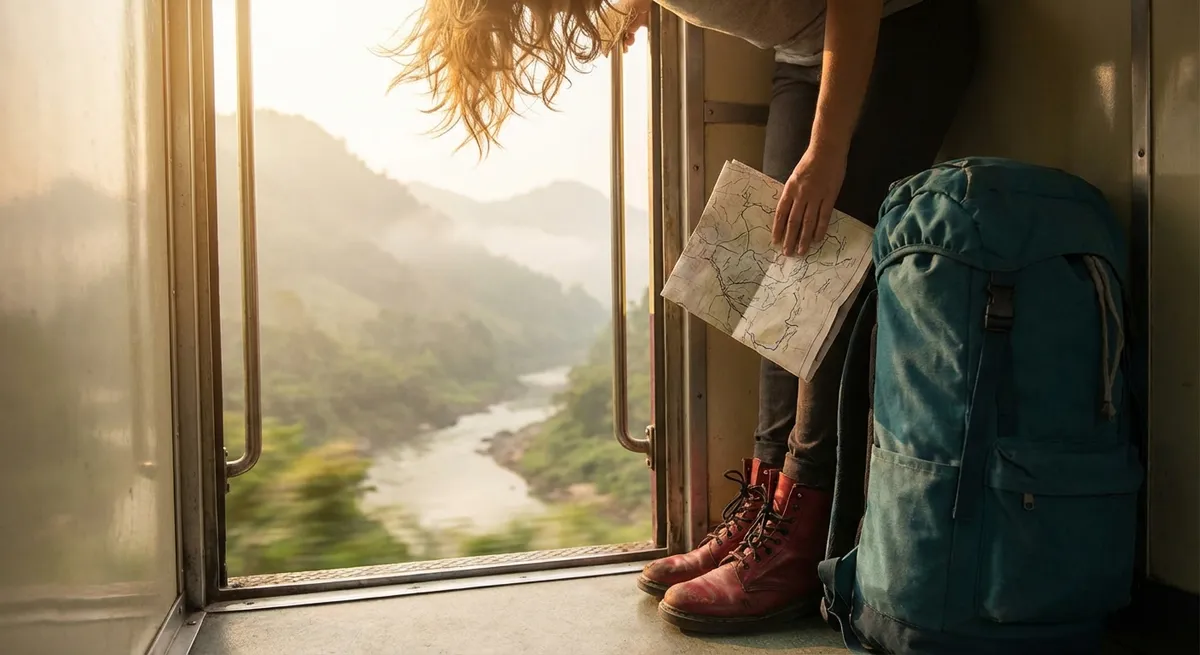
These five travel moves aren’t about picture-perfect itineraries. They’re about turning your next trip into a story you can feel in your bones long after you’re home.
Build a “Yes Day” Into Every Trip
Most trips quietly follow the same pattern: see the sights, snap the photos, repeat. A “Yes Day” breaks that loop.
Choose one full day of your trip where your default answer is yes—to reasonable, safe opportunities that come your way. A street musician invites you to a neighborhood concert? Yes. A local suggests a tiny family-run restaurant behind the market? Yes. Your guesthouse host mentions a sunrise walk to an overlook that’s not on any blog? Yes.
You’re not saying yes to everything blindly; you’re saying yes with awareness. Trust your gut, stay within your safety comfort zone, and pair your Yes Day with smart precautions: keep your accommodation’s address saved offline, share your live location with a friend, and agree on boundaries ahead of time if you’re traveling with others.
The magic is in the momentum. As the day unfolds, your trip stops feeling like a checklist and starts to feel like collaboration—with the city, with its people, and with your own curiosity.
Design a “Second-Layer Map” Beyond the Tourist Trail
The first layer of any destination is obvious: top attractions, big museums, famous viewpoints. They’re popular for a reason, and many are worth your time. But the second layer—that’s where a place reveals its heartbeat.
Before you go, build a “second-layer map” alongside your main plans. Pin things like community parks, neighborhood markets, local libraries, indie cinemas, running routes, and riverside walking paths. Search for:
- “community center + [city]”
- “local market + [neighborhood name]”
- “[city] running club” or “open-air workout spot”
Once there, dedicate at least one morning or evening to wandering through those pins with no rigid schedule. This is where you’ll catch kids walking to school, friends sharing coffee on a stoop, older neighbors playing cards under the trees. Bring a notebook or notes app and jot down the details that grab you: the smell of bread from a side-street bakery, the tram bells, the way people greet each other.
Those second-layer memories—fleeting, unscripted, deeply human—will outlast any postcard view.
Travel With a Signature Micro-Challenge
Instead of a vague goal like “see more” or “eat local,” choose one specific, repeatable micro-challenge that you’ll carry from city to city. It turns your whole journey into an ongoing quest, and every stop adds another piece to the story.
Some ideas:
- Find the highest publicly accessible viewpoint in every place you visit and climb it—church towers, rooftop bars, hilltop parks, old city walls.
- Learn to say “thank you” and “this is delicious” in the local language, then actually use those phrases at least three times a day.
- Track your “one extraordinary meal” in each destination—maybe it’s a street food stall, a grandmother’s kitchen, or a night market stand.
- Collect one ultra-specific sound recording per place: the metro chime, call to prayer, waves smashing under a pier, a café hum during the breakfast rush.
These micro-challenges are small on the surface, but they change the way you look at your surroundings. You start scanning rooftops for climbs, menus for surprises, and street corners for stories. Your trip becomes a series of connected moments instead of a scatter of disconnected stops.
Pack for Freedom, Not for “What If”
Most of us pack from a place of fear: what if it rains, what if it’s cold, what if I need six outfits for a three-day trip? Every “what if” you stuff into your bag quietly shapes your journey. A heavy suitcase doesn’t just drag down your shoulders—it limits your spontaneity.
Flip the script: pack for how you want to move, not how you want to look in every hypothetical scenario. Ask yourself, “What’s the lightest version of myself I can bring and still feel capable and confident?”
Anchor your bag around a freedom-first kit:
- One pair of shoes you can walk all day in and still wear to dinner.
- Clothing that layers well and dries quickly, so laundry becomes a sink-and-dry solution, not a suitcase-filling problem.
- A compact, packable day bag so you can jump on that last-minute train or follow a local’s suggestion without wrestling a giant backpack.
- A tiny “comfort anchor”: a scarf that doubles as blanket and pillow, a favorite tea bag, or a small item from home that calms your nervous system when everything else feels new.
The less you carry, the more you can say yes to missed connections that become road trips, surprise hikes, or wandering a neighborhood for hours just because the light is beautiful.
Turn Everyday Logistics Into Local Adventures
The unglamorous parts of travel—getting from A to B, figuring out food, buying a SIM card—are often treated like necessary annoyances. But those “in-between” moments are rich with texture if you lean into them instead of rushing through.
Turn logistics into mini-adventures:
- Transit as a window into real life: Take a tram at rush hour (if you’re comfortable) just to watch city rhythms. Notice the styles of bags people carry, the music leaking from headphones, the ads on the walls.
- Grocery stores as cultural museums: Explore local supermarkets or corner shops. Pick one snack you don’t recognize, one local drink, and one staple ingredient (like spices or sauces) to taste or bring home.
- Phone shops as language gyms: When buying a SIM card or transit pass, attempt the interaction first in the local language using simple phrases; then switch to English if needed. People often appreciate the effort.
- Cafés as temporary HQs: Use a café not just for caffeine, but as a research base. Study how locals order, what they linger over, how long they stay. Ask the barista where they’d send a friend for a late-night bite or a quiet sunset.
When you let the mundane become meaningful, no part of your trip feels like wasted time. Every ticket line, train ride, or checkout counter becomes another place to practice being fully present in a foreign world that’s briefly letting you in.
Conclusion
Travel doesn’t become unforgettable because you checked every box on a “must-see” list. It becomes unforgettable when you move through the world awake—willing to say yes, to pack lighter, to ask more questions, and to treat every corner of a city as part of the experience, not just the spaces in between the “big moments.”
On your next trip, try weaving in a Yes Day, a second-layer map, a signature micro-challenge, a freedom-first bag, and a mindset that turns logistics into stories. The destination will still be there—but you’ll meet a braver, more curious version of yourself along the way.
Sources
- U.S. Department of State – Traveler’s Checklist - Official guidance on preparation, safety, and documents before traveling abroad
- Centers for Disease Control and Prevention – Travelers’ Health - Up-to-date health advice, vaccines, and destination-specific recommendations
- BBC Travel – Why we travel: the psychological benefits of travel - Explores how travel challenges and experiences impact our mindset and well-being
- Harvard Business Review – How Vacations Affect Your Happiness - Research-backed insights on how trips are remembered and what makes them feel fulfilling
- Lonely Planet – Responsible Travel Tips - Practical ways to engage more meaningfully and respectfully with local communities while traveling