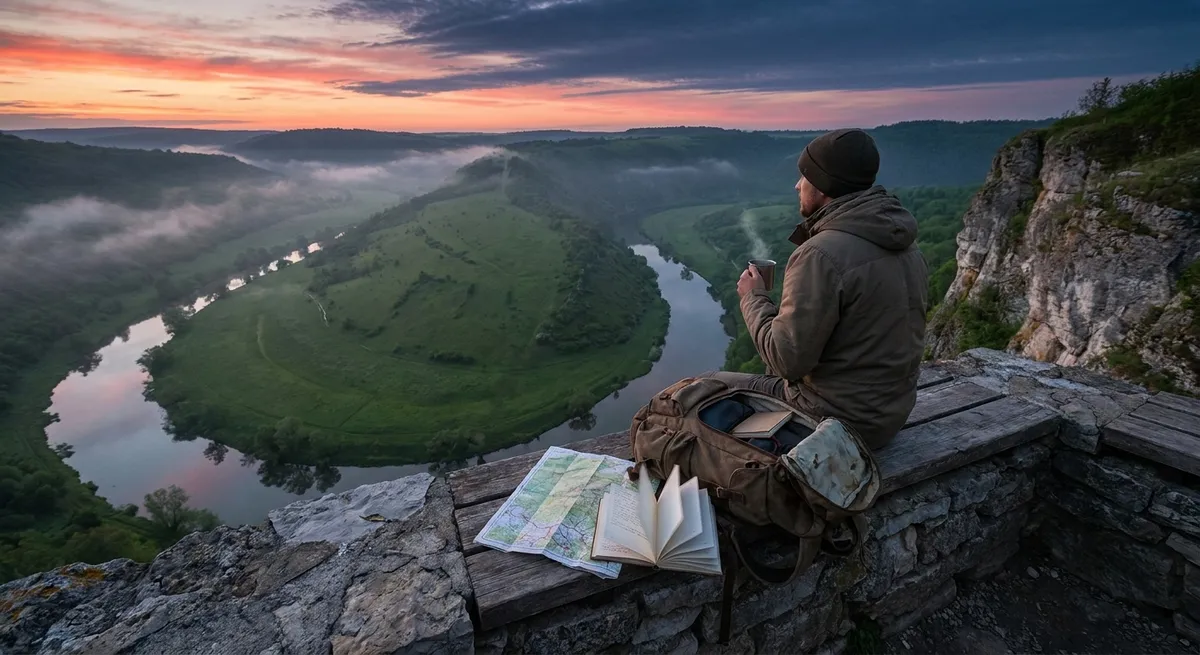
Tip 1: Follow the Unscheduled Hour
The most unforgettable moments often happen when you throw your itinerary a little off balance on purpose.
Build at least one “unscheduled hour” into every travel day—no plans, no reservations, no must-see checklist. Wander a side street because it smells like fresh bread. Step into a tiny café because you like the music drifting out the door. Sit on a bench and watch how the city moves. This is how you slip underneath the tourist surface and let a place reveal its real rhythm.
Practically, keep this hour safe and stress-free: pin your accommodation on offline maps, carry a hotel card with the address in the local language, and set a simple rule for yourself (for example: stay within a 20-minute walk of a known landmark). You’re not getting lost—you’re giving yourself permission to be found by something unexpected.
Tip 2: Turn Every Journey into a Micro-Challenge
Adventure doesn’t always mean cliffs and kayaks; it can be hidden in the smallest decisions.
Set one micro-challenge per day that pushes you just past your comfort zone. Order the dish you can’t pronounce. Take public transport instead of a taxi. Ask a local for their favorite place to watch sunset and actually go. These tiny dares build travel confidence like compound interest—the more you say “yes,” the more capable and fearless you feel.
Keep your challenges realistic but exciting. If you’re shy, your challenge might be starting a conversation with the person next to you on a train. If you’re an experienced traveler, try navigating a new city with only a paper map for the afternoon. The goal isn’t perfection; it’s that little jolt of “I didn’t think I could do that—but I did.”
Tip 3: Pack for Freedom, Not for Fear
Your backpack is either a set of wings—or an anchor that drags every step.
Most of us overpack because we’re packing for “just in case” fears instead of real needs. Flip that mindset: pack only what unlocks freedom. Choose versatile layers over one-use outfits, neutral colors you can mix and match, and gear that does double duty (a sarong that’s also a towel, picnic blanket, or curtain; a lightweight jacket that works in city streets and mountain paths).
Aim to leave breathing room in your bag. That extra space is future possibility: a local craft you fall in love with, snacks for a long train ride, or gear you discover on the road. Use packing cubes to keep chaos under control, and create a “go bag” inside your bag with essentials—passport, wallet, phone, charger, small first-aid kit—so you can grab it quickly for early flights or last-minute adventures. The lighter you move, the easier it is to say yes when opportunity appears.
Tip 4: Learn the “Golden Five” Local Phrases
Fluency is optional; connection is not.
Before you land, learn five powerful phrases in the local language:
Hello
Please
Thank you
Excuse me / Sorry
Do you recommend…?
These simple words are like keys that open doors—smiles get wider, help comes faster, and conversations stretch a little deeper. When you ask for recommendations in the local language—“Do you recommend a place to eat nearby?”—you’re inviting the city to guide you to its hidden favorites.
Don’t worry about your accent. People almost always appreciate the attempt. Keep screenshots or a digital note with phonetic spellings, and practice with staff at your accommodation or café owners. Every clumsy effort is a bridge between your world and theirs, and those bridges often lead to memories you never could have Googled.
Tip 5: Build Your Own “Story Ritual” on the Road
The adventure doesn’t end when you get back; it lives in whatever you carry forward.
Create a simple ritual that turns each day’s experiences into a story you can revisit. Maybe you write three lines in a travel journal every night: one thing you saw, one thing you felt, one thing you learned. Maybe you take a single photo that captures the day’s emotion rather than its landmarks. Maybe you collect ticket stubs, leaves, or sketches in a small notebook.
This ritual keeps you present while you’re traveling—you start looking for moments that matter, not just views that impress. And later, when normal life feels a little too normal, your notes and photos become a map back to that version of you who said yes, who wandered, who trusted the unknown. That’s the quiet magic of travel: it doesn’t just change where you’ve been; it changes who you are when you come home.
Conclusion
Adventure isn’t booked; it’s invited. You invite it every time you leave an hour unplanned, choose a tiny challenge, pack a little lighter, speak a new word, or write down a moment before it fades. You don’t need more money, more time off, or a perfect plan to feel more alive on the road—you just need a bit more courage and a few smart habits that tilt each day toward discovery.
On your next trip, pick one of these tips and commit to it. Then add another. Watch how quickly your journeys shift from predictable escapes to stories that feel bold, textured, and unmistakably yours. The world is out there, yes—but so is a braver version of you, waiting just one choice beyond comfort.
Sources
- [U.S. Department of State – Travel Smart Tips](https://travel.state.gov/content/travel/en/traveladvisories/travel-smart.html) - Practical guidance on safe, prepared international travel
- [Centers for Disease Control and Prevention – Traveler’s Health](https://wwwnc.cdc.gov/travel) - Up-to-date health, vaccination, and packing advice for global trips
- [BBC Travel – Why Getting Lost Makes for Better Travel](https://www.bbc.com/travel/article/20170328-why-getting-lost-could-be-the-best-part-of-travel) - Insight into the value of unstructured exploration while traveling
- [Lonely Planet – Packing Tips](https://www.lonelyplanet.com/articles/packing-tips) - Detailed strategies for packing light and efficiently
- [National Geographic – The Power of Learning a Few Local Words](https://www.nationalgeographic.com/travel/article/why-you-should-learn-a-little-of-the-local-language-before-you-travel) - Explores how basic language skills deepen cultural connections