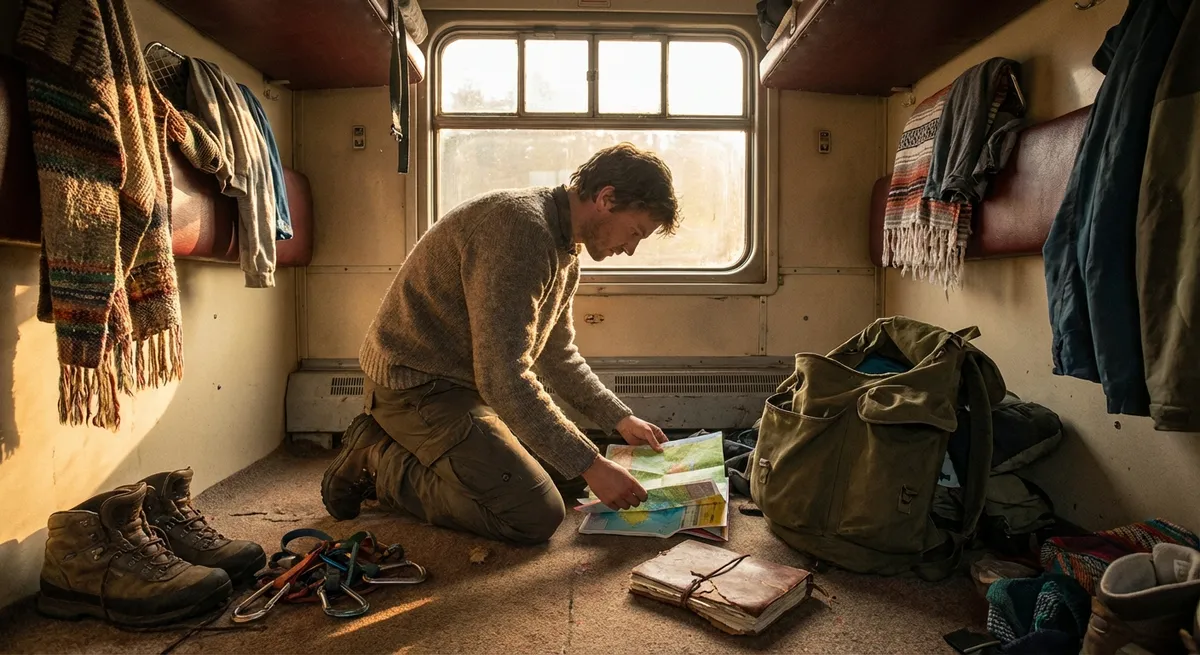
Turn the Unknown Into Home: Mastering Your First 24 Hours
Your first day in a new place can either vanish in jet-lagged blur or become the moment the trip really begins. Treat those first 24 hours as your “orientation mission.”
Walk instead of ride whenever possible. Choose a loose triangle—your stay, a local market, and a public space like a park or plaza. As you walk, note landmarks, metro stops, ATMs, and late-night food spots. This builds a mental map so your new city stops feeling like a maze and starts feeling like a neighborhood.
Skip the tourist-heavy restaurants on night one and aim for where office workers or families eat. They’re your best proxy for “good, local, fairly priced.” Learn three phrases in the local language before you arrive: “Hello,” “Please/thank you,” and “Do you recommend something?” Then use them immediately—at a café, a kiosk, a small shop. You’re not just buying coffee; you’re buying tiny moments of connection that change the tone of your entire trip.
Pack a “first day kit” in your personal item: offline map already downloaded, portable charger, a pen, photocopies of your documents, and one simple comfort (tea bags, a small snack, or a light scarf). When everything feels unfamiliar, that tiny piece of “home” can reset your mind so you can stay open to everything new.
Travel With a Theme, Not a Checklist
Instead of trying to “do” a destination, give your trip a theme and let that theme guide your choices. It’s a subtle shift that turns random sightseeing into an adventure that actually feels like yours.
Your theme could be anything that sparks curiosity: “Seaside sunsets,” “Ancient paths,” “Underground arts,” “Markets and music,” or even “Rivers and rooftops.” Once you choose it, aim to weave that thread through each day. In one city, “hidden green spaces” might mean a botanic garden, a canal walk, and a café with a rooftop garden. In another, it could be forest temples and hillside viewpoints.
A theme helps you say “no” to the generic and “yes” to what matches your story. You start asking better questions: Where do locals go for live music? What’s the oldest trail nearby? Is there a neighborhood mural scene? Algorithms will show you what’s popular; your theme will guide you to what’s meaningful.
Write your theme at the top of your notes app or journal before you leave. Every evening, jot one moment that matched it—a conversation, a view, a meal, even a smell. By the time you head home, you won’t just remember what you saw; you’ll remember who you were while you were seeing it.
Hack Your Senses: How to Remember a Place Forever
Your brain is wired to cling to sensory detail. If you want your travels to feel vivid years from now, curate what you see, hear, smell, taste, and touch.
Sight: Instead of chasing the same Instagram angle as everyone else, spend five full minutes not photographing a place before you take a single shot. Scan the scene: colors, textures, small movements. Then take one deliberate photo that feels like a memory, not a postcard—maybe it’s the chipped paint on a door, or the reflection of a cathedral in a puddle.
Sound: Record 30 seconds of “soundscapes” wherever you go—street chatter, temple bells, subway announcements, rain on a tin roof. Label them by place and time. Listening back later will teleport you far faster than scrolling through selfies.
Smell and taste: Don’t just eat a dish—break it down. Is it smoky, citrusy, fermented, bright? Learn what it’s called and where it’s from. Ask one simple question: “Is this typical of this region?” Suddenly that bowl of noodles isn’t just lunch; it’s a doorway into geography and history.
Touch: Pay attention to how a place feels: the smooth handrail of a centuries-old staircase, the cool air in a stone alley, the grit of sand between your toes at dawn. Note one tactile detail per day. It’s a quiet practice, but it keeps you present in a way Wi‑Fi never will.
These sensory “anchors” mean that when you’re back home on a rainy Tuesday, you can close your eyes and actually be there again.
Train for the Road: Build a Traveler’s Body and Mind
Being “travel fit” isn’t about six-packs; it’s about being ready to walk an extra mile because that alley looks interesting, to climb one more tower for the view, to carry your own bag when the elevator’s broken or the bus is full.
Before you travel, practice your “5s”:
- 5 km of walking in a day without discomfort
- 5 flights of stairs without stopping
- 5 minutes of carrying your fully packed bag without strain
- 5 basic stretches (hips, calves, back, shoulders, neck)
- 5 minutes of calm breathing when plans go sideways
On the road, treat movement like exploration, not obligation. Walk sections of your route instead of taking a cab the whole way. Choose one “active” element each day: a guided walking tour, a bike rental, a city viewpoint with a climb, a morning swim, or even dancing at a local bar or social night.
Equally important is your mental stamina. Travel will test your patience. Flights get delayed. Weather ruins plans. Trains are crowded. When it happens, use a simple reset: three deep breaths and one curious question, “What can I see or learn here that I’d otherwise miss?” The people-watching in an airport, the local snacks at a bus station, the kindness of someone giving directions—these “in-between” moments become part of the adventure instead of just friction.
Design Moments of Awe on Purpose
Awe doesn’t just happen at world wonders; you can design for it. Aim to include deliberate “awe missions” in every trip—experiences that make you feel small in the best possible way.
Maybe it’s watching a storm roll in from a cliffside path, stepping into a centuries-old library, sitting quietly in a place of worship during a service, or listening to street musicians as the city lights flicker on. The recipe for awe is a mix of scale (big landscapes or deep history), novelty (something unlike your daily life), and vulnerability (a willingness to pause and feel it).
Give yourself a little structure: pick one time of day to chase awe. Sunrise for the solitude. Afternoons for museums, galleries, or forests when shadows are deep and colors glow. Evenings for city views, riversides, or rooftop corners where you can watch the skyline pulse.
When you find an “awe moment,” don’t rush to capture it. Put your phone away for at least 60 seconds. Breathe. Notice your heartbeat, the air on your skin, the tiny movements around you. Only then take a photo if you still feel like it. The real souvenir is the quiet shift inside you—the reminder that the world is bigger and stranger and more beautiful than your routine allows you to remember.
Conclusion
Travel isn’t a shopping list of landmarks; it’s a set of choices you keep making—about how you arrive, what you notice, how you move, and how deeply you’re willing to feel. When you give your trip a theme, train your senses, build your stamina, and design for awe, the world stops being “somewhere else” and starts becoming a place you actually belong to.
You don’t need perfect plans or endless funds to travel like this. You just need curiosity, a bit of intention, and the courage to treat every journey as training for the next, bigger one. Pack your bag, pick your theme, and step out the door. The version of you that comes back will not be the same one that left.
Sources
- U.S. Department of State – Travel Preparation Guidance - Official advice on travel preparation, documentation, and safety considerations
- Centers for Disease Control and Prevention – Traveler’s Health - Health recommendations, vaccines, and region-specific guidance for international travelers
- National Geographic – The Science of Awe - Explores how awe affects perception, memory, and well-being, supporting the idea of designing awe-filled travel moments
- Harvard T.H. Chan School of Public Health – Walking for Health - Details on the physical and mental benefits of sustained walking, relevant for building “travel fitness”
- Lonely Planet – How to Travel Like a Local - Practical tips on engaging with local culture and neighborhoods beyond typical tourist paths