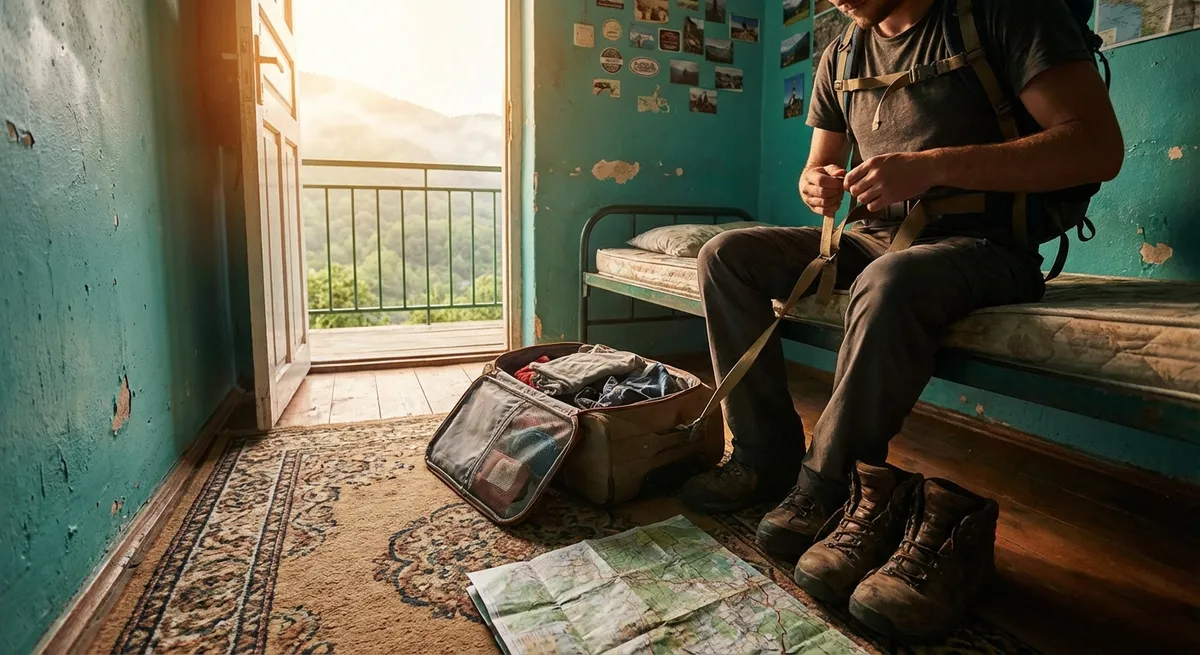
These five travel moves aren’t about strict rules. They’re about giving yourself space to be bold, curious, and fully awake wherever you touch down next.
Travel Move #1: Pack for Who You Want to Be, Not Every “What If”
Most people pack for disasters that never come. Adventurous travelers pack for freedom.
Instead of stuffing your bag with backup outfits and endless “just in case” items, build a kit that serves the traveler you want to be: present, unburdened, ready to move. Choose a single carry-on and make every item earn its space. Versatile clothing in a coordinated color palette, one pair of shoes you can walk miles in, and a second pair that can handle a surprise night out.
Use packing cubes to compress and sort; one cube for clothes, one for activewear, one for “essentials.” Keep a tiny “ready-to-go” pouch with passport, cards, a pen, and a photocopy of your documents so airport security and border checks are quick and stress-free.
The less you carry, the more you can do: sprint for that connecting train without a trolley, hop in a tuk-tuk without wrestling a giant suitcase, say “yes” when someone invites you to stay an extra night in a mountain village. Lighter bags create heavier memories.
Travel Move #2: Design One “Anchor Ritual” in Every New Place
New cities can feel overwhelming: new sounds, new smells, new routes. An anchor ritual is your way of stepping into that swirl with intention instead of letting it knock you off balance.
Choose a simple, repeatable ritual you’ll do every single morning or evening, no matter where you are. Maybe it’s walking to the same corner café at sunrise, journaling with a street view for ten minutes, or doing a short stretch routine on your hostel bunk before you face the day.
This ritual becomes your compass. It gives you a chance to observe the city waking up or winding down: vendors setting out fruit, buses exhaling at the curb, kids in school uniforms racing past. When someplace feels too chaotic, returning to your ritual resets your nervous system and your sense of direction.
You’ll start to notice the small changes—new faces, different pastries, shifts in the light—and those tiny details root you more deeply than any must-see checklist. Adventure feels bigger and safer when you have something familiar to come back to each day.
Travel Move #3: Chase One Daily Story, Not a Full Checklist
Instead of trying to “do everything,” aim to come home with one great story from each day on the road.
Wake up and choose a theme: “today I’ll follow the water,” “today I’ll say yes to invitations,” or “today I’ll get lost on purpose within a 1-mile radius.” Let that theme guide what you notice and where you wander. Hike along a coastline and follow the sound of waves to hidden coves; spend a day hopping between neighborhood bakeries comparing the flakiest pastries; ride the tram to the last stop just to see what lives at the edge of the city map.
When something unexpected happens—a missed bus, a sudden downpour, a stranger’s recommendation—treat it as the plot twist your story needed, not a problem to “fix.” Ask yourself, “If this were the best part of the day, how would I lean into it?” That mindset shift turns annoyances into adventures.
At night, jot down a few notes: who you met, what surprised you, what you smelled and tasted. You’re not documenting a checklist; you’re capturing a living, breathing story. Over time, your travels stop being a blur of landmarks and become a collection of vivid scenes you can step back into anytime.
Travel Move #4: Build Your Own “Safety Net of Courage”
Bold travel doesn’t mean reckless travel; it means knowing you’re prepared enough to push your edges without snapping them.
Before you leave, set up a lightweight safety net. Share your itinerary (even a rough version) with someone you trust. Upload scans of your passport and key documents to a secure cloud folder. Learn a handful of local emergency phrases—“I need help,” “hospital,” “police,” and “pharmacy”—and store the local emergency number in your phone.
On the ground, do small but powerful things: keep hotel business cards in your pocket for when maps fail, download offline maps, and carry a backup payment method separate from your main wallet. If you’re solo, trust your instincts—if a situation feels off, you don’t owe anyone politeness at the expense of your safety. Walk away, change plans, call for help if you need it.
The more solid your safety net, the bolder your choices can be. You’ll hike that extra trail, try the night market, or hop on the regional bus because you know you’ve laid a foundation that’s got your back.
Travel Move #5: Let Food Become Your Shortcut to Connection
Food is the quickest, most joyful way to plug into a place—and it can turn a regular trip into an unforgettable one.
Make it a mission to eat at least one meal a day that tells you something about where you are. Seek out markets at dawn, when farmers and vendors are setting up. Ask locals, “What do you eat when you really miss home?” rather than “Where’s the best restaurant?” That single question often leads you to tiny family kitchens, street stalls, or no-frills spots that hold generations of stories.
Say yes to a cooking class, or better yet, a home-cooked meal experience if it’s offered and feels safe. Watch how people eat: with their hands, chopsticks, bread, or spoons. Notice the spices, the rituals, the rhythm of the meal. Respect local customs and dietary norms; research ahead if you have allergies or restrictions and learn how to communicate them clearly in the local language.
Each dish becomes a memory trigger: the noodle shop that warmed you after a rainstorm, the seaside grill where strangers insisted you try “just one more bite.” Long after you’ve forgotten museum ticket prices or bus schedules, you’ll remember the taste of a city on your tongue.
Conclusion
Every unforgettable journey is built from small, intentional moves: the way you pack, the rituals you keep, the stories you chase, the safety net you weave, and the meals you share. You don’t need a perfect plan or endless funds to travel like this; you only need a willingness to trade heavy baggage—physical and mental—for curiosity and courage.
Next time you set out, try just one of these travel moves and watch how the trip bends toward something bolder. The world is wider than your itinerary, and it’s waiting for you to step into it with lighter bags, open eyes, and a heart ready for the next “yes.”
Sources
- U.S. Department of State – Traveler’s Checklist - Official guidance on documents, safety precautions, and preparation before international trips
- Centers for Disease Control and Prevention – Travelers’ Health - Up-to-date health advice, vaccines, and destination-specific safety information for travelers
- Transportation Security Administration – What Can I Bring? - Detailed rules on packing and carry-on items to help you streamline your luggage and airport experience
- National Geographic – Food and Travel Features - Stories and insights that highlight how food connects travelers to local culture around the world
- Lonely Planet – Solo Travel Tips and Advice - Practical guidance on staying safe, confident, and open to connection while traveling independently