Travel With a Story, Not Just an Itinerary
A list of attractions will keep you busy; a story will keep you awake to everything in between.
Before you go, decide the “theme” of your trip: are you following the path of ancient traders, chasing the world’s quietest sunrise, or eating your way along a coastline? That story gives your days a loose arc and makes every decision—train or bus, side street or main boulevard—part of a larger narrative.
Build a flexible “spine” for your journey: your arrival, your departure, and maybe one or two non‑negotiable stops. Let everything else breathe. Ask locals how they would spend a perfect free day. Notice what keeps catching your eye—old doors, street music, mountain silhouettes—and follow that thread.
When you travel with a story, getting lost is no longer a failure; it’s a plot twist. The missed ferry becomes chapter three, the surprise rooftop dinner with strangers chapter four. You’ll come home with more than photos—you’ll return with a journey that makes sense to you, not just to a guidebook.
Turn Everyday Moments Into Micro-Adventures
You don’t have to jump out of planes to feel the rush of discovery; you only have to treat ordinary moments like invitations.
Pick one everyday activity and do it the most local way possible. Need breakfast? Skip the hotel buffet and follow the smell of bread baking down a side street. Need to get across town? Try the tram, the shared taxi, the bike share, or the water bus. Even buying fruit at a neighborhood market can feel like a mini-expedition when you try something you can’t pronounce.
Set small, playful challenges: talk to three strangers and learn one local phrase from each; find a view of the city with zero other tourists around; spend one afternoon with no map, turning left or right on pure instinct. These tiny quests create sparks of memory in places where you might otherwise walk on autopilot.
When you frame your day around micro-adventures, boredom becomes nearly impossible. Every errand, every commute, every snack run is a chance for the city or landscape to surprise you.
Master the Art of the “Adventure Kit”
Travel feels freer when you know you’re ready for whatever the road throws at you. Think of your bag as a portable launchpad, not a burden.
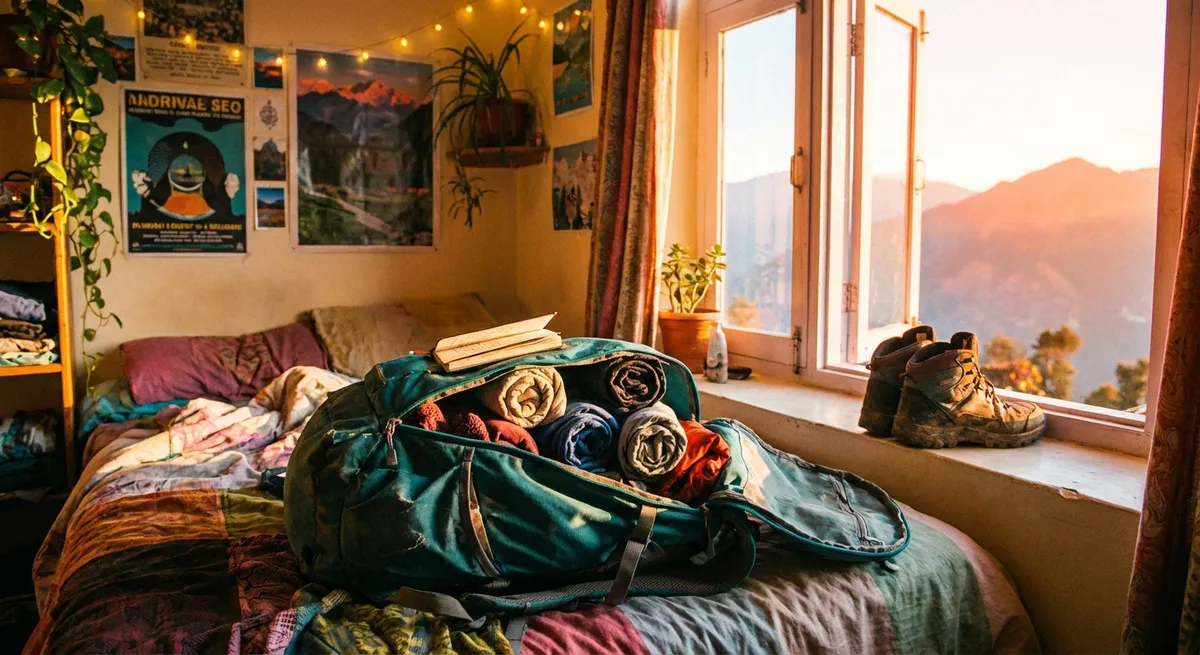
Build a lean “adventure kit” you can grab at a moment’s notice: a lightweight packable jacket, refillable water bottle, compact first-aid items, power bank, scarf or buff (for warmth, sun, or makeshift pillow), and a tiny notebook or notes app ready for names, directions, and sudden ideas. Add a photocopy of your passport, a backup credit card stashed in a different pocket, and digital copies of key documents stored securely online.
Know the basics of staying healthy and safe where you’re going—what water you can drink, how to handle altitude or heat, where the nearest clinic or pharmacy is. A few minutes of research can mean the difference between confidently hopping in a shared van to a remote waterfall and staying stuck in the hotel lobby.
The point isn’t to anticipate every problem; it’s to remove enough friction that saying “yes” to an unexpected opportunity feels natural. With the right essentials and a light load, a spur‑of‑the‑moment sunrise hike or last‑minute train ride becomes an easy decision, not a logistical nightmare.
Use Your Senses as Your Personal Guidebook
Guidebooks list “must‑see” sights. Your senses reveal the soul of a place.
Instead of racing between attractions, slow down and “travel by senses” for an hour. What does the city smell like at dawn—coffee and sea air, or wood smoke and fresh tortillas? How does the pavement change under your feet as you move from the old quarter to the riverfront? What sounds cut through the noise—a particular bird call, a prayer, a street vendor’s song?
Pick a spot—a park bench, a temple courtyard, a seaside promenade—and stay there longer than feels normal. Watch who passes by. Listen to the rhythm of conversations. Notice how people greet each other, how they carry groceries, how they take up space on sidewalks or buses. This quiet witnessing turns anonymous streets into living stories.
Later, when you think back on the trip, it’s often these sensory details—the taste of that grilled fish at dusk, the echo in a stone alley after rain, the way the wind shifted just before a storm—that rise to the surface. Training yourself to notice them as you travel makes every destination feel deeper, richer, and more alive.
Make Connection Your Boldest Souvenir
The most transformative travel tip isn’t about packing or planning; it’s about people.
Wherever you go, treat curiosity and kindness as your primary currencies. Learn a handful of local phrases—“hello,” “thank you,” “this is delicious,” “what do you recommend?” and “can you write that down?” Open with them, even if your pronunciation is messy. That effort often unlocks smiles, stories, and invitations that no app can predict.
Say yes to safe, shared experiences: a neighborhood festival someone mentions at the café, a group hike organized by a local outdoor club, a cooking class where you’re the only foreign guest. These moments put you inside the daily life of the place instead of watching it from behind glass.
At the same time, protect your boundaries. Share your general plans, not your room number. Meet new people in public places. Let a trusted contact know where you’re headed. Connection doesn’t require recklessness; it requires presence. When you show up fully—listening more than you speak, respecting local customs, tipping fairly, and remembering names—you create a trail of relationships instead of just a trail of receipts.
Those friendships, however brief, become the invisible map that pulls you back to the world again and again.
Conclusion
Travel isn’t only about crossing borders; it’s about crossing thresholds—out of habit and into possibility. When you give your trip a story, fill your days with micro‑adventures, carry a ready-for-anything kit, follow your senses, and treat connection as your greatest treasure, every journey becomes less about escape and more about expansion.
The world is waiting in the spaces between your plans: in the alley you almost don’t explore, the sunrise you nearly sleep through, the conversation you’re shy to start but begin anyway. Pack light, walk open, and let the road surprise you.
Sources
- U.S. Department of State – Traveler’s Checklist - Official guidance on documents, safety, and preparation before traveling abroad
- Centers for Disease Control and Prevention – Traveler’s Health - Up-to-date health advice, vaccines, and destination-specific safety information
- World Health Organization – International Travel and Health - Research-based recommendations on staying healthy while traveling
- Lonely Planet – Travel News & Inspiration - Articles and insights on destinations, culture, and on-the-road experiences
- National Geographic Travel - In-depth storytelling and photography that highlight sensory, cultural, and adventurous aspects of travel