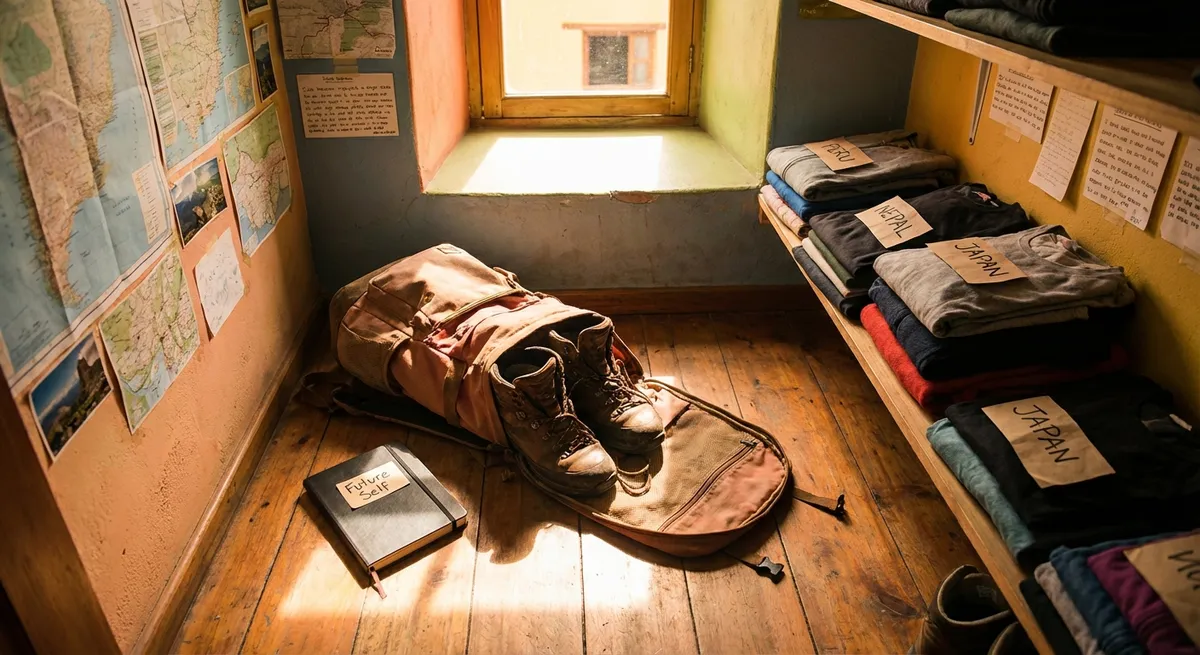
This guide shares five powerful, practical travel tips that don’t just make your trip smoother—they make it more alive. Think of them as your launch codes for a more fearless, story‑worthy way of moving through the world.
Travel With a Theme, Not Just an Itinerary
Most travelers collect sights. Adventurous travelers collect threads—patterns that stitch their journeys together.
Instead of building a trip around “top 10 things to do,” choose a personal theme that excites you and let it guide your days. Maybe your theme is “rooftops and viewpoints,” so every city becomes a quest for sunset perches. Or “daily markets,” where your first mission each morning is to find where locals buy their bread, fruit, and spices. You’ll start noticing hidden corners: back alleys leading to mom‑and‑pop bakeries, tiny cafés tucked above hardware stores, quiet neighborhood parks that never make the guidebooks.
Your theme doesn’t have to be profound. Street art, independent bookstores, rivers and bridges, night food stalls, local music venues—these simple obsessions create a storyline. Suddenly, you’re not just walking around; you’re hunting for a specific flavor of experience. You’ll remember your trip not as a blur of “nice places,” but as the journey where you followed jazz basements across Europe or chased local noodle joints through Southeast Asia.
Anchoring your travels to a theme also helps when you’re overwhelmed by options. Ask yourself: “What would fit my theme today?” You’ll experience less FOMO, more focus, and far richer memories.
Pack Like a Problem Solver, Not a Tourist
What you carry determines how freely you move. Every extra “just in case” item is a tiny anchor that slows you down. The goal isn’t minimalism for its own sake—it’s mobility.
Before adding anything to your bag, imagine a real scenario where you’d use it. If you can’t easily picture it, leave it. Focus on versatile gear: clothes you can dress up or down, shoes that handle both cobblestones and mild hikes, layers that work across climates. A compact, high‑quality daypack can be the difference between ducking into a spontaneous side trip and skipping it because your main bag is too heavy or awkward.
Travel-sized essentials—a microfiber towel, refillable bottles, a lightweight scarf or buff, a simple first-aid kit—quietly solve problems before they grow teeth. A scarf becomes a picnic blanket in the park, a pillow on a night bus, or a respectful cover in temples. Packing cubes and compression bags don’t just save space; they protect your energy. When your bag is organized, you’re more likely to say yes to early trains, last-minute detours, and quick checkouts.
Travel insurance, copies of important documents stored online, and a little digital backup (like offline maps and translation apps) are invisible gear—but they’re part of your packing strategy, too. When you prepare for mishaps, you’re freer to embrace the unexpected, because you’re not afraid that one small problem will derail your entire trip.
Learn the “Local Keys” That Unlock Any Destination
Every place has a rhythm, and there are a few simple keys that help you tune into it fast.
Start with language. Learn 15–20 words and phrases in the local tongue—hello, please, thank you, excuse me, yes, no, how much, delicious, beautiful, and a simple “I’m learning, can you speak slowly?” Even clumsy attempts shift how people see you. You’re no longer a passing stranger demanding English; you’re someone trying to meet them halfway. That tiny bridge can earn you smiles, insider tips, or an extra helping of something homemade.
Next, pay attention to how locals move through a day. When do cafés fill up? When does the main market feel most alive? Is the city built around late dinners, long lunches, or morning bustle? Aligning your day with the local clock reveals a completely different story than one lived only on “tourist time.”
Use public transport at least once—metro, bus, shared minivan, tuk‑tuk, tram. It’s where you feel the pulse of a place: kids in school uniforms, workers heading home, street snacks passed through bus windows. You’re not just moving from A to B; you’re letting the city carry you the way it carries its own people.
Finally, ask specific questions, not generic ones. Instead of “What should I see?” try “If you had a free afternoon, where would you go?” or “Where do you take friends from out of town?” These prompts often lead to secret viewpoints, neighborhood joints, or small rituals that never show up on maps—but linger in your memory for years.
Turn Borders Into Bridges: Safer, Bolder Connections
The most vivid travel memories often come from the people you meet—but connection feels riskier when you’re far from home. The art is in being open and adventurous, without being naive.
Stay in places that naturally encourage interaction: small guesthouses, hostels with quiet common areas, co-living spaces, or locally run homestays. Many hostels and guesthouses offer walking tours, cooking lessons, or family dinners that make it easy to meet both travelers and locals in a low-pressure environment. Say yes to at least one shared experience early in your trip; those first connections often shape your entire route.
At the same time, set clear boundaries with yourself. Share your general plans, not exact room numbers or rigid itineraries. Meet new people in public spaces first. Trust your intuition: if someone’s energy feels off, you don’t owe them your time, your story, or your contact information. You can be kind without being available.
Technology, used wisely, can be a powerful safety net. Share your live location or check‑in times with a trusted friend back home. Save emergency numbers and your embassy’s contacts offline. Use well-reviewed transportation apps where available. These quiet precautions give you permission to say yes to bold experiences: a sunrise hike with a small group, a last-minute road trip with new friends from your hostel, or a late-night jazz bar in a neighborhood you might have skipped alone.
The point isn’t to erase risk. It’s to respect it—and then step forward anyway, with eyes open and a heart ready for rare, genuine moments of human connection.
Leave Space for Serendipity: Build Flexibility Into Your Plans
A packed schedule looks efficient on paper but suffocating on the road. The most electric moments of travel—the old woman who invites you for coffee, the street parade you stumble into, the local who offers a ride to a viewpoint at dawn—almost never fit inside fixed plans.
Plan anchors, not chains. Book your first few nights and any major inter-city transport you truly need, then leave buffer days and open blocks of time. Think of your trip as a spine with flexible ribs. The spine holds you steady; the ribs can stretch, bend, and expand as opportunities appear.
When you reach a new place, give yourself at least one “aimless” walk. No agenda, no must-see list—just your feet, your curiosity, and perhaps one loose intention: follow the sound of music, seek the smell of baking bread, trace the waterline. Aimless time is not wasted time; it’s when your senses finally catch up to your body. You notice cracked tiles, balcony plants, children’s games in side streets—the texture that makes a place real.
Also, practice the power of intentional no. Saying no to one more museum or rushed side trip can mean saying yes to an unplanned sunset by the river, a lingering conversation, or simply the rare luxury of doing nothing in a beautiful somewhere. Flexibility is not laziness; it’s a strategy for catching the magic that rigid plans can’t anticipate.
Conclusion
You don’t need to be fearless, rich, or endlessly experienced to travel boldly. You just need to move with intention: pack for movement, not for comfort alone; choose a theme that makes every city a quest; learn the “local keys” that open doors; protect your safety so you can say yes more often; and leave generous space for the world to surprise you.
Somewhere out there is a version of you who walks lighter, notices more, and feels at home in unfamiliar places. The secret is this: you don’t find that person at the end of the journey—you create them with every choice you make along the way.
Zip up your bag. Open your map. Decide who you want to be when you step off that next bus, train, or plane—and travel like you’re already becoming them.
Sources
- U.S. Department of State – Traveler’s Checklist - Official guidance on documents, safety preparations, and practical steps before traveling abroad
- Centers for Disease Control and Prevention – Travelers’ Health - Up-to-date health advisories, vaccination recommendations, and region-specific health information for travelers
- World Tourism Organization (UNWTO) - Data and insights on global tourism trends, useful for understanding travel flows and peak seasons
- Rick Steves – Packing Smart and Light - Practical advice on minimalist packing strategies and versatile gear selection
- Lonely Planet – Responsible Travel Tips - Suggestions for respectful, sustainable behavior that helps travelers connect more meaningfully with local communities