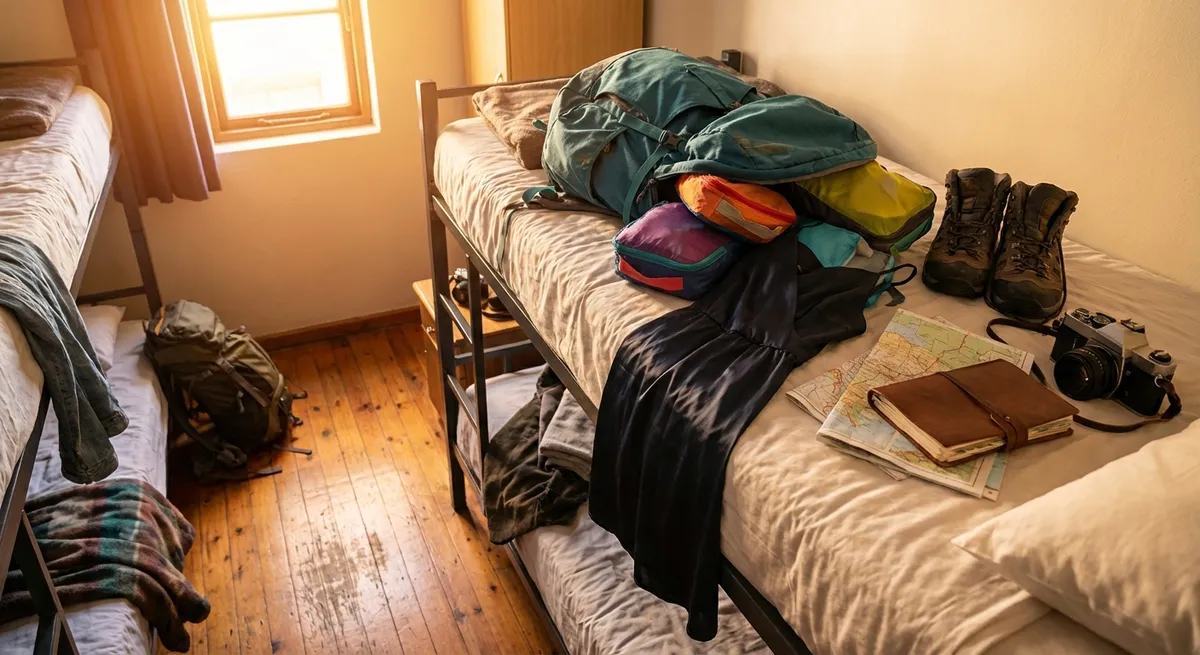
Turn Your First Hour Into a Ritual, Not a Rush
The tone of your trip is set in the first 60 minutes after you arrive. Most travelers stumble through check-in, scroll maps in a panic, and collapse on the bed. You can do better—set a simple, repeatable arrival ritual that tells your brain, “You’re here. This matters.”
Drop your bag, drink a full glass of water, and walk one slow, deliberate loop around your immediate neighborhood—no headphones, no calls, just your senses turned up. Notice the smells from street food stalls, the rhythm of traffic, the way people greet each other. Duck into a corner shop to buy one local snack and ask the cashier how to say “thank you” correctly—even if you already know it. This tiny interaction anchors you to the place.
Back in your room, write three things in a notebook: what surprised you, what intimidated you, and what you’re most curious about. This combination of movement, observation, and reflection calms your nervous system, fights jet lag, and flips your mindset from “Where is everything?” to “What can I discover next?”
Ask for One Wildly Specific Recommendation
Generic questions get generic answers. Instead of asking locals, “What should I see?” or “Where should I eat?”, go intentionally narrow: “Where would you go on a rainy Tuesday if you had two hours and ten dollars?” or “If your best friend visited for one day, where would you take them for sunset?”
These oddly precise questions light people up. They stop reciting tourist checklists and start thinking about their real lives—hidden bakeries where they treat themselves, a stairway viewpoint they escape to after work, a food stall that reminds them of childhood. You’re not just collecting tips; you’re borrowing their emotional map of the city.
Try this with baristas, rideshare drivers, hostel staff, and people sitting near you in parks or cafés. Jot their answers in your notes app and follow at least one every day, even if it’s slightly out of your way. The best travel memories are often the ones that weren’t optimized, just followed—like a breadcrumb trail of human recommendations instead of algorithmic ones.
Travel With a Theme, Not Just an Itinerary
Most itineraries are lists of places. Transform yours into a story by choosing a personal theme that shapes your days. It could be “rooftops and viewpoints,” “historic bookshops,” “night markets,” “urban nature,” or “lost rivers of the city.” The theme becomes your lens, turning random wandering into a focused treasure hunt.
If your theme is “water,” you might trace a city’s old port, follow a canal by bike, find the smallest local ferry, and end your day watching reflections from a bridge. If your theme is “old signs,” you’ll notice faded shopfronts, transit plaques, and decades-old typography that most people walk past. Suddenly, you’re not just visiting—you’re investigating.
This approach works on any budget and in any destination, from mega-cities to tiny villages. It keeps you curious on day six as much as on day one, and it gives your trip a unique shape you can’t copy from a blog. When you look back, you won’t just remember “that Europe trip”; you’ll remember “the journey where I followed every rooftop I could climb.”
Pack a “Tiny Courage Kit” Instead of Just Gear
Most packing lists focus on survival: chargers, socks, adapters. Useful, sure—but what about the items that nudge you to be braver, more open, more present? Build a tiny courage kit: a handful of light, intentional objects that remind you to step beyond your comfort zone.
Slip in a small notebook for asking people to write one sentence in their language. Bring a compact instant camera or a mini photo printer and give photos to people you meet. Carry a simple calling card with your first name, email, and a blank space where you can write where you met—perfect for turning a five-minute chat into a lasting connection.
Add one item that encourages you to sit still: a pocket-sized sketchbook, a slim poetry book, or a foldable reusable cup that nudges you to actually sit down for coffee instead of rushing. None of these weigh much, but they reshape your behavior. Instead of just “seeing more,” you’ll be talking more, noticing more, daring more.
Leave One Day Unscripted—On Purpose
We plan trips like we’re afraid of wasting a second. But the memories you bring home rarely come from the most scheduled days—they surface from the hours when things went off-script. Instead of resisting that, build it in. For every four or five days of travel, declare one day almost completely unplanned.
On that day, choose only a starting direction and one loose anchor—like a market you want to end up at or a neighborhood you’d like to reach by sunset. Use public transport without routing every step; get off when a stop name or view out the window intrigues you. Follow the sound of live music, the smell of bread, the flash of color in an alleyway mural.
If you feel “unproductive,” that’s your routine talking, not reality. This unscripted day teaches your brain to trust your instincts again, to respond instead of control. Ironically, these are often the days when you stumble into street festivals, grandmother-run restaurants, or viewpoints with no one else around. You didn’t lose a day—you gained the one you’ll be talking about for years.
Conclusion
Travel doesn’t become unforgettable by accident; it becomes unforgettable when you travel like it matters. When you land with a ritual instead of a rush, ask questions that crack open real stories, chase a personal theme, carry tools for courage, and protect one unscripted day, something shifts. Destinations stop feeling like backdrops and start feeling like co-authors.
Your next trip doesn’t need more stuff or more status—it needs more intention. Pack lighter, notice harder, ask better questions, and leave room for the world to surprise you. The map is just the outline. How you move through it—that’s where the adventure lives.
Sources
- U.S. Department of State – Traveler’s Checklist - Practical pre-departure guidance on documents, safety, and preparation
- Centers for Disease Control and Prevention: Travelers’ Health - Up-to-date health advice, vaccines, and destination-specific recommendations
- BBC Travel – Why Getting Lost Is the Best Way to Travel - Explores the value of unstructured exploration while traveling
- Lonely Planet – How to Connect with Locals When You Travel - Tips on asking better questions and building real connections on the road
- Harvard Business Review – Why You Need a Vacation - Research-backed insight on how intentional time away can reset your mindset