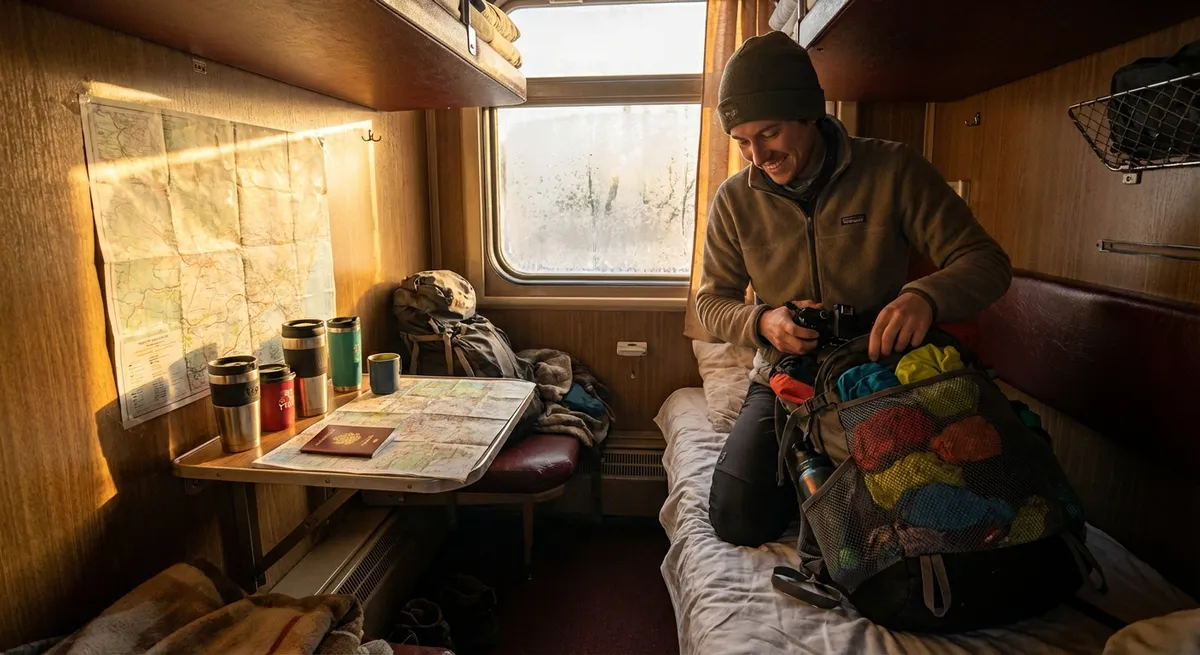
These five powerful shifts in how you travel will help you squeeze every drop of wonder from your next trip—no matter your budget, destination, or comfort zone.
Treat Your Bag Like a Basecamp, Not a Closet
Your backpack or suitcase isn’t just storage—it’s your mobile basecamp, and what you put in it can either weigh you down or set you free.
Pack for movement, not for “just in case.” Choose versatile clothes that layer well, dry quickly, and mix into multiple outfits. A lightweight shell, a warm mid-layer, and breathable base layers can carry you from misty mountain mornings to rooftop bar evenings. Anchor your bag with one pair of comfortable, broken-in walking shoes; if you add a second pair, make it something compact and different enough to handle another terrain or vibe.
Prioritize gear that unlocks experiences: a compact daypack for spontaneous hikes or street wandering, a swimsuit even if you’re headed inland (you never know about hot springs, hotel pools, or lakes), and a small microfiber towel that lets you say yes to surprise swims or hostels.
Create a simple packing ritual before each move: empty your bag, repack with intention, and check your “big three”—passport/ID, phone, and payment method. Treat your bag like a reliable expedition basecamp. When it’s dialed in and light enough to carry without thinking, you’re more likely to say yes to the unexpected trail, the last-minute detour, or the long walk home under foreign streetlights.
Plan for Anchors, Leave Space for Detours
Rigidity kills adventure; chaos kills momentum. The sweet spot is a trip that has a skeleton—but lets you flesh it out in real time.
Instead of planning every hour, choose a few non-negotiable “anchors” for each destination: a sunrise hike, a museum or historic site that truly excites you, a neighborhood you want to wander, a local food you’re determined to try. Put those on the calendar, then defend generous blank space around them.
Use the first day in any new place as your orientation lap. Walk without a tight schedule. Note down streets that feel intriguing, cafés full of locals instead of screens, small parks, strange doors, and street corners that hum with life. These become your waypoints for later days.
Have a “soft plan” for bad weather and burnout: a shortlist of indoor options (libraries, markets, galleries, hammams, bathhouses, or cafés with views) and one low-energy option for when you’re tired (picnic in a park, people-watching on a square, a slow ferry ride).
Think of your itinerary like a flexible trail map: key check points you aim for, side paths you’re free to explore, and enough open terrain to let serendipity lead when local tips or sudden invitations appear.
Walk Like a Local Scout, Not a Tourist on Rails
Your feet are the best guidebook you’ll ever carry. The way you move through a place changes what it reveals to you.
Whenever it’s safe and practical, walk the “in-between” spaces instead of jumping from one attraction to the next by taxi or ride-share. The alleys between landmarks, the side streets behind main squares, and the blocks between bus stops are where cities whisper their secrets: kids playing football, grandmothers chatting from balconies, steam rising from street food stalls you won’t find on any top-10 list.
Adopt a “scout’s eye” as you walk: look up at balconies and eaves, read the posters taped to poles, peek into courtyards if they’re clearly public, and notice what the locals carry home—bags of produce, specific bakery boxes, sports gear. These are clues to where real life happens. Mark interesting spots on your phone map as you go; tomorrow’s breakfast, sunset view, or dinner could be hidden in today’s wander.
Use transit like a local, too. Hop on the tram, subway, or shared minibus at non-rush hours, and ride a few extra stops past your destination just to see how the city changes. Public transport lines sketch out the living veins of a place; riding them lets you feel the city’s rhythm instead of just its postcards.
Always balance curiosity with awareness: stay in well-lit, populated areas; trust your instincts; and if a street feels wrong, turn back without overthinking it. Walking like a scout means tuning in, not tuning out.
Turn Every Meal Into a Cultural Expedition
Food is one of the fastest, most delicious ways to understand where you’ve landed. Treat each meal as a micro-adventure rather than just a refuel stop.
Start with what locals actually eat. Before you go, look up a few signature dishes and how they’re traditionally served. Once you arrive, watch which stalls have long lines of locals, which cafés are busy at odd hours, and which bakeries sell out early. That’s your compass.
When you sit down, ask for a recommendation instead of defaulting to the safest choice. Tell the server you’d like something typical, seasonal, or “what you’d order for a friend visiting for the first time.” This simple question has launched countless travelers into unforgettable meals and conversations.
Street food, markets, and simple neighborhood spots often reveal more than white-tablecloth restaurants. Visit a morning market to see what fills people’s baskets. Grab picnic supplies—fresh bread, local cheese, fruit in season—and eat on a riverbank, public square, or hill with a view. The combination of place and flavor etches the memory deeper.
If you have dietary restrictions, learn a few key phrases in the local language and carry them written down. This opens doors and shows respect, while keeping you safe. Remember that sharing a table or bar counter can turn a meal into a story; leave your headphones in your pocket and your curiosity on the table.
Capture Moments, But Leave Room for Mystery
Your camera or phone can be either a wall between you and the world or a bridge into it, depending on how you use it.
Instead of chasing perfect shots, look for honest ones: the street musician lost in their music, the vendor rearranging oranges into a perfect pyramid, the buddy laughing under too-heavy backpacks in a bus station. Take a moment to actually experience the scene before you frame it. What does it smell like? How loud is it? What emotion is in your chest? Let that guide your photo.
Build small rituals to stay present. For example: the first five minutes in any new spot—no photos. Just look, listen, and breathe. Or decide you’ll only take a few intentional shots each hour, and the rest of the time your phone stays pocketed. This creates space for memories your camera can’t catch: the way cobblestones feel underfoot, the warmth of a teacup in your hands, a fleeting glance that says “we’re both strangers here, but we get it.”
Use your camera as a conversation starter instead of just a recording device. Ask permission before taking portraits, show people their photo, and offer to send it to them. This turns an image into an exchange, a mutual moment instead of a silent transaction.
And keep a tiny analog record—a pocket notebook or notes app—where you jot down one or two details each day: a smell, a street name you loved saying aloud, a small kindness. Years later, these fragments will pull whole days back into focus in a way no algorithm-filtered feed ever could.
Conclusion
The best travel tips aren’t just hacks for cheaper flights or lighter bags—they’re invitations to move through the world more awake. When you treat your backpack like a basecamp, your itinerary like a flexible trail, your feet like your best guides, your meals like cultural expeditions, and your camera like a bridge rather than a barrier, every journey—near or far—becomes rich with possibility.
You don’t need a perfect plan, a huge budget, or a once-in-a-lifetime destination. You need the courage to show up curious, pay attention to the details most travelers rush past, and leave just enough space in your days for surprise to find you.
The next time you step out your door, travel like the story is already waiting—and you’re just walking toward it.
Sources
- U.S. Department of State – Travel Tips - Official checklist and guidance for preparing documents, safety, and logistics before international travel
- Centers for Disease Control and Prevention – Travel Health - Up-to-date health advice, vaccines, and region-specific travel health notices
- National Geographic Travel - Inspiration and insights on culturally aware travel, photography, and exploration
- Lonely Planet – Travel Advice - Practical tips on packing, planning, public transport, and on-the-ground travel strategies
- Harvard Business Review – How Vacations Affect Your Brain - Research-backed perspective on why time away and new environments benefit your mind and well-being