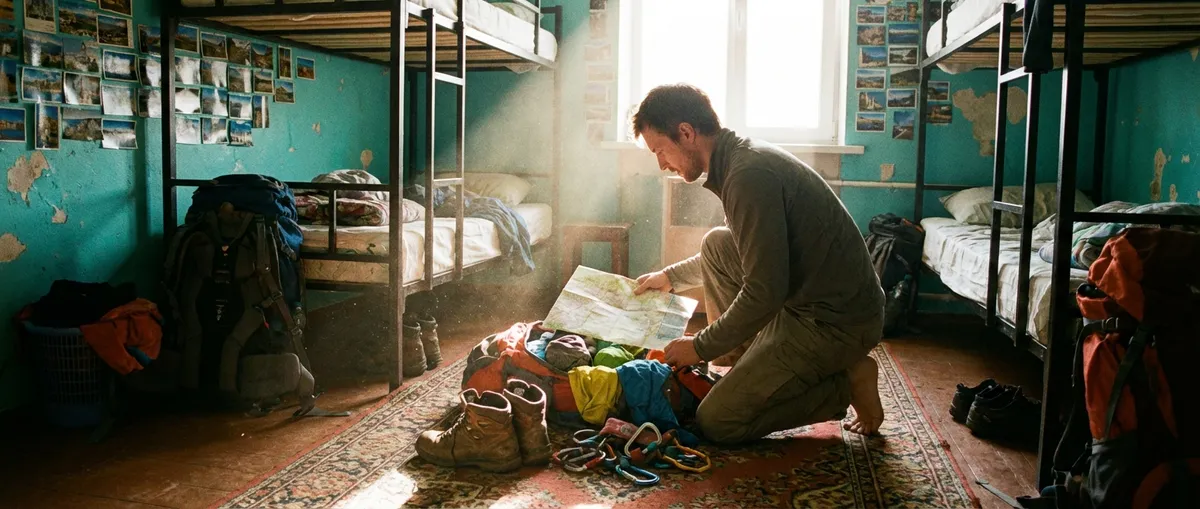
Below are five electric, field-tested travel moves that don’t just get you from A to B—they open up the in-between.
1. Pack a “Yes Kit” That Makes Spontaneity Easy
Spontaneous adventures don’t happen by accident; they happen because you’re ready when opportunity knocks.
Build a tiny “Yes Kit” that lives in your daypack: compact swimwear, a microfiber towel, a portable phone charger, a change of socks, a lightweight scarf or sarong, and a small cash stash in the local currency. This isn’t just packing; it’s pre-approval for last-minute detours—midnight hot springs, surprise rooftop invitations, unplanned hikes, or a random bus to a lookout the locals swear by.
By keeping your kit light and always ready, you remove the friction that makes you hesitate. You stop asking, “Can I do this?” and start asking, “How far can this go?” The best travel stories usually begin with, “I wasn’t planning to, but…”
2. Let One Obsession Shape Your Entire Route
Instead of trying to “see everything,” choose one obsession and let it pull you across the map like a magnetic field.
Maybe it’s chasing historic coffee houses, tracking down old train lines, finding live jazz bars, street murals, or mountain viewpoints locals whisper about. Build your itinerary around that single thread. Suddenly, your journey isn’t a checklist—it’s a quest.
This focus changes how you move. You’ll wander down side streets hunting for that rumored bakery, end up sharing tables with strangers who know the best hidden spots, and find yourself in neighborhoods you never would’ve visited if you’d only followed guidebook highlights. Depth beats breadth—and obsession creates depth.
3. Use “Micro-Detours” to Break Your Routine Wide Open
You don’t need an extra week off; you need better detours.
Wherever you’re headed—airport, museum, work event—add a deliberate 20–60 minute “micro-detour.” Get off the tram one stop early and walk. Choose the long way to the hostel that passes through a market. Step into one random café or bookshop that looks alive. Follow the sound of music, the smell of grilling food, or a line of locals that clearly know something you don’t.
These tiny pivots turn transition time into discovery time. You’ll catch neighborhoods in their real rhythm, not just their tourist version. And when your trip is over, the stories you’ll tell won’t be about the attraction itself—they’ll be about who you met and what you stumbled into on the way there.
4. Turn Every Meal Into a Doorway, Not Just a Refuel
Food is the fastest shortcut into the soul of a place—if you treat eating as exploration, not just maintenance.
Skip the familiar chains, even when you’re tired. Instead, ask someone who isn’t trying to sell you anything (a barista, a bookstore clerk, a taxi driver off-shift, a museum guard) where they actually eat. Say yes to at least one dish you’ve never heard of. Sit at the bar or communal table where conversations happen. Learn how to say, “What do you recommend?” in the local language and mean it.
As you eat, pay attention: how loud is the room? How long do people linger? What’s on every table? This isn’t just dinner; it’s a crash course in how people here celebrate, unwind, argue, and connect. You’ll leave full—but you’ll also leave tuned into the heartbeat of the place in a way no landmark can give you.
5. Travel with One Brave Question and Ask It Everywhere
Pack a question. Not a metaphorical one—an actual sentence you’ll carry from city to city, country to country.
It might be:
- “What do you love most about living here?”
- “If I had just one day in this town, what should I not miss?”
- “Where do you go when you want to feel calm?”
- “What’s one thing travelers misunderstand about this place?”
Ask this question of drivers, bartenders, hostel workers, fellow travelers, and people sitting alone at the next table who give you that open, curious vibe. The answers will redraw your map again and again. You’ll collect hidden viewpoints, unsung cafés, small-town festivals, sunrise spots, and raw, honest insights about the place you’re standing in.
In the end, your question becomes a thread connecting all your journeys—a human atlas of memories drawn not just from where you went, but from who you dared to talk to.
Conclusion
Adventure isn’t about having the perfect itinerary, the biggest budget, or the trendiest destination. It’s about how ready you are to say yes, how deeply you’re willing to follow your curiosity, and how bravely you lean into the unknown edges of each day.
Pack for possibility, not perfection. Let one obsession lead you off the main road. Bend your routes with micro-detours. Turn every meal into a portal. Carry one brave question and let it open doors. When you travel this way, the world stops being a backdrop and starts becoming a co-conspirator in your next great story.
The ticket is just paper. The real journey begins the moment you decide to move through the world like it’s inviting you in.
Sources
- U.S. Department of State – Traveler’s Checklist - Practical guidance on documents, safety, and preparedness for international travel
- Centers for Disease Control and Prevention – Travel Health - Up-to-date health recommendations, vaccines, and destination-specific advisories
- Lonely Planet – Travel Inspiration & Tips - Articles on travel styles, local experiences, and ways to explore beyond standard tourist routes
- National Geographic Travel - In-depth stories and photography that highlight cultural immersion and offbeat exploration
- BBC Travel - Features on local perspectives, food culture, and unique angles on destinations around the world