Design a “First Day Script” That Kills Jet Lag and Fear at the Same Time
The first 24 hours in a new place can make or break your momentum. Instead of stumbling through in a fog of jet lag and confusion, script your first day like it’s the opening scene of a movie.
Before you leave, pick three non‑negotiables for arrival day: a neighborhood to walk, a local food to try, and a simple “win” (like buying a transit card or learning a basic phrase in the local language). Land, drop your bags, splash water on your face, and get outside—sunlight and movement help reset your body clock more effectively than just napping in a dark room. Choose a walkable route that passes a park or waterfront, so you can orient yourself to the city’s pace: How fast do people walk? Where do they gather? What’s the soundtrack—street musicians, traffic, birds?
When you sit down for that first local meal, ask your server or the person next to you, “If you had one free afternoon in this city, where would you go?” You’ll often get a suggestion that never appears in guidebooks. By the time you go to sleep, you’ve already beaten jet lag with sunlight and movement, begun to understand the city’s rhythm, and had your first unscripted interaction. That’s not just arrival—it’s ignition.
Turn Your Bag Into a Mobile Basecamp, Not a Portable Closet
Most people pack to avoid inconvenience; seasoned travelers pack to invite freedom. The goal isn’t to bring your whole life with you—it’s to carry just enough to say “yes” to almost anything.
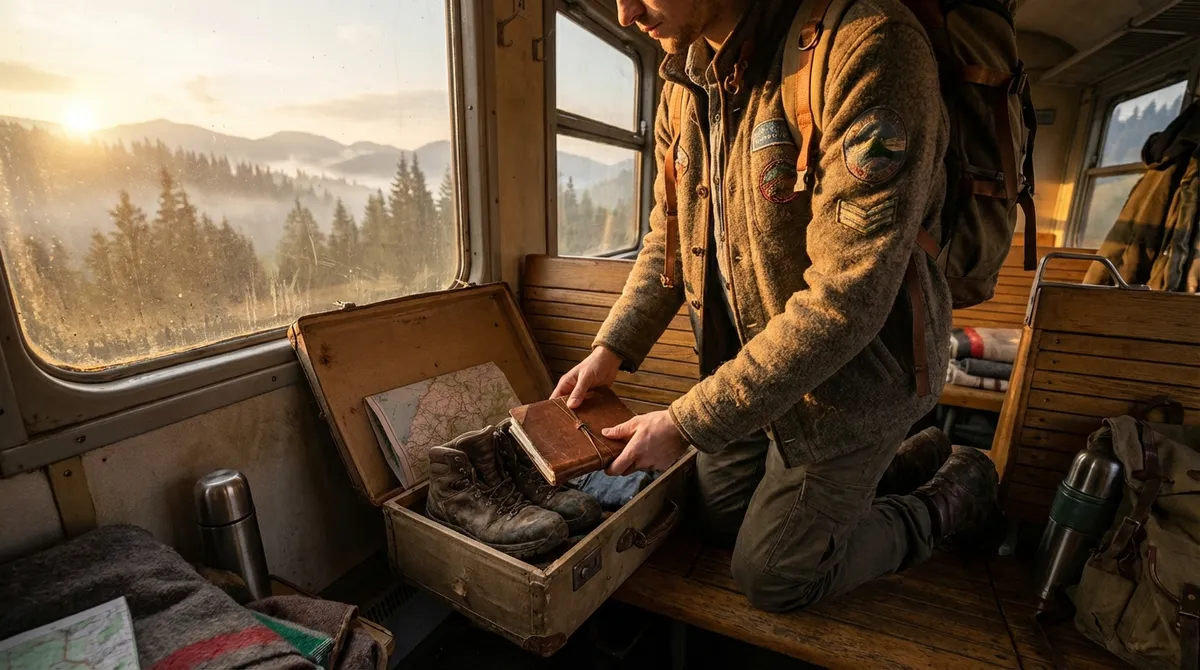
Think of your main bag as a basecamp and your daypack as your summit pack. In your basecamp: versatile layers (like a breathable long‑sleeve you can dress up or down), one “respectable” outfit for temples, churches, or last‑minute dinners, and a compact kit with essentials (meds, bandages, mini sewing kit, a photocopy of your passport). In your summit pack: ultra‑light rain shell, reusable water bottle, packable tote, a tiny power bank, and a scarf or bandana that doubles as sun protection, blanket, or makeshift pillow. Choose fabrics that dry overnight in a hotel sink, so you can wash as you go and stay light.
The lighter your bag, the more you can pivot in real time—jumping on a last‑minute train, walking an extra 5 km to chase a sunset, or saying yes when a local invites you to a beach you didn’t plan for. Minimal gear doesn’t mean minimal experience; it’s the opposite. When your stuff stops weighing you down, suddenly the world feels a lot more climbable.
Use Curiosity as Your Compass, Not Just Your Map App
Navigation apps will get you where you’re going. Curiosity will get you where you didn’t know you needed to be. The most electric moments on the road almost never happen on the “Top 10” lists—they spark when you follow a thread of interest just a little bit further.
Start with an anchor—maybe a museum, a market, or a viewpoint. On the way there, look for “friction points”: street art that makes you pause, a side alley full of plants, a coffee shop unexpectedly packed with locals. Give yourself permission to detour for 15 minutes every time something pulls your attention. Ask one question per stop: “Who painted this?” “Why is everyone lining up here?” “What does that sign say?” Curiosity is your ticket to stories.
Shift your research, too. Instead of only searching “best things to do in X,” look up niche interests: “underground music scene,” “local women‑run cooperatives,” “city hiking trails,” “community gardens.” When you land, follow those threads in person. This approach turns the city into a living puzzle—one where the pieces you collect add up to a version of the place that’s uniquely yours, not just what the algorithm recommends.
Make One Bold Ask in Every Destination
Every trip has at least one moment when you’re standing in front of a closed door—literal or metaphorical—and you have a choice: turn away or knock. The travelers who come home with the wildest stories almost always have one thing in common: they’re willing to ask.
Decide before you go: in every new city, you’ll make one bold, respectful ask. It might be asking a local vendor if you can watch how they prepare a dish. Asking at your guesthouse if any staff are willing to show you their favorite neighborhood after their shift. Asking a dive shop if you can ride along on an early‑morning boat just to see the coastline wake up. You’ll hear “no” sometimes, and that’s okay. But you’ll also hear “sure, why not?” more often than you think.
The key is to combine courage with consideration. Be clear that you respect their time, offer to pay when appropriate, and read the room—if someone is busy or uncomfortable, back off graciously. Over time, this habit rewires how you travel. You stop standing on the outside looking in and start stepping, gently, into the backstage of everyday life in the places you visit.
Capture the Journey for Future You, Not Just for the Feed
Photos and videos are amazing, but they rarely capture the full texture of a trip—the smells, the overheard conversations, the small internal shifts. That’s where intentional documenting turns a good trip into a personal time capsule.
Each day, capture three things for “future you”:
- One sentence about something that surprised you.
- One sensory detail (a smell, a sound, a texture).
- One micro‑win (something you did that you’re proud of, even if tiny).
You can write this in a pocket notebook, your phone’s notes app, or even as voice memos recorded while you walk. Take at least a few photos just for yourself—unfiltered, imperfect, the way the day really felt. Snap menus so you remember dishes you loved, street corners that became landmarks, and small scenes like an old man feeding birds or kids playing football in an alley.
When you come home, these fragments become fuel: for stories you tell friends, for social posts that go deeper than “wish you were here,” and for the next version of you who’s thinking, “Can I really book that solo trip?” You’ll have proof on record that you’ve already done hard, beautiful, brave things—even on days that just looked like “vacation” from the outside.
Conclusion
The most powerful travel tips aren’t about shaving five minutes off airport security or rolling your socks just right. They’re about shifting how you move through the world so every journey feels charged with possibility. Script your first day to launch strong, pack like someone who’s ready to pivot, let curiosity tug you off the main roads, dare to make one bold ask, and document the small moments that quietly change you.
Do that, and your trips stop being a break from your life—and start becoming the training ground for a bigger, braver version of it.
Sources
- Centers for Disease Control and Prevention – Jet Lag and Sleep – Evidence‑based guidance on managing jet lag with light exposure and routines
- Mayo Clinic – Jet Lag Disorder – Medical overview of jet lag and practical strategies to reduce symptoms
- Transportation Security Administration (TSA) – What Can I Bring? – Official rules on carry‑on items and travel essentials for smoother packing
- Lonely Planet – Travel Tips and Articles – Curated articles on packing light, navigating new cities, and connecting with locals
- National Geographic Travel – Storytelling and Photography – Advice on capturing more meaningful travel photos and moments