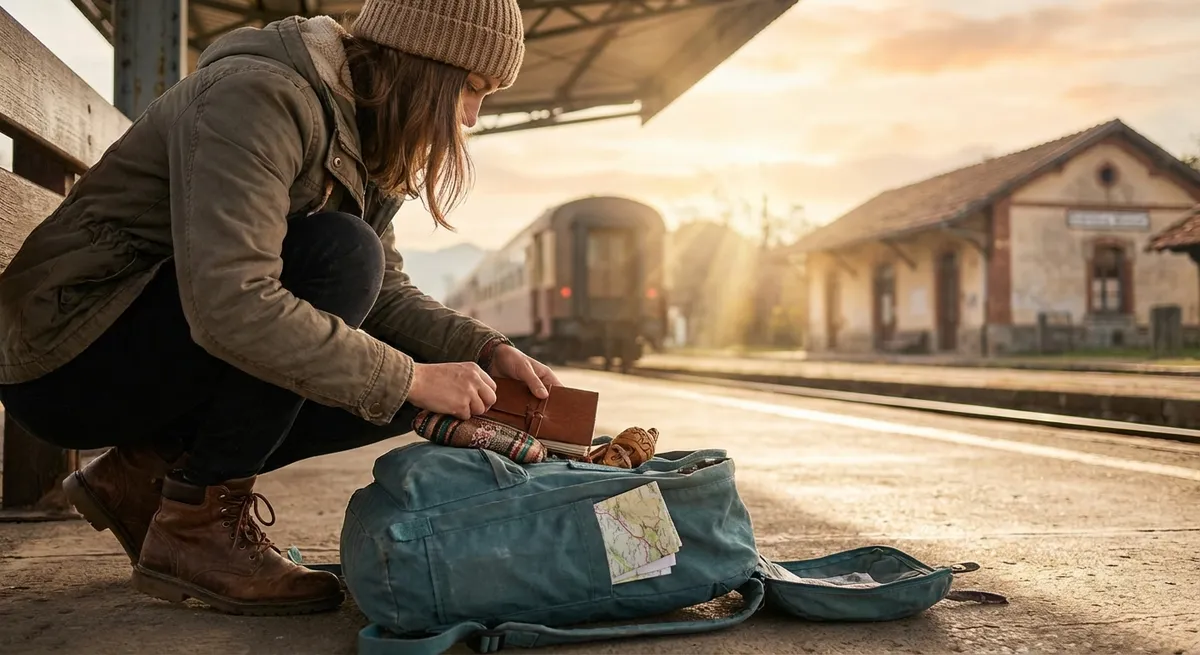
Turn Your First Day into a Soft Landing, Not a Sprint
The first 24 hours in a new place can shape the entire trip—if you let them rush by in a blur, the whole journey can feel like you’re playing catch-up. Instead of trying to “do everything” on day one, treat your arrival as a slow, intentional landing.
Start with a simple ritual: drop your bags, drink a full glass of water, and step outside for a short, aimless walk—no map, no checklist. Let your senses do the navigating. Notice what the air smells like, how the light hits the buildings, what people are doing on street corners and in cafés. This quiet observation time helps you sync with the pace of the place instead of forcing your own.
Keep your first day’s “must-do” list tiny: one good meal, one neighborhood to wander, and a plan for sleep that respects local time. Research shows that adapting your schedule and getting morning daylight in your new timezone can reduce jet lag and boost mood, which means your adventure starts sharper and stronger. Think of day one as tuning the instrument; the performance comes later.
Build a “Curiosity Map” Instead of a Rigid Itinerary
A strict schedule might feel efficient, but it leaves no space for the serendipity that makes travel legendary. Instead of planning every hour, build a “curiosity map”: a loose collection of spots, questions, and themes you want to explore, anchored by only a few fixed commitments.
Pick 3–5 “anchors” for each destination—maybe a night market, a local trail, a waterfront, a small museum, or a sunset viewpoint. Around each anchor, leave blank space. Use that open time to follow whatever catches your attention: a side street lined with murals, a street musician whose song stops you in your tracks, or a tiny café buzzing with locals. You’re not just “killing time”—you’re creating space for the place to introduce itself on its own terms.
Layer in “questions” you’d like your trip to answer: How do people here relax? What does a normal weekday look like? Where do families gather? Let those questions guide spur-of-the-moment choices—where you sit, when you linger, who you talk to. A curiosity map turns your trip from a checklist into a conversation with the world, one that can surprise you every day.
Travel with a Signature Skill You Can Share
One of the most powerful things you can pack doesn’t take luggage space at all: a skill you can offer to the people you meet. When you travel with something you can share, you stop being just a passing face and become part of the story around you.
Maybe you can juggle, sketch quick portraits, teach a simple card game, fix a squeaky bike chain, or show someone how to take a great photo with their phone. Perhaps you’re fluent in another language, can braid hair, know a few magic tricks, or are great at teaching kids a silly song. These small talents become instant bridges in hostels, on trains, and in public squares.
Be intentional about it. Before you leave, choose one or two simple things you can teach or offer without equipment, or with only minimal tools (a deck of cards, a small watercolor set, a travel chess board, a packable yoga mat). When the moment feels right, lead with generosity, not performance. The most memorable invitations—like joining a family meal, getting invited to a local festival, or being shown a hidden viewpoint—often spring from the simple magic of sharing what you know and letting others share in return.
Treat Local Food as a Language, Not Just a Meal
Food isn’t just fuel; it’s a living, edible map of every place you visit. When you approach meals like a language to be learned instead of a box to be checked, the world starts speaking back in flavors and stories.
Skip the most obvious “top 10 restaurants” on search results and scan where locals line up instead—morning bakeries, busy lunch counters, crowded food stalls with laminated menus and handwritten specials. Order one thing you recognize and one thing you don’t. Ask the person serving you what they’d recommend “for someone visiting for the first time”—you’ll often get a dish that carries memories, not just calories.
Be mindful and adventurous at the same time. Learn common food phrases and basic allergy words in the local language so you can explore safely. Take a cooking class, ask vendors about ingredients, and watch how people eat, not just what they eat: Do they linger? Do they share? Do they snack late into the night? When you travel this way, every bite teaches you how a place lives, celebrates, and cares for itself—and you leave with stories you can literally taste again when you’re home.
Use Micro-Adventures to Turn Ordinary Days Epic
Not every day of a trip can be a grand, once-in-a-lifetime event—and that’s exactly where the magic hides. Micro-adventures are small, focused bursts of exploration that transform an ordinary day into something that feels like a cinematic scene.
Pick a simple theme for a half-day: follow only streets with interesting doorways, chase the sound of live music, visit every bridge you can cross on foot, or ride public transportation to the end of the line and see what’s there. Give yourself a playful rule like, “Every time I see a park, I have to sit for 10 minutes,” or “If I pass a bookstore, I must go in and find one local author.” These self-imposed quests turn you into an active participant rather than a passive observer.
Micro-adventures also help on low-energy or bad-weather days, when huge plans feel overwhelming. A rainy afternoon can become “café-hopping and journaling under different windows.” A transit delay becomes “collecting overheard phrases and turning them into a short story.” Tiny missions like these keep your sense of wonder switched on, so even in-between moments feel like part of the adventure, not just empty space between highlights.
Conclusion
Travel isn’t just about the places you mark on a map; it’s about the way you move through them and who you become along the way. When you land softly instead of sprinting, trade rigid plans for curiosity, share your skills, treat food as a conversation, and design micro-adventures, you give every trip room to surprise you.
Pack your bag, yes—but more importantly, pack your attention, your generosity, and your willingness to follow the world down paths you didn’t know existed. That’s where the stories you’ll tell for years are waiting.
Sources
- Centers for Disease Control and Prevention – Jet Lag: Tips for Travelers - Practical, research-based advice on adjusting to new time zones and reducing jet lag
- National Geographic – How to Travel More Responsibly - Insights on engaging thoughtfully with destinations and local communities
- Harvard Business Review – The Benefits of Curiosity - Explores how curiosity improves experiences and decision-making, relevant to a curiosity-driven travel style
- UNESCO – Intangible Cultural Heritage - Explains how food, music, and traditions express local identity and culture
- Lonely Planet – What Is a Microadventure? - Background on the concept of micro-adventures and how small explorations can feel big and meaningful