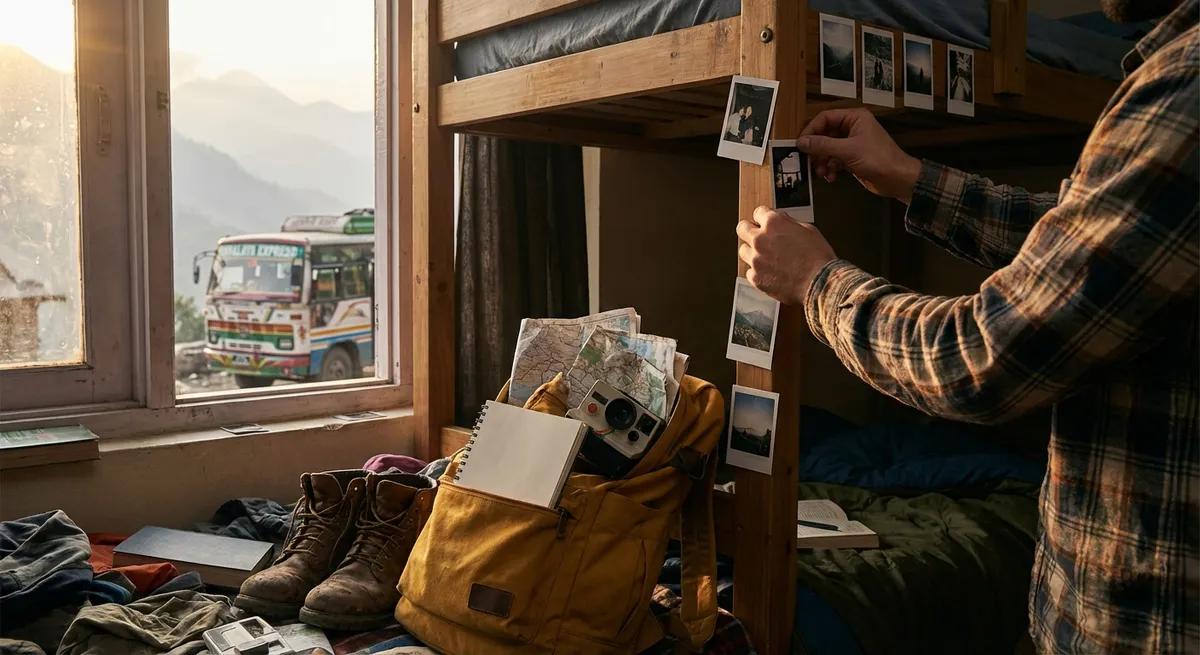
Below are five powerful, adventure-igniting travel tips—each designed to help you experience more, worry less, and step into each trip like you were made for the road.
Turn “Arrival Day” Into Your Soft Landing Ritual
Your first day in a new place can feel chaotic: jet lag, new streets, unfamiliar sounds. Instead of treating arrival day as a throwaway, turn it into a personal ritual that anchors you and opens your senses.
Walk, don’t ride, for your first hour if it’s safe to do so. Feel the pavement, listen to the language, let the city’s rhythm set your pace. Choose one small, intentional task: buy fruit at a local market, ride a tram just to the last stop, sit in a café and write your “first impressions” in a notebook. This slows your mind and gives you a sense of orientation that Google Maps alone can’t provide.
Skip the pressure to “see everything” on day one. Focus on a triangle: your accommodation, a nearby grocery or market, and a local spot you’d happily revisit (a bakery, park, or tiny restaurant). Once you can walk that triangle without maps, the city starts to feel less like a maze and more like a neighborhood that happens to be yours—for now.
Design One “Challenge Quest” in Every Destination
Adventure doesn’t just happen; you can engineer it. Choose one personal “quest” in each destination—something that stretches you just beyond your comfort zone without abandoning common sense or safety.
Maybe it’s ordering food all day in the local language, even if you stumble over every word. Maybe it’s taking the local bus to the end of the line to discover where everyday life unfolds. It could be joining a dawn walking tour or a night photography walk, hiking to a nearby viewpoint, or trying a cultural class like salsa, pottery, or traditional cooking.
By framing it as a quest, fear turns into curiosity. You’re no longer “nervous about messing up” at the market—you’re on a mission to buy ingredients for a local dish. You’re not “lost on the tram”—you’re scouting the city’s outer edges. The quest gives your days a narrative, and narratives are what turn random experiences into memories that stick.
Travel With a “Connection Kit,” Not Just a First-Aid Kit
Most travelers pack bandages and painkillers but forget the tools that help them actually connect with people. A simple “connection kit” can transform your interactions from transactional to unforgettable.
Pack a tiny notebook or a few postcards from your hometown to give away as small gifts. Download an offline translation app and pre-save useful phrases: “This is delicious,” “Can you recommend a place locals love?” or “What’s something important people should know about your city?” Bring a printed photo or two from home to show new friends; it’s a simple, human way to bridge distances.
Learn three local phrases thoroughly—greetings, please, and thank you—and use them constantly. Even imperfect attempts are often met with smiles and doors opening. When you show people you’re there to engage, not just consume, you’re more likely to be invited into stories, kitchens, and hidden corners guidebooks don’t reach.
Curate Your Days With One Anchor Experience and Wide Open Edges
Overplanning is how wonder gets squeezed out of travel. Underplanning can leave you drifting aimlessly. The sweet spot: one “anchor experience” per day, and then space around it for serendipity.
Your anchor might be a museum, a mountain trail, a street food tour, a live music show, or a historical site. That’s your non-negotiable. You book it or schedule it—and then you deliberately avoid cramming the rest of the day with a checklist.
Before and after your anchor, wander with purpose but without a strict agenda. Follow the smell of baking bread down a side street. Linger at a viewpoint longer than your itinerary would have allowed. Step into a tiny shop just because the sign makes you curious. When your day has room to breathe, the unexpected can find its way in: conversations with strangers, unplanned sunsets, and tiny revelations you never could have scheduled.
Capture Stories, Not Just Photos
Photos freeze surfaces. Stories capture the soul of a place. Shift your mindset from “I need a shot for social” to “I want something to remember who I was here.”
Ask yourself three questions each day and jot the answers in your notes app or journal:
- What surprised me today?
- Who did I meet, and what did I learn from them?
- What moment felt the most alive?
Take fewer, more intentional photos. A wide shot of the street, a detail shot (a door, a plate, a stray cat in the sun), and one human moment (someone laughing, a friend trying something new, your own shadow on a foreign cobblestone). Pair your photos with a short caption that tells a tiny story: the smell, the sound, the feeling.
When you return home, your memory won’t cling to how many attractions you ticked off. It will cling to the taxi driver who shared his favorite local song, the vendor who taught you the name of a spice, the quiet of that early-morning train. Stories turn your trip from content into a chapter of your life.
Conclusion
Every journey carries two maps: the one in your hand, and the one inside you that’s still being drawn. You can race through destinations collecting passport stamps—or you can move with intention, curiosity, and courage, letting each place change you a little.
Treat arrival day as your grounding ritual, give yourself a quest, pack for connection, anchor your days with room for wonder, and chase stories instead of just photos. When you travel this way, the world stops feeling like a series of checklists and starts feeling like what it truly is: a living, breathing invitation to step beyond who you’ve been and into who you’re becoming.
Adventure isn’t waiting at the edge of the map. It’s waiting at the edge of your habits. Change those—and every trip becomes an open door.
Sources
- U.S. Department of State – Traveler's Checklist - Practical guidance on preparation and safety before international travel
- Centers for Disease Control and Prevention – Travelers’ Health - Up-to-date health recommendations, vaccines, and country-specific travel health advice
- UNESCO World Heritage Centre - Authoritative information on culturally and naturally significant sites around the world
- Lonely Planet – Travel Tips - Expert-curated tips and insights for smarter, more meaningful travel
- National Geographic Travel - In-depth stories and photography that inspire immersive, story-driven exploration