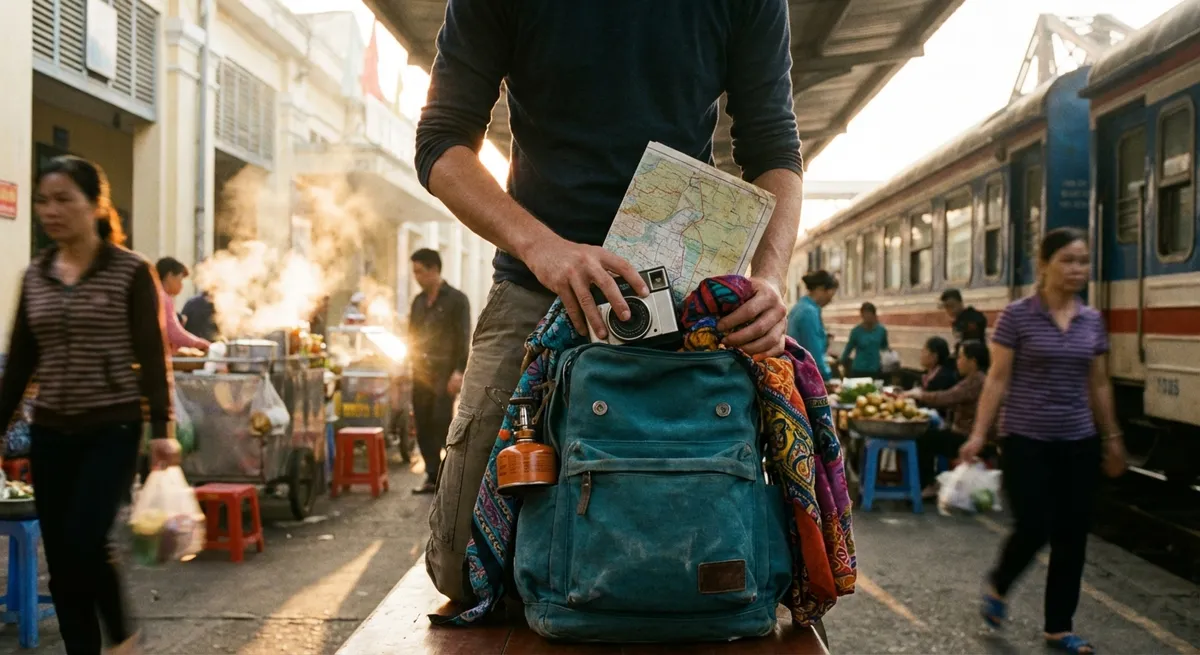
Treat Your Itinerary as a Compass, Not a Contract
Locking every hour into a schedule might feel efficient, but it leaves no room for magic. Think of your itinerary as a compass pointing you in a direction, not a contract you’re bound to obey.
Choose a few “anchor” experiences each day—maybe a museum in the morning, a sunset viewpoint in the evening—and leave the in-between time wide open. That gap is where life sneaks in: the café you stumble upon because you took a side street, the local festival you notice because you weren’t racing to your next tour.
Build intentional flexibility. Add “buffer days” with no fixed plans, especially after long travel days or big cities. If you find a neighborhood you love, let yourself linger. If a local recommends a hidden beach or a family-run restaurant, reshuffle your plans without guilt. The most unforgettable trips are rarely the ones that went exactly as planned—they’re the ones where you allowed the unexpected to rewrite the script.
Pack a “Curiosity Kit” Instead of Just Luggage
Clothes and chargers keep you moving; curiosity is what makes the movement meaningful. Pack a small kit not just for comfort, but for connection and exploration.
Slip a tiny notebook or digital note app to capture overheard phrases, new foods, and sudden ideas. Bring a deck of cards or a simple game—these become instant bridges in hostels, trains, and guesthouses. Add a reusable tote bag and collapsible container so you can say yes to impromptu picnics from street markets or leftovers from a generous host.
Think beyond typical gear: a lightweight scarf can be a temple cover, beach blanket, or makeshift picnic cloth. A compact headlamp unlocks sunrise hikes, late-night beach walks, and power outage adventures in far-flung places. Instead of just asking, “What do I need?” ask, “What will let me say yes more often?” Your curiosity kit turns ordinary moments into opportunities, and strangers into scenes in your unfolding story.
Learn Ten Local Words and Use Them Everywhere
Fluency is optional; effort is not. Learning even a handful of local words shifts you from passive observer to willing participant. It’s a small act that can transform how a place opens up to you.
Start with the essentials: hello, goodbye, please, thank you, yes, no, sorry, delicious, beautiful, and a simple “Do you speak English?” Then actually use them—with the street vendor, the bus driver, the barista, the person sitting next to you on the train. You’ll mispronounce things. People will laugh with you, not at you. That shared moment of humor is its own connection.
Download an offline language app or carry a mini phrasebook, but don’t hide behind it. Speak first, then show the phone if you need help. People everywhere are wired to respond to genuine effort. Suddenly, you’re not just “tourist number five” buying lunch—you’re the traveler who tried, and that effort can turn transactions into conversations, and conversations into invitations.
Follow the Daily Rhythm, Not Just the Tourist Highlights
Guidebooks tell you where to go; a city’s rhythm tells you how it lives. To feel the soul of a place, match its heartbeat for at least a day.
Wake up early one morning and watch the city unfold. Join the runners along a river, the elders doing tai chi in a park, or the first wave of commuters at a train station. Notice what fills the grocery baskets, what’s sold at corner stands, when cafés get loud and when streets go silent.
Eat where the lines form with locals, even if the menu is unfamiliar. Visit a neighborhood market instead of just the famous sights. Sit on a bench with no agenda and simply observe: kids playing games you’ve never seen, street musicians warming up, the smell of bread from a nearby bakery. Let yourself be guided not only by “must-see” lists, but by the everyday choreography around you. It’s in the ordinary rhythms that you discover that nowhere on earth is truly ordinary.
Capture Moments for Memory, Not Just for the Feed
Photos are powerful—but how you take them changes how you travel. When every moment becomes an Instagram mission, you risk missing the actual moment unfolding in front of you.
Start with presence, not the camera. When you reach a viewpoint, pause for a full minute before taking a single photo. Breathe, look, listen. Ask yourself, “What does this feel like?” Then take pictures that tell that story: the wind in someone’s hair, the steam rising from street food, the chipped paint on a beloved doorway.
Mix wide shots with tiny details and candid moments. Include yourself in the scene, but let imperfection live in the frame—messy hair, cloudy skies, a stranger walking through. These are the markers of real life, not staged perfection. And take some memories just for you: a sunset watched without a lens, a concert heard without recording. Paradoxically, the more fully you live the moment, the more powerful and shareable your stories become later—because they’re rooted in something real.
Conclusion
Every trip holds two itineraries: the one you plan and the one the world offers you. When you treat your schedule as a compass, pack tools for curiosity, speak even a few local words, move with the daily rhythm, and capture memories with presence, you unlock the second one—the living, breathing adventure that can’t be pre-booked.
The next time you zip your backpack or roll your suitcase toward the unknown, remember: you’re not just traveling to see places. You’re traveling to meet versions of yourself that only appear when you step beyond routine. Leave a little space in your plans for the world to surprise you—and it will.
Sources
- U.S. Department of State – Travel Tips - Practical guidance on preparing for international trips, documents, and safety
- BBC Travel – How to Travel More Sustainably - Insightful advice on conscious choices that deepen your connection to destinations
- Lonely Planet – How to Travel Like a Local - Discusses immersing yourself in local rhythms, customs, and everyday life
- National Geographic – The Power of Language in Travel - Explores how learning local language enriches cultural understanding
- Harvard Business Review – Why You Should Take More Breaks (and How to Do It) - Explains the value of unstructured time, supporting the idea of flexible itineraries