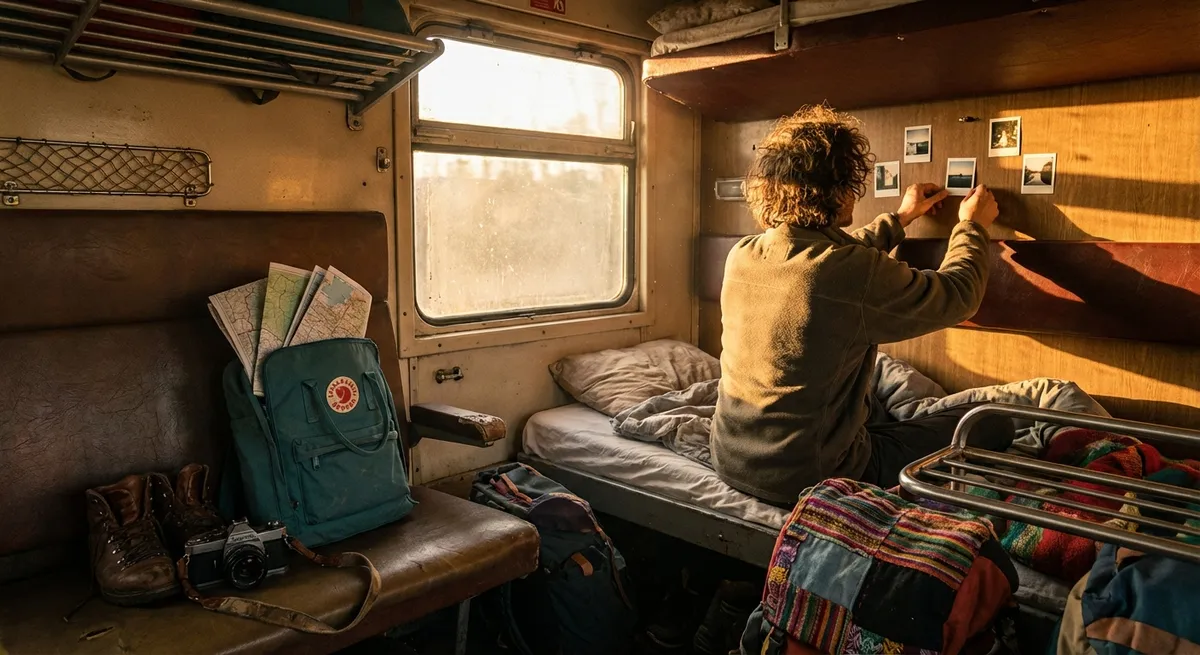
Below are five travel habits that don’t just get you from point A to point B—they quietly transform every trip into an adventure you’ll feel in your bones.
Turn Your First Day into a “Soft Landing Expedition”
Most travelers blow their first day: either collapsing in a hotel room or sprinting through a checklist, too exhausted to remember any of it. There’s a better way—treat day one as your soft landing expedition.
Before you leave, pick a simple “arrival ritual”: a local café within walking distance of your stay, a public park, or a riverside promenade. Drop your bags, grab a shower, and walk there with no agenda except noticing. Pay attention to street sounds, the rhythm of traffic lights, what people hold in their hands—umbrellas, shopping baskets, bicycles, phones. This gentle loop helps your brain map the neighborhood so you feel oriented, not overwhelmed.
Skip anything that requires reservations or long commutes on day one; jet lag and delays can wreck tight schedules. Instead, buy your transit card, locate a grocery store, learn the nearest emergency room or clinic, and test a short local bus or metro ride. These are small, practical wins that build calm confidence. As your body adjusts, your curiosity wakes up—and by the second morning, you’re not “a stranger in a new city” anymore. You’re someone who already has a favorite corner table and a tiny mental map of your own.
Ask One Bold Question a Day
Travel becomes electric the moment you invite other humans into your story. Make a habit of asking one bold, genuine question every day—something that opens a door into local life.
Skip the generic “What should I see?” and try:
- “If your best friend were visiting for just one day, where would you take them first?”
- “Is there a food from here that people from other countries don’t usually try—but should?”
- “What’s something people misunderstand about this place?”
- “Where do you go when you need to clear your head?”
Ask this to baristas, rideshare drivers, market vendors, hostel staff, park rangers—anyone who seems open to a quick chat. Stay present, not performative. You’re not collecting “content”; you’re collecting perspective.
Often, these questions unlock surprising invitations: a hidden sunset viewpoint, a community festival, a mom-and-pop bakery that never shows up on top-10 lists. It’s also a powerful safety tool. Locals can tell you which neighborhoods feel safe at night, how late transit realistically runs, and what common scams to avoid—information that doesn’t always show up in guidebooks.
When you string seven or ten of these conversations together over a trip, you don’t just leave with photos; you leave with a mosaic of human stories stitched into your own.
Carry a “Curiosity Kit” Instead of Just a Daypack
Most travelers pack their day bag like a portable closet: snacks, a water bottle, maybe a jacket. Useful, yes—but what if your bag was primed not just for comfort, but for serendipity?
Build a compact “curiosity kit” that turns random moments into experiences:
- Analog notebook + pen: For capturing directions, overheard phrases, local book recommendations, or quick sketches of that wild mountain skyline before you forget it.
- Offline map + translation app downloaded in advance: So you can say yes to detours—even when you’re off Wi‑Fi.
- Light scarf or bandana: Doubles as sun protection, modesty cover in temples, makeshift picnic blanket, or even an eye mask on a bright train.
- Tiny reusable bag: So you can act on impulse when you spot local produce, street-market treasures, or bakery finds.
- Portable charger: The difference between “lost and anxious” and “lost but totally okay” is often a battery bar.
With these tools, you’re free to wander alleys, hop off trams when something looks interesting, or accept a “you should check out that market” tip on the spot. Your bag stops being just storage—it becomes an invitation to say yes more often, while still feeling prepared.
Use “Micro-Challenges” to See More Than the Highlights
It’s easy to spend a trip ping-ponging between famous landmarks and Instagram backdrops. Memorable? Sure. Transformative? Not always. Micro-challenges inject a sense of quest into your day and pull you deeper into the fabric of a place.
Design one small challenge for each day:
- The Color Hunt: Choose a color in the morning (turquoise, saffron, rust). Spend the day noticing where it appears—doors, tiles, markets, textiles, street art. You’ll spot details your brain would usually gloss over.
- No-English Hour: For one hour, use only the local language plus gestures and smiles. Even if you only know a handful of phrases, you’ll engage more intentionally and remember those words forever.
- The One-Street Rule: Pick one ordinary residential street on your map and slowly walk its entire length, noticing front yards, laundry lines, small shrines, neighborhood dogs, and daily rituals.
- Local-Only Menu Choice: Skip the familiar. Ask for “what people from here usually order” instead of what looks safe and known.
- Time-Capsule Photo: Instead of taking 200 photos, commit to capturing one image that sums up the feel of your day. You’ll look harder, wait longer, and connect more with what’s actually in front of you.
These micro-challenges don’t require more money or time—just intention. They transform routine walks into mini-expeditions and turn each day into a story with its own arc.
Plan Your Safety Like a Pro So You Can Wander Like a Rookie
The more secure you are behind the scenes, the freer and more adventurous you can be on the surface. Think of safety not as fear, but as the scaffolding that lets you climb higher.
Before you go, take these concrete steps:
- Register and research: For international travel, check your government’s travel advisories and, if available, traveler registration programs (like the U.S. Smart Traveler Enrollment Program). Know visa rules, local emergency numbers, and any common scams.
- Make a “just-in-case” folder: Keep digital and paper copies of your passport, key IDs, insurance details, and important contacts, including the nearest embassy/consulate and accommodation info. Share basics with a trusted person at home.
- Choose accommodations with intention: Look beyond pretty photos. Read recent reviews for safety mentions, neighborhood noise, and staff responsiveness. Check walking distance to transit and whether streets are well-lit at night.
- Establish personal non-negotiables: Maybe it’s “no isolated walks after midnight,” “no drinks left unattended,” or “always tell someone my general plan for the day.” Decide these at home, not in the moment.
- Learn local norms: In some places, modest dress isn’t just etiquette; it keeps you from standing out. In others, hailing unofficial taxis is normal—or a terrible idea. A few minutes of research can prevent hours of stress.
When those foundations are set, you’re not burning mental energy on “What if?” all day. Instead, you have the bandwidth to get joyfully lost in a street market, linger longer over rooftop sunsets, or hop on that spur-of-the-moment ferry—knowing your back-up plans are quietly in place.
Conclusion
Adventure isn’t hiding in some secret far-flung country. It’s hiding in how you travel—in the questions you ask, the way you land in a new city, the tools you carry, the tiny challenges you set, and the safety net you build beneath your curiosity.
Pack for possibility, not perfection. Let your first day be gentle, your questions be brave, your bag be ready for detours, your days have playful quests, and your safety be solid enough that you can say yes when the unknown beckons.
The world doesn’t just want you to see it. It wants you to meet it—with your eyes open, your mind prepared, and your heart wide awake.
Sources
- U.S. Department of State – Traveler’s Checklist - Official guidance on passports, safety, registration, and preparations for international travel
- Centers for Disease Control and Prevention – Travelers’ Health - Up-to-date health notices, vaccination recommendations, and country-specific health advice
- UK Foreign, Commonwealth & Development Office – Foreign Travel Advice - Government travel advisories, local laws, and safety information by destination
- Transportation Security Administration (TSA) – What Can I Bring? - Detailed information on what is allowed in carry-on and checked baggage
- Harvard Global Support Services – International Travel Guidance - Practical advice on risk assessment, emergency planning, and safety best practices for travelers