Below are five travel approaches that don’t depend on a big budget or rare opportunities—just curiosity, courage, and a willingness to say yes a little more often.
Follow the First Sound That Intrigues You
Instead of planning your days around must‑see checklists, try anchoring one part of your trip around sound. Let your ears be the compass.
Step out of your hotel, pause, and notice what you hear first: the sizzle of a food stall, a distant drum, a burst of laughter from an alley, a busker’s violin echoing under a bridge. Pick one of those sounds and walk toward it with intention. This simple shift pulls you off the polished, well‑worn routes and into the city’s heartbeat—where grandmothers lean out of windows to talk across narrow streets, where kids play soccer in dusty courtyards, where the local bar plays the same three songs every night and everyone still sings along.
Listening first also slows you down. You’ll cross paths with tiny, unplanned moments: a café owner tuning a radio, a temple bell ringing at dusk, an old man whistling as he repairs bicycles. These are the moments that stitch a place into your memory. They also make you a better traveler—more observant, less rushed, more willing to be led by what’s actually there rather than what you expected to find.
To make this habit easy, travel light enough that you’re comfortable walking longer distances, and leave one daily time slot open with no agenda: just follow the next interesting sound and see where it takes you.
Turn Every Meal into a Micro‑Quest
Food is one of the fastest ways to step out of the role of spectator and into the flow of local life. Instead of defaulting to the first restaurant with an English menu, turn eating into an ongoing quest.
Start with a single mission: find the one dish locals light up about when they talk. Ask three different people (baristas, taxi drivers, market vendors) a simple question: “If I could only eat one thing in this city, what should it be, and where should I get it?” You’ll not only gather specific recommendations; you’ll also spark conversations, invitations, and stories that lead you deeper into the culture.
When you arrive at that recommended spot, stay curious. Ask how the dish is usually eaten, whether it’s tied to a festival or season, and if the server or cook has a personal twist on it. If there’s a line, ask the person in front of you what they’re ordering and why. Suddenly, dinner isn’t just fuel—it’s context, connection, and sometimes a doorway into neighborhoods you’d never find otherwise.
To keep your stomach (and budget) happy, balance your “quest meals” with simpler bites: bakeries, street stalls with high turnover, or grocery store picnics in a park. This mix turns every day into a string of edible discoveries, without wearing you out.
Build One Local Skill Instead of Chasing Every Sight
Instead of trying to see everything, decide to learn something. Pick one small, place‑rooted skill and make it the quiet thread running through your trip.
In a coastal town, that might be learning to read the tide tables or basic knots from a fishing guide. In a mountain village, it could be understanding how locals predict weather by watching the sky and wind. In a city known for markets, learn how people judge the “perfect” piece of produce, how to bargain respectfully, or how to identify regional spices by smell alone.
Look for short workshops, community centers, walking tours led by residents, or even informal tutorials from people you meet. The point isn’t mastery; it’s to leave knowing how to do one local thing you couldn’t do before. That tiny skill will anchor your memories much more deeply than ticking off another attraction.
Practically, set aside a half‑day for this. Search for experiences run by locals or organizations tied to the community, not just large tour resellers. And bring a small notebook or use your phone to jot down what you learn: local phrases, pro tips, diagrams. You’re building a “field guide” to your own journey—one you can revisit long after you fly home.
Treat Transit as a Moving Window, Not Dead Time
Buses, trains, ferries, long rides—they’re often treated as the boring price you pay to get somewhere worth seeing. Flip that script, and transit can become one of the richest parts of your day.
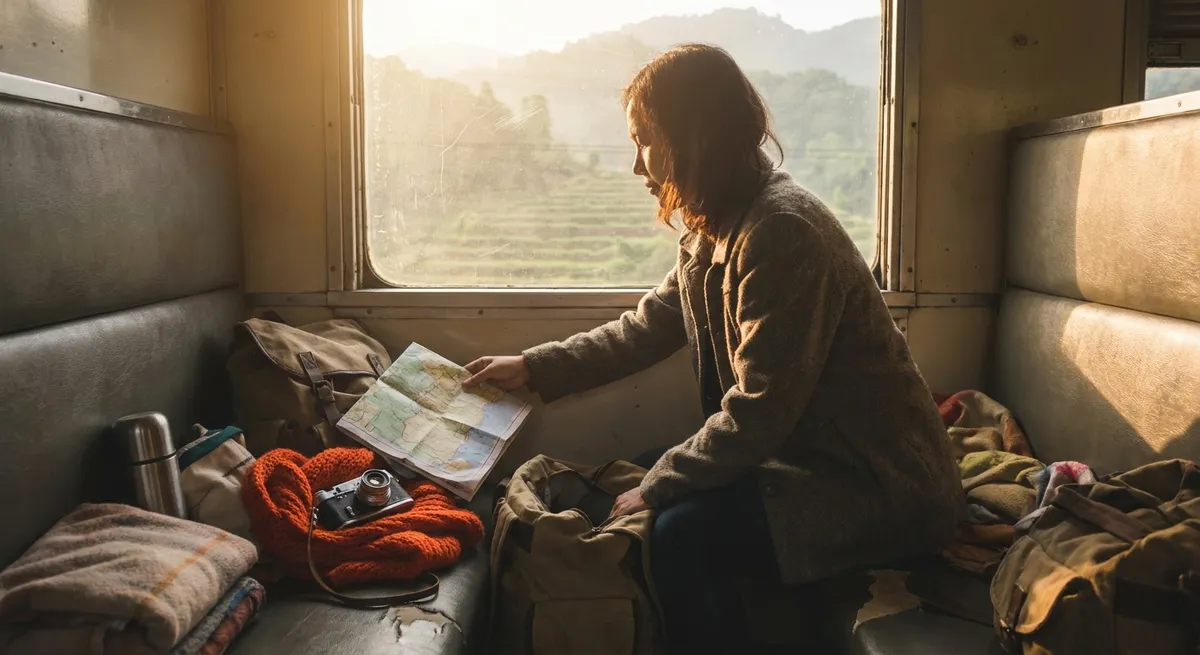
First, claim a “window ritual.” On every ride over 20 minutes, put your phone away for a stretch and simply watch the world move by. Notice patterns: laundry colors on balconies, types of trees lining the road, how neighborhoods shift block by block. Try to guess the stories behind the places you pass—a faded roadside café, a half‑built house, a crowded stop where everyone seems to know each other.
Second, pack a simple “transit toolkit” that nudges you toward presence: a lightweight journal, an offline map, a playlist of local music, and maybe a few conversation starters translated into the local language (“What’s your favorite place in this city?” goes a long way). These rides are the perfect time to strike up low‑pressure chats, reflect on what you’ve seen, jot down impressions, or plan a small detour based on something that caught your eye from the window.
When you treat transit as part of the journey, not a void between highlights, you naturally build more flexibility into your days—and that flexibility is exactly where surprising opportunities appear.
Leave One Decision Each Day to a Stranger
There’s a unique kind of magic that appears when you hand over a bit of control. Once a day, invite a little randomness in by letting someone else decide a small part of your plan.
Set simple boundaries so it stays safe and enjoyable: the choice must be something you can walk to or reach easily; it can’t involve big expenses; and you always retain the right to say no if it feels off. Then ask a local a very specific, playful question: “I have one free hour—should I turn left or right when I leave this café?” or “I’m choosing between a viewpoint, a bookshop, or a snack—what do you think I should do next?”
You might end up in a nearly empty museum that stuns you, at a forgotten dock where kids leap into the water, or at a bakery that’s been in the same family for generations. The point isn’t perfection; it’s surrendering just enough control that the world can surprise you.
This habit also shifts how you see people. Strangers become co‑authors of your day. Many will respond with enthusiasm—drawing maps on napkins, walking you part of the way, or sharing why their recommendation matters to them. Those tiny collaborations imprint the destination on your memory with far more color than an algorithm‑generated “top ten” list ever could.
Conclusion
Every trip offers the same invisible invitation: to move through the world on autopilot or to travel as if the day is secretly rooting for you to notice more, ask more, and dare a little more. When you follow the sounds that call to you, turn meals into quests, learn one local skill, savor the in‑between moments, and hand a small choice each day to a stranger, you’re not just collecting sights—you’re practicing a different way of being alive.
You don’t need more time off or a larger budget to start; you just need your next journey, however small, and the willingness to treat it as a living, unfolding story. Step outside, listen for that first intriguing sound, and let it lead you somewhere you didn’t plan to go—yet somehow were always meant to find.
Sources
- [U.S. Department of State – Travel Advisory & Safety Information](https://travel.state.gov/content/travel/en/traveladvisories/traveladvisories.html) - Guidance on staying safe and informed while traveling abroad
- [World Health Organization – International Travel and Health](https://www.who.int/teams/global-health-education-and-training/travel-health) - Evidence-based recommendations for healthy, prepared travel
- [Lonely Planet – Responsible Travel Tips](https://www.lonelyplanet.com/articles/responsible-travel-tips) - Practical advice on engaging ethically with local communities and cultures
- [National Geographic – How to Be a Better Tourist](https://www.nationalgeographic.com/travel/article/how-to-be-a-better-tourist) - Insights on more meaningful, respectful ways to explore destinations
- [MIT Senseable City Lab – Projects on Urban Mobility](https://senseable.mit.edu/) - Research that highlights how people move through cities, inspiring more observant transit experiences