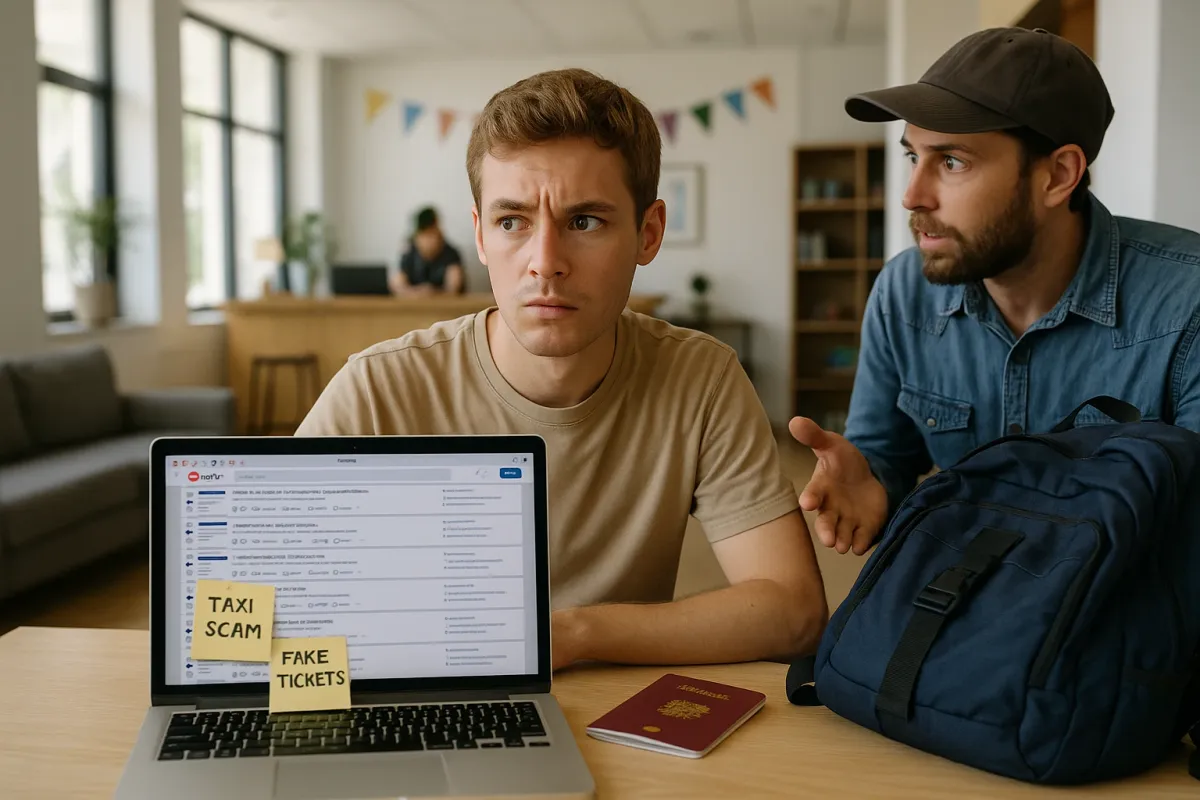
Instead of letting those stories scare you off, use them as rocket fuel. The travelers who go the furthest aren’t the luckiest—they’re the ones who know how to spot a setup, trust their instincts, and still say yes to the world. Here’s how to turn today’s scam warnings into a fearless, street-smart travel style you can carry anywhere.
Learn the “Script” of Common Scams Before You Go
The Reddit thread going viral right now is basically a free masterclass in how scammers think. The patterns repeat: fake urgency (“your relative is in trouble”), fake authority (“I’m from your bank”), or fake reward (“you’ve won!”). When you’re on the road—jet-lagged, excited, maybe a little disoriented—those scripts hit even harder, especially if they come wrapped in a foreign accent or an official-looking logo.
Before your next trip, take one evening to research “common scams in [destination]” and skim recent posts on Reddit’s r/travel, r/solotravel, and threads like the one trending now. You’ll spot the same tactics again and again: rigged taxi meters, unofficial “helpers” at ATMs, fake hotel booking websites, or tour operators who vanish right after you pay in full. Write down 3–5 you’re most likely to encounter and decide in advance how you’ll respond—refusing to hand over your passport, walking away from aggressive “guides,” or insisting on booking only via verified platforms. When you recognize the script mid-sentence, it’s incredibly empowering to calmly say “no thanks” and walk back into your adventure.
Build a Money Strategy That Makes You Hard to Trick
Many people in today’s viral scam thread lost money because everything—cards, cash, and key documents—was in one place or one account. On the road, that’s like hiking a cliff trail without a backup route: one slip, and the whole trip is in danger. You can keep your journey epic and your risk low with a few deliberate moves.
Split your money into layers. Keep a “decoy” wallet with a small amount of local cash and a basic card you can cancel quickly; that’s what you pull out for everyday purchases or in crowded areas. Your main card and most of your cash stay hidden in a money belt, neck pouch, or locked bag at your accommodation. Turn on transaction alerts with your bank so every charge pings your phone in real time—and use a travel card with strong fraud protection so suspicious payments are blocked fast. When booking flights or stays, stick to official airline sites, major OTAs (like Booking.com, Expedia, or Airbnb), or direct communication through the platform’s messaging system—never via random links sent on WhatsApp or email. You’ll feel freer to wander when you know one bad interaction can’t drain your entire trip.
Master the Art of the “Soft No” With Strangers
A ton of scams highlighted in the Reddit thread start as something that feels…helpful. A stranger grabs your bag “to assist,” a “friendly local” insists on guiding you, someone at a station suddenly “fixes” your ticket situation—for a fee you never agreed to. In an unfamiliar city, refusing help can feel rude, especially if you’re traveling solo, but your politeness is exactly what many scammers bank on.
Practice a simple, universal refusal you can say on autopilot: “No, thank you, I’ve already arranged it.” Use it with confidence for unsolicited rides, private tours, money exchanges, or anyone demanding to “check” your phone, passport, or ticket when they’re not in uniform or behind a counter. If they keep pushing, walk toward a busy, well-lit area, a hotel lobby, or a shop. You don’t have to argue, explain, or justify—just repeat, move, and disengage. The irony is that once you get comfortable saying “no” firmly, you actually end up free to say “yes” to real, generous offers from people who aren’t demanding anything in return.
Turn Tech Into Your Traveling Bodyguard
Many of the modern scams people are sharing online—especially phishing links, fake booking confirmations, and spoofed “bank” calls—follow you onto your phone wherever you go. On the road, when Wi-Fi is spotty and you’re booking fast, you’re more likely to click something sketchy just to get things done. Treat your tech the way you’d treat a passport on an overnight bus: guarded, encrypted, and never left completely exposed.
Before departure, enable two-factor authentication on your primary email, banking apps, and main social accounts—those are the keys scammers love to steal. Download offline maps (Google Maps, Maps.me) so you don’t need to rely on “helpful” strangers to find your way. For ride-hailing, only use official apps like Uber, Bolt, Grab, or the country’s verified equivalent—and always check the plate and driver name before getting in. When booking or paying on the go, avoid public Wi-Fi for anything involving a card; tether to your phone’s data instead, or use a reputable VPN. And if you receive a text or email about a “problem with your booking,” don’t click the link—go directly to the airline or hotel app or website and check from there. Your phone can be your strongest ally if you treat every unexpected pop-up, link, or call with healthy suspicion.
Pack Courage, Not Fear: How to Stay Bold and Curious
Scrolling through a list of scams—like the Reddit stories trending now—can make the world feel hostile and dangerous. But here’s the truth seasoned travelers know: the same planet that produces scammers is absolutely overflowing with kindness, beauty, and spontaneous generosity. Your job isn’t to hide from risk; it’s to recognize it quickly so it doesn’t hijack your story.
Balance your street smarts with intentional openness. Book your first night or two in advance so you land with a “safe basecamp” and a clear head. Join group walking tours, cooking classes, or hostel activities so you’re exploring with others instead of drifting alone and overwhelmed. Trust patterns more than vibes: a bustling café full of locals is safer than an empty bar, a licensed taxi stand is safer than random drivers approaching you at arrivals. And when something doesn’t feel right—prices that suddenly skyrocket, pressure to decide now, people who get angry when you pause—treat that as your built-in alarm. Walking away isn’t cowardly; it’s what allows you to keep saying yes to the next sunrise, the next city, the next unforgettable stranger who’s actually on your side.
Conclusion
The scams blowing up on Reddit today aren’t there to scare you off travel—they’re there as signposts from people who went first, stumbled, and decided to light the path for the rest of us. Use their stories as fuel, not fear. Learn the patterns, set up simple systems, and practice a firm “no” so you can say a louder “yes” to everything that makes travel magic: 5 a.m. trains, street food at midnight, surprise invitations, and landscapes that rewire the way you see your life.
The world isn’t waiting for the most fearless traveler. It’s waiting for the most prepared one—the person who can spot a scam from a mile away and still step onto the next bus, next boat, next trail with eyes wide open and heart all in.