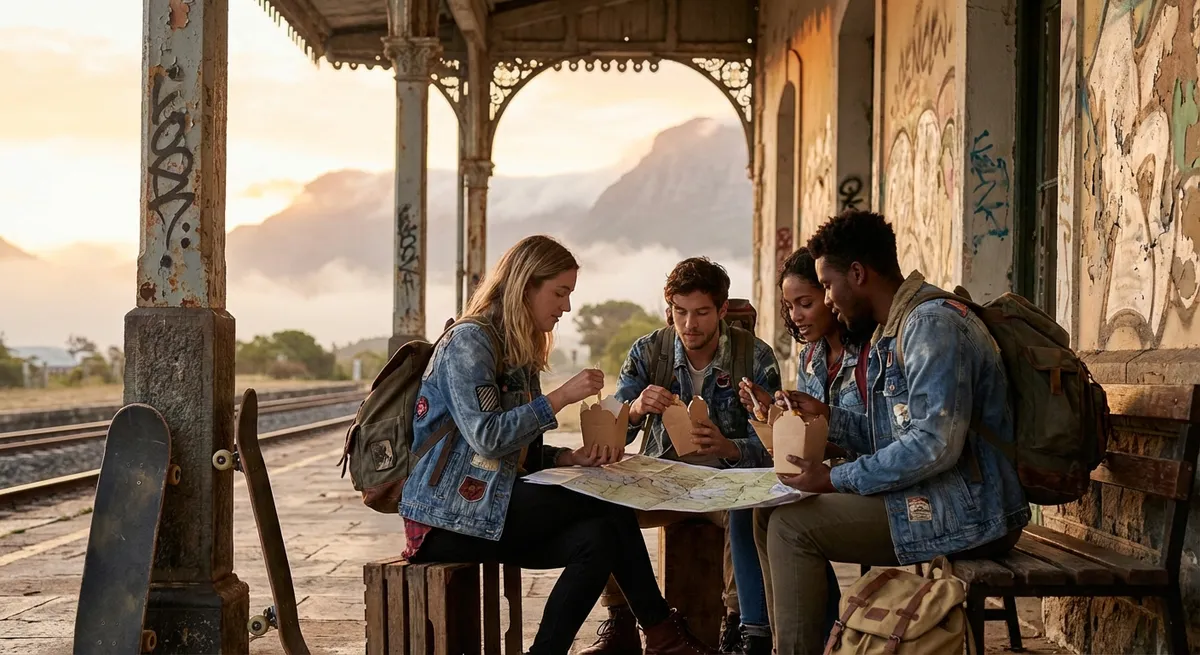
This is your invitation to travel richer while paying less: five powerful shifts that make budget journeys feel boundless, not bare-bones.
Choose Routes, Not Resorts: Let Your Path Do the Heavy Lifting
The most thrilling “attraction” of a trip often isn’t a single landmark—it’s the route that threads a dozen small wonders together. Instead of anchoring your plans to a pricey resort or famous hotel, build your adventure around a path that’s naturally budget-friendly and endlessly surprising.
Follow old trading routes, coastal bus lines, or railway corridors where slow trains stitch together villages, markets, and city corners you’d never otherwise see. In Southeast Asia, backpacker loops link sleeper trains, river boats, and tuk-tuks for a fraction of a resort stay. In Europe, regional trains and long-distance buses snatch you across borders for the price of dinner back home. In Latin America, shared vans and local coaches turn transit into a rolling language lesson.
By designing your travels around a route, every transfer becomes a mini-story, every stop a chance to say “let’s just see what’s here.” You’re not buying a room—you’re buying a trail of moments.
Hunt for Free Wonders: Make the World Your Open-Air Museum
Some of the world’s most powerful experiences cost absolutely nothing—except your willingness to show up. If your budget is tight, let curiosity, not ticket prices, decide your agenda.
Start with what’s free or almost free in every destination: sunrise from a hilltop, a self-guided walking tour through the oldest neighborhood, wandering markets at opening time, or sitting in a public square long enough to feel the rhythm of daily life. Many museums have free days or hours; city tourism boards often list no-cost events, festivals, and open-air concerts. National parks sometimes waive entrance fees on certain dates, turning entire landscapes into free playgrounds.
When you look at a city like it’s an open-air museum, alleyways become galleries, buskers become performers, and local parks turn into your front-row seat to everyday life. You don’t need a ticket for wonder—you need time and attention.
Sleep Like a Local: Stays That Stretch Your Budget and Your Story
You don’t have to choose between a soulless dorm and a five-star suite. Budget travel gets magical when your bed for the night becomes part of the adventure.
Swap generic hotels for family-run guesthouses, hostels with private rooms, homestays, and short-term rentals in lived-in neighborhoods. In many places, you can sleep in a traditional ryokan, a riad, a countryside farmstay, or a mountain hut for less than a mid-range chain hotel. Overnight buses and trains can double as both your bed and your transportation, cutting costs and turning your journey into a continuous story.
These stays drop you into everyday life: shared breakfasts around big wooden tables, chance conversations in hostel kitchens, rooftop terraces where travelers trade tips from places you’ve never heard of. The money you save on accommodation doesn’t just free up your budget—it frees your nights for experiences that would never fit between hotel lobby walls.
Eat the Street, Not the Souvenir Menu
If you’re paying for a laminated menu in four languages across from a major landmark, you’re paying for the view, not the food. Budget travelers know the best bites hide one, two, sometimes three streets back from the crowds.
Follow the lunchtime rush: office workers in line at a tiny stall, families crowded around shared plates, locals huddled under a simple awning. Markets are your buffet of everyday life—grab fresh fruit, bread, cheese, or street snacks and build your own picnic on church steps, seaside walls, or park benches. Look for set-price lunch specials, “menu del día” deals, or canteens where workers eat quickly and cheaply.
Eating this way, your meals become a crash course in culture. You learn how people actually eat, not what’s been curated for visitors. Your wallet gets a break, your palate gets an education, and your memories get anchored to flavors instead of receipts.
Carry the Right Courage: Mindset as Your Most Valuable Currency
Budget travel isn’t just a number—it’s a mindset. The courage to say “yes” to uncertainty can stretch your money farther than any discount code.
Travel light enough to walk instead of taxi. Accept that some plans will change, and treat the reroutes as part of the story. Learn a handful of phrases—“hello,” “thank you,” “how much,” “delicious”—and use them often; respect builds invisible doors that money can’t buy. Be willing to ride the slower bus, to share a table, to ask other travelers what worked for them yesterday.
Protect yourself with the essentials—travel insurance, a rough budget, a backup card—but let curiosity, not fear, be your navigator. The less you need everything to be controlled, the more space you create for serendipity: the free concert someone mentions in passing, the ride you’re offered to a town not in your guidebook, the hidden beach you reach because you were willing to walk an extra kilometer.
On a budget, your greatest luxury is flexibility. The more you embrace it, the more the road gives back.
Conclusion
You don’t need a platinum card to live a golden life on the road. When you travel on a budget with intention, every choice becomes sharper: the routes you follow, the beds you sleep in, the streets where you eat, the courage you pack.
Let your journeys be stitched from slow trains instead of fast flights, from markets instead of malls, from conversations instead of curated experiences. Your bank account might be limited—but your capacity for wonder, adaptation, and connection is not.
The world is wide, and your budget—used wisely—is already enough to start. Pick a route, pack light, stay curious. The next great story of your life is waiting at the cheapest bus stop in town.
Sources
- U.S. Department of State – Travel Advisories - Official safety and advisory information to help plan budget-friendly routes responsibly
- Eurail – Passes and Train Info - Details on European train travel, passes, and regional options useful for low-cost slow travel planning
- Hostelling International - Global network of hostels and budget accommodations that support affordable, social travel
- Lonely Planet – Budget Travel Tips - Practical strategies for saving on accommodation, food, and transport around the world
- UNESCO World Heritage Centre - Authoritative list of cultural and natural sites worldwide, many of which are low-cost or free to visit