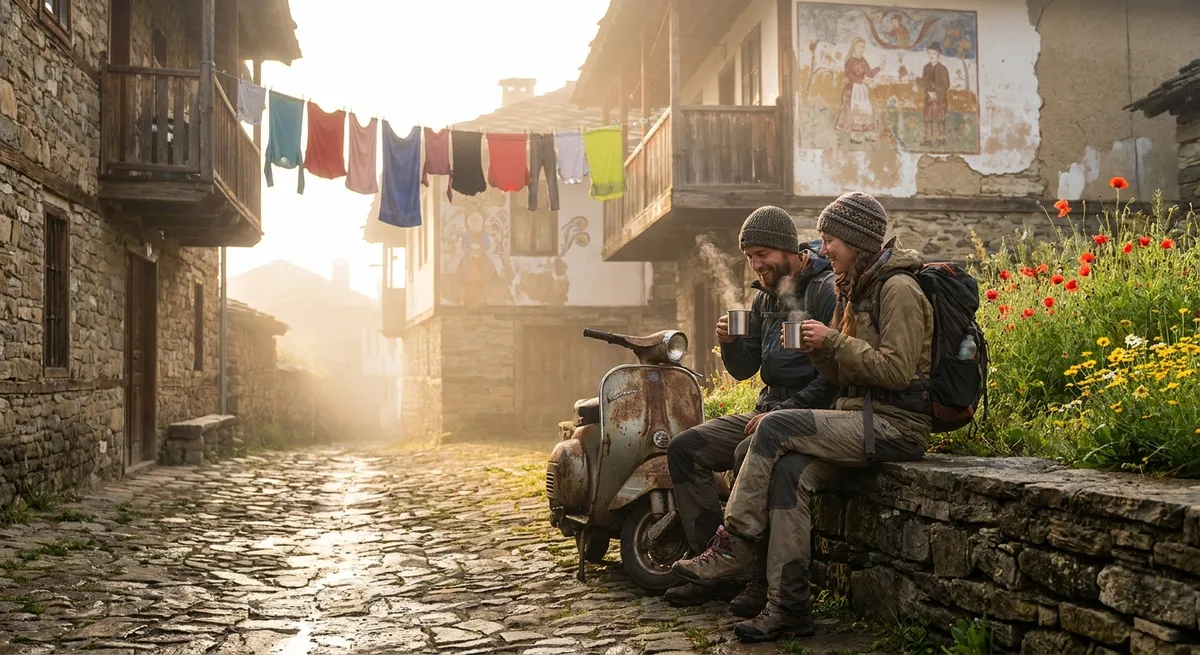
This is your invitation to travel wide without spending big—five powerful ways to turn limited funds into limitless adventure.
1. Follow the “Third Choice” Rule
The cheapest option is often crowded, and the priciest is usually polished but forgettable. The magic often lives in the “third choice”—the places and paths just one step beyond the obvious.
Skip the first restaurant on the main square and walk two or three streets away. Duck down alleys where the menus are in the local language. Look for cafés where people are laughing loudly, TVs are tuned to local sports, and the chairs don’t match. These are the places where your money stretches further and your memories run deeper.
Apply the same rule to neighborhoods and day trips. Instead of the most “Instagram-famous” spot, ask locals where they’d go to clear their head after a long week. Beaches used mostly by families, parks filled with runners and dog walkers, small-town markets just outside big cities—these are where everyday life hums. Your budget benefits, and your experience feels real, not staged.
Your mission: on every decision—food, neighborhood, attraction—ignore the first two obvious choices and see what waits behind door number three.
2. Turn Transit Into the Highlight, Not the Hurdle
Budget travel means you’ll often move slowly: buses instead of flights, trains instead of taxis, ferries instead of high-speed connections. That’s not a downgrade; it’s an upgrade in storyline.
Overnight trains give you sunrises over new skylines for the price of a hostel bed. Long-distance buses roll you through villages and landscapes you’d never see from the air. Local minibuses and shared taxis might be chaotic, but they’re rich with tiny moments—grandmothers carrying baskets, kids in school uniforms, vendors jumping on at stops with snacks you’ve never heard of.
To make slow travel work in your favor, pack a “transit kit”: a scarf (blanket, pillow, and privacy screen in one), a refillable water bottle, downloaded offline maps, and a small notebook. Plan no big tasks that day beyond getting from A to B. Let yourself stare out the window, read, daydream, or chat with the person next to you.
When you stop seeing transit as a cost and start seeing it as an experience, every ticket becomes a story generator, not just a line on your budget.
3. Chase Experiences That Cost Time, Not Money
On a budget, your best currency isn’t cash—it’s curiosity and time.
Seek out free or low-cost events: outdoor concerts, public festivals, neighborhood parades, open-air movie nights, university lectures, and museum free days. City tourism boards, local event calendars, and even library notice boards are a gold mine for this. Many major museums have “free hours” each week; parks host yoga, dance classes, or art fairs; universities host talks by authors, scientists, and activists.
Walk the city at different times of day. Sunrise in a new place feels like you have the whole world to yourself. Dusk shows you families in parks, streetlights flickering to life, and crowded food stalls starting to buzz. Night reveals quiet side streets, live music drifting from bars, and new perspectives on landmarks you saw in daylight.
Instead of paying to be entertained, place yourself where life is already happening—for free. The reward is a version of the destination that’s unscripted, unpolished, and unforgettable.
4. Let Your Budget Shape a Signature Travel Style
When you stop trying to travel like everyone else, your budget becomes a compass instead of a constraint.
Maybe your signature becomes “kitchen-table travel”: staying in guesthouses or hostels with shared kitchens, then learning to cook one simple local dish in every country using market ingredients. You’ll spend less on food, more time talking to vendors, and walk away with recipes that carry the taste of your trip long after you’re home.
Or perhaps you become a “public spaces hunter”: building your days around parks, libraries, public beaches, hiking trails, riversides, and plazas. These spaces are free, but they’re also the living rooms of a city. Watch how people use them—playing dominoes, skateboarding, picnicking, practicing music—and you’ll understand the culture better than any expensive attraction could show you.
Your constraints become your style: early-bird flights, couch-surfing, bike rentals, free walking tours, or house-sitting. When you lean into that style instead of apologizing for it, your travels feel less like sacrifice and more like a bold personal statement.
5. Build Flexibility Into Your Plans—and Hunt for “Lucky Breaks”
One of the biggest advantages of budget travel is that you’re already willing to bend. Use that flexibility to find the “lucky breaks” that other travelers miss.
Travel in shoulder seasons—those golden weeks between peak and off-peak. Prices are lower, crowds are thinner, and locals often have more time to talk. Stay slightly longer in fewer places instead of rushing through many stops; weekly discounts on rooms, rentals, and even coworking spaces can seriously cut costs.
Keep your days open enough for opportunities to slip in: a local you meet invites you to a village celebration; a hostel bulletin board advertises a shared car rental to a waterfall; a café owner tells you about a festival happening two towns over tomorrow. Flexibility is a superpower—it lets you say yes when the unexpected appears.
Use tools that track flight deals and error fares, but also watch for cheaper alternatives: overnight buses instead of domestic flights, second-tier cities instead of capital hubs, local airlines instead of international giants. When you let price and curiosity work together, your map fills up with places you never knew to dream of.
Conclusion
Budget travel isn’t a consolation prize; it’s a different kind of richness. It trades luxury for texture, routine for surprise, and polished experiences for raw, real moments that stay with you long after your wallet has been refilled.
When you choose the third option, turn transit into an adventure, hunt for time-rich experiences, lean into your own travel style, and leave breathing room for chance, your limited funds become a launchpad, not a limit.
You don’t need more money to travel boldly—you need a willingness to step into the unknown and let the world meet you halfway. The question isn’t “Can I afford to go?” It’s “What stories am I ready to live into next?”
Sources
- U.S. Department of State – Travel Advisories - Official safety and advisory information to help budget travelers plan responsibly
- Lonely Planet – Budget Travel Tips - Practical strategies and ideas for cutting costs while enriching experiences
- Rick Steves Europe – Money-Saving Travel Tips - Detailed guidance on saving money on transportation, lodging, and food in Europe
- National Park Service (NPS) - Information on U.S. national parks, many of which offer low-cost or free outdoor adventures
- Hostelworld Blog – Backpacking on a Budget - Insights into budget accommodations, social travel, and affordable experiences worldwide