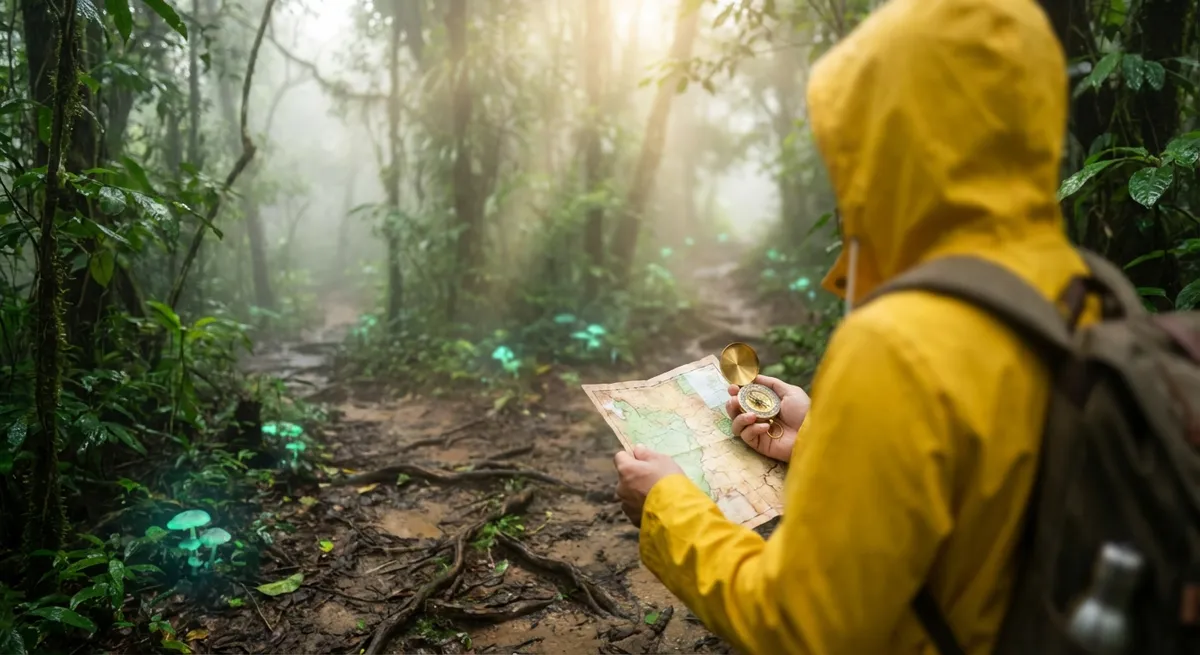
Below are five powerful shifts in how you travel—each one a mix of mindset, tactic, and tiny rebellion—that will make your next journey feel richer, wilder, and more alive.
Tune Into a Place Before You Ever Arrive
Long before your plane lands or your train rolls in, you can start “arriving” in a place by learning its rhythms. Instead of only reading top 10 lists, dig into the pulse of daily life: when people eat, where they gather, how they move.
Skip the generic hotel blog and search local news outlets, city transportation sites, and cultural calendars. Learn the basics of greetings in the local language and a few phrases for appreciation—“This is delicious,” “That was beautiful,” “Thank you for your help.” These phrases open doors that guidebooks don’t even know exist.
Pull up a map and follow the route of a local bus line or subway, imagining the neighborhoods it crosses. Check the times of sunrise and sunset to picture the golden hour light on old streets, markets, or coastlines. Doing this doesn’t just help with planning; it builds a mental map of a place’s texture so that when you finally walk out of the station or airport, you feel less like a stranger and more like someone returning to a story you’ve already started reading.
Let the Side Streets Rewrite Your Itinerary
The main sights are easy: follow the crowd, snap the photo, move on. But the real magic usually lives one or two turns away from where everyone else is going.
Leave at least one unstructured block of time each day with only a direction in mind, not a destination. Wander down the lane that smells like fresh bread. Follow the sound of a street musician echoing off stone walls. Drift toward a public park where families sit on blankets and teenagers practice dance routines. Often, what you “stumble” onto is exactly what you needed: a quiet café with handwritten menus, an elderly shopkeeper who wants to tell you about their city, a view that isn’t pinned on social media yet.
Stay alert and aware, of course—don’t wander blindly into unsafe areas—but give yourself permission to follow curiosity rather than algorithms. When a place pulls your attention, pause there. Buy something small. Ask someone what they love about their neighborhood. These unscripted detours are where a trip stops being a checklist and starts to feel like a chapter in your life.
Pack for Courage, Not Just Convenience
Most packing lists are about comfort: extra outfits, backup toiletries, “just in case” items. But imagine your bag as a toolbox for courage instead—designed to help you say yes to more experiences with fewer hesitations.
Clothing that layers easily and dries fast means you can take that last-minute hike, accept that invitation to a sunset boat ride, or stay out late without worrying about what you’re wearing tomorrow. A tiny first-aid kit and basic meds give you confidence to venture a bit farther from the tourist center. A portable battery keeps your phone alive so maps and translation apps don’t abandon you just when the adventure gets good.
Equally important is what you don’t pack. When you travel lighter, you move faster through crowds, climb more stairs without exhaustion, and hop onto an unexpected train without wrestling a suitcase the size of a refrigerator. Every ounce you leave behind is space you gain for spontaneity. Think of your backpack or suitcase as a promise: “I’m ready to go wherever this day leads.”
Make Strangers Your Best Travel Resource
The most up-to-date, hyper-local, deeply human travel guide is the person standing three feet away from you.
Ask the barista where they’d take a friend for their first night in town. Ask the hostel staff which neighborhoods they’d walk alone after dark and which they’d skip. Ask the street vendor what time the crowd dies down or the market feels most alive. You’ll get answers no search engine can fully replicate: the tiny restaurant that doesn’t bother with marketing, the quiet temple that locals visit on their lunch break, the view everyone assumes is “just for residents.”
Seek out different perspectives: older residents for history and safety tips, younger locals for nightlife and subcultures, families for parks and low-key spots. Listen with respect, say thank you, and follow up: if you take someone’s recommendation and love it, return to tell them. In that moment, the dynamic shifts—this isn’t tourist and local anymore; it’s two people sharing a story.
And if language is a barrier, use simple words, gestures, and kindness. A smile and visible effort to communicate—even badly—often unlocks more help and generosity than perfect pronunciation ever could.
Turn Every Challenge Into a Story You’ll Be Proud Of
Travel will test you. You’ll board the wrong bus, misread a schedule, get caught in the rain, or stand in front of a closed gate that was supposed to be open. These moments can ruin a day—or redefine it.
When something goes sideways, pause and mentally fast-forward. How will you tell this story later? “We got drenched, then found the coziest bakery,” or “We missed the train and ended up talking for hours with a stranger at the station.” Viewing problems as “story seeds” flips your mindset from frustration to creativity. It nudges you to look for the twist that turns a mishap into a memory.
Carry a small notebook or keep a travel journal on your phone. Capture not just where you went, but how you felt when plans crumbled and then shifted into something unexpected. Over time, you’ll notice a pattern: your most cherished travel tales rarely come from the perfectly executed plans—they’re born in the spaces where you had to adapt, improvise, and trust yourself.
Conclusion
Every journey asks you the same quiet question: Will you move through this place as a spectator or as a participant? When you arrive mentally before you land, wander beyond the obvious, pack for courage, trust the people around you, and treat challenges as raw material for great stories, you stop consuming travel and start living it.
You don’t need more money, more time, or more gear to travel this way. You need attention. You need curiosity. You need just enough bravery to step off the marked path and into the living, breathing unknown.
That’s where the world starts to meet you halfway. That’s where travel stops being a break from your life—and starts becoming the boldest part of it.
Sources
- U.S. Department of State – Traveler’s Checklist - Official guidance on preparation, safety, and documents for international travel
- CDC – Travel Health Information - Up-to-date health advice, vaccines, and destination-specific recommendations
- Lonely Planet – Travel Tips & Articles - Expert insights on packing, planning, and experiencing destinations like a traveler, not a tourist
- National Geographic Travel - Inspiring stories and photography that highlight culture, place, and responsible exploration
- Rick Steves – Packing and Travel Skills - Practical, field-tested tips on packing light, connecting with locals, and moving confidently through new places