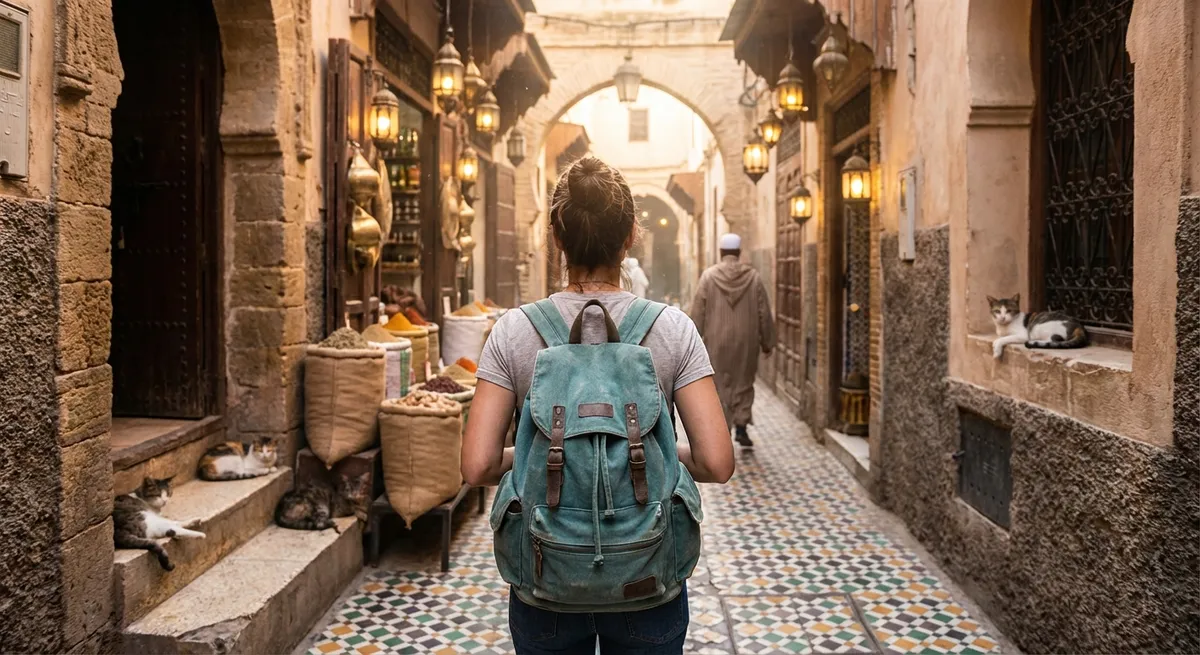
Turn Your First Hour Into a Ritual of Discovery
Most travelers land, drop their bags, and immediately chase the nearest “top attraction.” Instead, claim the first hour as your orientation ritual—a deliberate reset that tunes you to the rhythm of the place.
Step out without a rigid plan. Walk in one direction for 15–20 minutes, letting your senses lead: follow the smell of fresh bread, the sound of a street musician, or the sight of a crowded corner café. Notice how people greet each other, what they’re carrying, how fast they move. This is your crash course in local life.
Pick one micro-quest for that first hour: find a small park, a local bakery, a market, or a bookstore. Buy one hyper-local thing—a pastry, a piece of fruit, a postcard—and ask the person who sells it to you one simple question: “If you had only one afternoon free here, what would you do?” That single conversation can shortcut you past a dozen generic recommendations and into the real heartbeat of the city.
Ritualizing your first hour in every destination turns nerves into excitement, jet lag into gentle exploration, and “just another arrival” into the beginning of a story.
Use Food as Your Map, Not Just Your Meal
Your stomach is one of the most reliable compasses you own. Instead of treating meals as fuel stops between attractions, let food design entire chapters of your journey.
Start by hunting down a fresh market or a cluster of street food stalls. These are living guidebooks, full of clues about what this place grows, celebrates, and craves. Notice what’s piled high, what sells out first, and what locals are willing to stand in long lines for. That’s where the real flavor—and culture—lives.
Turn each day into a themed tasting mission. One day might be “soup day,” another “things wrapped in dough,” another “desserts locals argue about.” Ask vendors how dishes are eaten: with hands or utensils, quickly or slowly, shared or individual. Say yes (safely) to at least one thing you don’t recognize each day; that’s how you stumble into new favorites and unforgettable stories.
Be smart, not scared: choose places with high turnover, where you can see food being cooked fresh, and follow the crowds of locals, not the slickest sign. With a little care, food becomes less of a risk and more of a door—one that opens into family traditions, regional identity, and late-night conversations you can’t plan for.
Let Transit Become the Adventure, Not the Inconvenience
Airports, buses, trains, ferries—these are often treated as dead time. Flip that script and your “in-between” hours can turn into some of the most human, surprising parts of your trip.
On public transport, put your phone away for a while and actually watch the choreography around you. How do people signal for seats, pay for tickets, queue (or not)? These small behaviors tell you more about local values—order, efficiency, spontaneity—than any slogan ever will.
Make one deliberate choice to take the slower, more scenic route at least once per trip: a regional train instead of a plane, a day ferry instead of a night crossing, a bike rental instead of a taxi. Pack a small “transit kit”—not just snacks and a power bank, but a notebook, a pen, and perhaps a phrasebook. Long rides are perfect for writing down impressions while they’re still fresh or learning a few local words that might unlock smiles later.
Strike up light, respectful conversations if the moment feels right: ask a neighbor for a viewpoint not in guidebooks, a music recommendation, or the story behind a local holiday. Many travelers find that friendships—and even future invitations—start in the limbo of a train carriage or a bus station bench.
When transit stops being a chore and starts being a stage, your journey gains an extra layer of serendipity that can’t be bought or scheduled.
Practice Micro-Bravery: Tiny Risks, Big Rewards
Adventure isn’t only cliff jumps and wild treks. It’s also the dozens of small choices where you could stay comfortable—or lean gently into the unknown. These “micro-brave” moments are where most transformation actually happens.
Set a daily micro-bravery challenge before you even leave home. It could be as simple as: “Ask one stranger for a recommendation,” “Try one activity I’ve never done,” or “Say yes to the first reasonable invitation that feels safe.” Write it down. Treat it like a promise to your future self.
Once you arrive, look for opportunities that stretch you just past your edges: joining a local dance class even if you have two left feet, renting a bike in a busy city you don’t fully know yet, stepping into a neighborhood where few tourists go (after checking it’s safe) just to see how everyday life unfolds. These are small stakes, but they build a muscle: your capacity to trust yourself in unfamiliar situations.
Balance courage with common sense: share your general plans with someone you trust, keep your valuables secure, know local emergency numbers, and have a way to get back to your base. The goal isn’t recklessness; it’s intentional, sustainable boldness.
Over time, these tiny acts of bravery stack up. You come home not just with better photos, but with a wider sense of who you are and what you can handle.
Design One “Anchor Experience” That Matters to You
It’s easy to let a destination’s must-see lists dictate your entire itinerary. Instead, choose one deeply personal “anchor experience” that will matter to you long after the trip ends—something that aligns with your own fascinations, not just the city’s marketing.
Maybe you’re obsessed with coffee. Make it your mission to trace the journey from bean to cup in that region: visit a roastery, talk to baristas, taste different roasts, learn the local coffee rituals. If you’re drawn to history, find one specific era or story tied to that place and follow its trail through museums, plaques, neighborhoods, even old train lines or city walls.
Your anchor might be nature-related: sunrise on a particular hill, a cold plunge in a mountain lake, an afternoon birdwatching in wetlands most visitors ignore. Or it might be creative: sketching doorways, recording street sounds, photographing only reflections or shadows.
By crafting an experience around a personal thread, you give your trip a spine—a narrative that holds everything together. Even if weather changes your plans or an attraction is closed, your anchor keeps your journey feeling intentional, distinct, and uniquely yours.
Conclusion
You don’t need a bigger budget, a longer vacation, or a more “exotic” destination to travel like your life just got an upgrade. You need curiosity that leads your feet, bravery that fits in your pocket, and a few simple habits that turn ordinary moments into stories.
Claim your first hour. Let food be your compass. Turn transit into a stage. Practice micro-bravery. Build one anchor that matters to you. Do this, and it won’t matter whether you’re crossing an ocean or hopping to the next city over—you’ll be moving through the world like it’s a living, breathing invitation.
The map is only the outline. How vivid the journey feels is entirely up to you.
Sources
- U.S. Department of State – Travel Advisory & Safety Tips - Official guidance on staying safe and informed while abroad
- Centers for Disease Control and Prevention – Travelers’ Health - Evidence-based health recommendations and destination-specific advice
- UNESCO World Heritage Centre - Background on culturally and naturally significant sites that can inspire meaningful “anchor experiences”
- BBC Travel – Food and Travel Features - Stories illustrating how cuisine reveals local culture and history
- Lonely Planet – Responsible Travel Tips - Practical ideas for engaging more deeply and respectfully with destinations