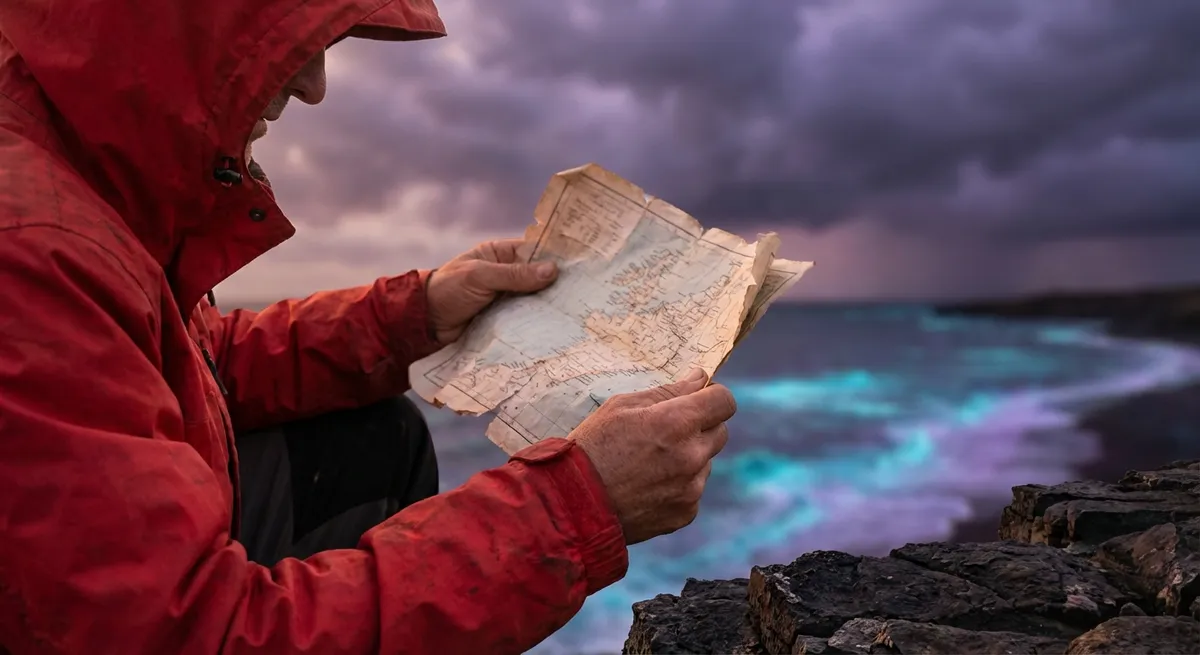
This is your invitation to chase five kinds of places that grip your senses, shake your routines, and leave you a little different when you come home.
1. Threshold Cities Where Two Worlds Collide
There are cities that don’t belong to just one story. They sit on fault lines—between continents, cultures, climates—and every street feels like crossing a border without ever showing a passport.
Think of Istanbul straddling Europe and Asia, Tangier gazing at both Africa and Europe across a narrow strait, or Panama City tying two oceans together. In these “threshold cities,” call to prayer mingles with church bells; street food stalls lean against glass towers; centuries-old alleyways point straight toward hyper-modern skylines.
These places are thrilling precisely because they refuse to be one thing. You can walk from a bazaar thick with spices and metalwork into a sleek cafe serving third-wave coffee and Wi-Fi strong enough for a video call home. Mornings might begin with mint tea and end with rooftop cocktails above container ships sliding toward another ocean.
Practical moves:
- Stay near a transit hub or a ferry terminal to feel how constantly the city is in motion.
- Build in unscheduled hours to simply walk in a straight line and watch the city morph around you.
- Eat what locals line up for, not what’s on the nearest tourist board. Those queues are road signs without words.
2. Night-Sky Sanctuaries Far from the Last Streetlight
The most powerful destination might be an absence—a place where the sky finally goes properly dark. In a world drowning in artificial light, reaching a dark-sky reserve or remote desert can feel more alien than landing on Mars.
Under truly dark skies, the Milky Way stops being an abstract word and becomes a glowing river. Satellites blink, meteors scratch brief scars across the black, and constellations you thought you knew multiply into impossible detail. Time stretches; you start to measure hours in the movement of Orion instead of notifications.
Destinations like Aoraki Mackenzie in New Zealand, the deserts of Atacama in Chile, and certified Dark Sky Parks in the American Southwest aren’t just pretty—they’re pilgrimages to a quieter version of Earth. Your eyes adjust. Your shoulders drop. You remember how small—and somehow more significant—you really are.
Practical moves:
- Travel during new moon periods for maximum darkness.
- Give your eyes 20–30 minutes to adapt; avoid checking your phone.
- Pack layers and a simple tripod if you want to try astrophotography—long exposures turn invisible stars into crowded galaxies.
3. Slow-Coast Routes Where the Journey Becomes the Destination
Not all destinations stand still. Some are stretched across a coastline, meant to be unspooled at the speed of a bus, a bike, or a stubborn old train that refuses to rush.
Picture Norway’s coastal steamers weaving through fjords, Portugal’s Atlantic villages linked by buses and surf breaks, or Japan’s local trains hugging the Sea of Japan. You’re never quite “arrived”—you’re always between places, catching glimpses of life strung along the water’s edge: fishermen hauling nets at dawn, kids cannonballing off docks, old men playing cards in shaded corners.
What makes these slow-coast routes addictive is repetition with variation. Every curve in the road or bend in the track gives you the same sea, the same horizon—but the details constantly change. Another cove. Another harbor. Another excuse to get off two stops too early and walk the rest.
Practical moves:
- Choose regional buses or local trains over high-speed options whenever you can.
- Travel with a small daypack that lets you hop off spontaneously for a village, a viewpoint, or a beach you didn’t plan.
- Keep one stretch totally unbooked—no accommodation reserved—so you can stop where it simply “feels right.”
4. High-Altitude Towns That Teach You to Breathe Differently
Above a certain height, the air itself becomes an experience. High-altitude destinations aren’t just about dramatic peaks; they’re about learning to move through the world more slowly and deliberately.
From Andean towns like Cusco to Himalayan villages tucked under 7,000-meter giants, high places make everyday actions feel epic. Climbing a simple staircase can leave you breathless; sipping tea in the morning sun feels like an accomplishment. The scenery—prayer flags, terraced fields, ice-bright mountains—hits harder because your senses are on high alert.
These towns have learned to live with the thin air and fickle weather. Markets explode with potatoes and grains that thrive in cold soil. Architecture is thick-walled and sun-facing. There’s a practical rhythm to life: walk early, rest midday, watch the light fade across peaks in the afternoon silence.
Practical moves:
- Ascend gradually if possible—give your body a day or two to adapt before tackling big hikes.
- Drink more water than you think you need and ease up on alcohol the first couple of nights.
- Listen to local pacing: if the people who live there walk slowly, that’s your new normal.
5. Borderlands That Rewrite the Meaning of “Edge”
Most maps draw borders as solid lines, but on the ground those lines dissolve into something far more interesting: a fuzzy, living zone where languages swap mid-sentence and recipes share a common plate.
Borderland destinations—think the twin cities of the US–Mexico frontier, mountain passes between Italy and Switzerland, or river crossings between Laos and Thailand—are living conversations. Street markets accept multiple currencies, menus jump between alphabets, and radio stations flicker back and forth between countries as you drive.
Staying in these liminal zones shows you that identity isn’t a neat box; it’s a spectrum. You’ll meet people who belong fully to both sides and to neither, who cook fusion not because it’s trendy but because that’s how their grandparents did it. The “edge” on your map becomes a center in real life.
Practical moves:
- Spend at least one night on each side of a border if it’s easy and safe to do so—compare how mornings feel different.
- Seek out cross-border markets or festivals; they’re often where hybrid culture is loudest.
- Learn greetings in both dominant languages; locals notice the effort and often open up faster.
Conclusion
Your most powerful destinations won’t just be places you visit; they’ll be new ways of measuring distance, time, and self. Threshold cities blur the lines between worlds. Dark-sky sanctuaries unlock forgotten wonder. Slow coasts remind you that movement can be its own reward. High-altitude towns teach humility with every breath. Borderlands prove that edges are often where life is richest.
You don’t have to chase them all at once. Choose one kind of “far” that calls to you—upward, outward, seaward, or mapless—and follow it until your inner compass spins a little. Those are the trips that never really end, because they redraw your internal map long after you’ve come home.
Sources
- International Dark-Sky Association – Dark Sky Places - Directory of certified dark-sky reserves and parks around the world
- UNESCO World Heritage Centre – Historic Areas of Istanbul - Background on Istanbul’s cultural and historical significance as a city between continents
- Norwegian Coastal Administration – Hurtigruten Coastal Route - History and role of Norway’s coastal voyage as a travel corridor
- Centers for Disease Control and Prevention – High Altitude Travel & Altitude Illness - Medical guidance on acclimatization and safe travel at altitude
- Pew Research Center – Life on the U.S.–Mexico Border - Insight into culture, identity, and daily life in a major borderland region