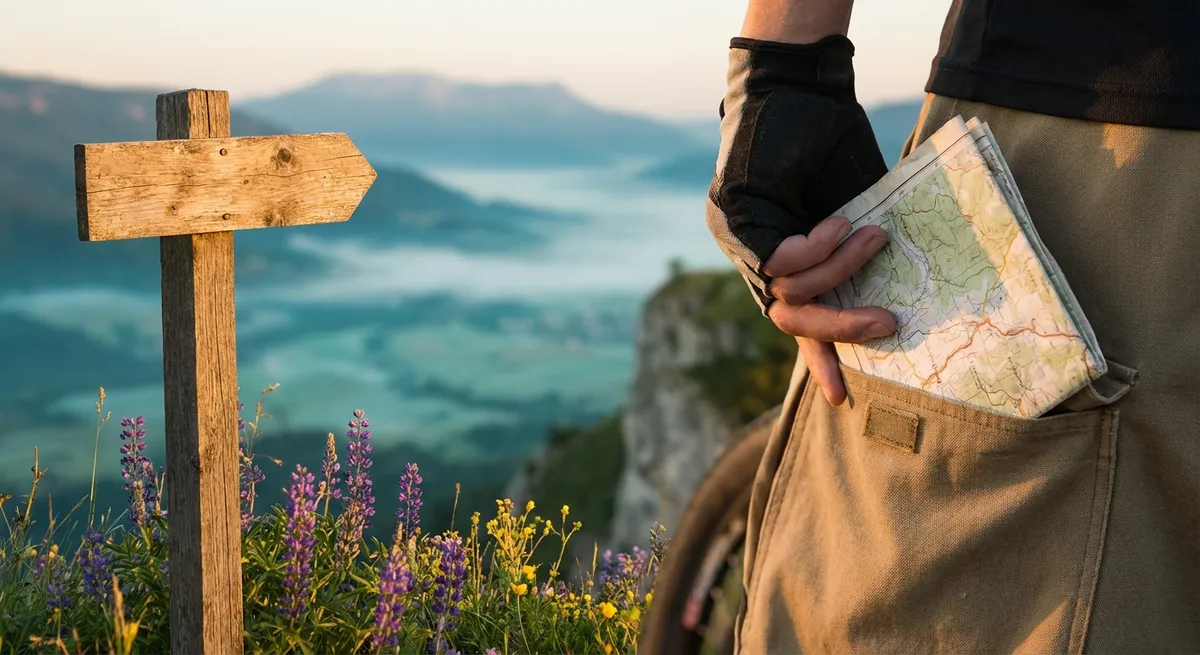
Below are five adventure ideas designed to pull you out of autopilot and drop you into the vivid, unscripted side of travel—where stories are born and the world feels startlingly, beautifully new.
1. Follow One River From Its Quiet Source to Its Wild Heart
Rivers don’t care about your schedule. They carve their own path—through towns, forests, and canyons—and following one from source to mid-journey is like stepping into a living story.
Pick a river small enough to trace but long enough to surprise you: maybe Slovenia’s emerald Soča, Scotland’s River Spey, or the Rhone before it widens in France. Start high, near its cold, hesitant trickle. Hike alongside it as it gathers strength, turning from a ribbon into a roar. Camp on gravel bars, wake to mist above the current, and learn its mood by sound alone.
Talk to the people who live by it: the angler who knows where trout sleep, the farmer who watches spring floods, the café owner who’s seen summer kayakers for decades. Use footpaths, local buses, and, when it widens, a kayak or packraft. You’re not just moving from A to B—you’re learning how water shapes land, life, and culture.
Practical moves:
- Bring a topographic map or offline map app; follow footpaths that shadow the river instead of the fastest road.
- Ask in local visitor centers or small outdoor shops about safe sections for paddling or swimming.
- Pack layers—mountain sources are colder and more changeable than downstream towns.
- Respect flow and safety: never underestimate currents, cold shock, or dam releases.
2. Design a Sunrise-to-Midnight “Micro-Expedition” in One Place
You don’t always need weeks and wilderness to feel like an explorer. A single, fully claimed day in one place can feel bigger than a month of half-awake sightseeing.
Choose a town, island, or region and plan a dawn-to-midnight circuit with one rule: no backtracking, and every move must feel like discovery. Start in the dark and walk to the best sunrise viewpoint—a hill, pier, rooftop terrace, or quiet beach. From there, let curiosity dictate your line.
Trace old lanes instead of main roads. Hop on whatever local transport appears first: a tram, shared taxi, ferry, bike rental. Eat where the menu isn’t translated, linger at street corners with music, follow the smells of grilled food or fresh bread. End somewhere completely different from where you began: a night market, seaside lookout, or hilltop lit by city glow below.
By the time midnight hits, you’ll feel like you lived multiple days in one.
Practical moves:
- Mark a rough loop on a map but leave gaps—your job is to improvise the connections.
- Pack light: small daypack, water, sun protection, a jacket, portable charger, and a headlamp.
- Check local transit times so you’re not stranded if the last bus or ferry leaves early.
- Make space for unscheduled conversations—adventures often begin when you pause, not when you rush.
3. Let the Night Sky Be Your Compass
Modern life blurs the stars into a hazy ceiling; adventure sharpens them back into a map. Traveling somewhere dark enough to truly see the sky rewires how you feel about distance, time, and your place in it.
Head to a certified dark-sky reserve or remote region—maybe a high desert, rural valley, or island far from city glare. Arrive before sunset and watch the color drain from the horizon. As darkness settles, you’ll feel the sky thicken with detail: the Milky Way as a pale river, satellites gliding silently, meteors grabbing your breath mid-sentence.
The adventure is not just in watching, but in using the sky. Learn to find the North Star, trace constellations that have guided travelers for centuries, and track the slow rotation of the heavens through the night. Camp, or lie on a rooftop with a blanket and thermos, and let time stretch until you lose track of when “late” became “early.”
Practical moves:
- Check moon phases and aim for a new moon for the darkest skies.
- Use light pollution maps online to choose locations with minimal glow.
- Dress much warmer than you think you need—night cold sinks into still bodies.
- Download stargazing apps to identify constellations, but remember to look up more than down.
4. Say Yes to a Journey With No Shared Language
Adventure isn’t only cliffs and forests; sometimes it’s a conversation desperately trying to happen. Put yourself in a place where you don’t share a language with most locals and commit to staying open, patient, and inventive.
Book a home stay, small guesthouse, or village room instead of a big hotel. Learn a handful of essential phrases—hello, thank you, please, sorry, delicious, how much, where, and very important: “I don’t understand.” Then watch what happens when you pair those words with hand gestures, pictures scribbled in notebooks, pointing at maps, and shared laughter over misunderstandings.
You’ll notice how much connection happens beyond vocabulary: in tone, body language, and the universal grammar of shared meals. Someone will teach you how to say a tongue-twisting local greeting; you’ll show photos of home. The adventure unfolds in the pauses, the puzzle of ordering food, the surprise of being invited to a family celebration when you least expect it.
Practical moves:
- Carry a small phrasebook or offline translation app but treat it as backup, not a shield.
- Learn how to say any allergies or health issues in the local language.
- Keep a paper map and a small notebook for sketching directions and numbers.
- Slow down. Rushing makes miscommunication frustrating instead of fun.
5. Pick a Skill, Not a Destination—and Let It Lead You
Instead of asking “Where should I go?” ask “What do I want to learn with my whole body?” Then choose your destination as a side effect of that answer.
Maybe it’s learning to freedive along volcanic coastlines, mastering backcountry navigation in alpine terrain, dancing traditional styles in a city that breathes rhythm, or finally tackling multi-day bikepacking. Sign up for a course or guided intro, then give yourself extra days to roam and practice on your own.
Your itinerary shifts from sightseeing to skill-building. Mornings become sessions of trying, failing, and improving. Afternoons are for exploring the landscape your new skill opens up—reefs, trails, dance halls, mountain passes. You return home not just with photos, but with a new capability stitched into who you are.
Practical moves:
- Research reputable local schools or guides; read reviews and safety policies carefully.
- Start training at home—basic fitness, flexibility, or theory—so you arrive ready to dive deep.
- Give your body rest days; growth happens in the spaces between intense efforts.
- Keep a small “skill journal” to track what you learn each day and ideas for your next adventure.
Conclusion
Adventure isn’t a destination; it’s a decision. It’s choosing the river over the highway, the unplanned loop over the checklist, the star-streaked sky over the hotel lobby, the tricky conversation over the safe silence, the skill over the souvenir.
You don’t have to wait for the “perfect trip” or the “right time.” The world is already in motion—tides turning, seasons shifting, people living rich, messy lives just beyond your comfort zone. Step toward them. Let your next journey be less about control and more about discovery.
Stand on that threshold where plans end and possibilities begin—and hop next into a story you’ll still be telling years from now.
Sources
- International Dark-Sky Association – Find a Dark Sky Place - Directory of certified dark-sky parks and reserves around the world for stargazing adventures
- Leave No Trace Center for Outdoor Ethics - Guidelines for minimizing environmental impact during river journeys, camping, and outdoor travel
- U.S. National Park Service – River Safety Tips - Practical safety advice for hiking and paddling along rivers and waterways
- Centers for Disease Control and Prevention – Travel Health - Up-to-date health, vaccination, and safety information for international travelers
- Lonely Planet – Responsible Travel Tips - Guidance on ethical, culturally respectful, and sustainable travel practices