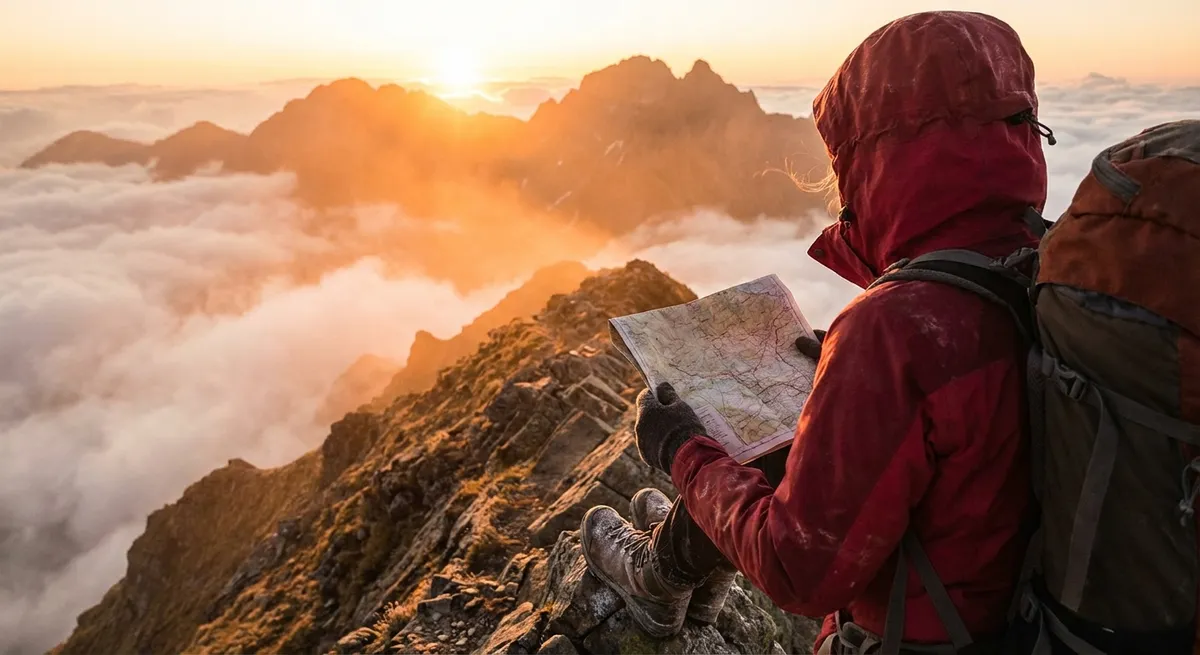
Below are five adventure ideas that don’t just fill your camera roll—they change the way you move through the world. Each one is designed to stretch your comfort zone in a different direction, with vivid experiences and practical tips to help you actually do them.
Trade the Scenic View for the Night Sky
Hotels give you comfort. The open sky gives you perspective.
Swap four walls and a lobby bar for a night under a sky full of stars. Whether it’s desert camping, a mountain hut, or a lakeside bivouac, sleeping outdoors flips your sense of scale—suddenly, you’re small, the world is huge, and that’s exactly what makes it thrilling.
Look for recognized dark-sky reserves or national parks where light pollution is low. Show up before sunset to set up camp, learn the basics of campfire safety, and bring layers—temperatures usually dip harder than you expect. As the light fades, the noises shift: insects tuning up, wind weaving through trees, waves or river sounds settling into a steady heartbeat.
If you want an extra dose of awe, plan around celestial events: meteor showers, eclipses, or the elusive northern lights. Use a stargazing app to spot constellations and planets, or just lie back and let the sky do what it does best—remind you that your everyday worries are tiny compared to the universe above you.
Follow Water Instead of Roads
Roads take you where everyone goes. Rivers, coasts, and waterfalls take you where your pulse starts to race.
Build an adventure around water: sea kayaking between islands, stand-up paddling across a calm bay, canyoning through a hidden gorge, or chasing waterfalls deep into a rainforest. Water has a way of turning time elastic—an hour can feel like a whole chapter of your life.
For safety, choose guided trips if you’re new to a water sport. Always check currents, tides, and weather forecasts; nature doesn’t negotiate. A personal flotation device isn’t optional, even for strong swimmers. Start with half-day experiences, then level up to multi-day river expeditions or coastal routes where you camp along wild shores.
There’s a special kind of liberation that comes from planning your days around tides instead of traffic, listening to waves instead of notifications, and ending sunsets with wet hair and salt on your skin. On water, you don’t just travel through a place—you move with it.
Climb Something That Intimidates You
You don’t have to be a mountaineer to feel the rush of standing higher than you thought you could.
Find a vertical challenge that makes your stomach flutter in the best way: a beginner-friendly via ferrata, a guided rock climb, a steep summit trail, or an urban climbing gym that mimics real cliffs. The goal isn’t to conquer the mountain; it’s to meet a stronger version of yourself at the top.
Start with realistic difficulty—research elevation gain, trail conditions, and weather patterns. Train a bit beforehand: long walks, stair climbs, light strength work for legs and core. Invest in good footwear; blisters destroy more trips than bad weather.
As you ascend, your world narrows to simple decisions: one more step, a better foothold, another deep breath. When you finally pull yourself over the last ledge or crest the final incline, the view hits differently. It isn’t just beautiful—it’s earned. That’s the moment you’ll revisit long after the trip is over, every time life throws you a metaphorical mountain.
Let Your Taste Buds Lead the Way
Some of the boldest adventures start with a single unfamiliar bite.
Instead of just seeing a place, taste it—at street-food stalls, chaotic markets, family-run diners, and night bazaars that don’t even wake up until after dark. Food is a language that doesn’t care what passport you carry.
Do a little homework to discover local specialties, then challenge yourself to try at least one dish you’ve never heard of in each new destination. Join a cooking class or a food tour run by locals to understand how ingredients, traditions, and history all sit in the same bowl. Learn how to say “no meat,” “no nuts,” or “mild spice, please” in the local language if you have dietary needs, and follow basic food safety rules: hot and fresh is usually safest.
The real adventure is in saying yes to flavors and textures that surprise you. The smoky char of street-grilled skewers, the crackle of fresh bread from a tiny bakery, the heat-and-sweet of a sauce you can’t quite describe—these are the sensory memories that keep pulling you back into the world.
Go Silent to Hear More
The loudest part of your trip doesn’t need to be your itinerary—it can be the quiet inside your own head.
Dedicate part of your journey to intentional silence and slowness. That might be a solo day hike without headphones, a digital detox weekend in a remote cabin, a retreat in a monastery or temple that welcomes visitors, or simply a few sunrise walks where your phone stays on airplane mode.
Before you start, tell people who might worry that you’ll be offline for a set period. Download offline maps and key information in advance. Bring a notebook; when your brain stops looping through notifications, thoughts surface that you didn’t know you had.
You’ll start to notice small things again: the rhythm of footsteps on dirt, the way mist slides off a valley, the pattern of a city waking up. Adventure isn’t always about louder, faster, higher. Sometimes the bravest thing you can do is pause long enough to hear what the journey is trying to tell you.
Conclusion
Adventure doesn’t belong only to extreme athletes, influencers, or people with unlimited time and money. It belongs to anyone who’s willing to trade a little comfort for a lot of wonder. Sleep under the stars. Follow the pull of water. Climb something that scares you. Taste the unfamiliar. Sit in the kind of silence that shifts your entire inner landscape.
When you start building trips around these experiences, you’re not just ticking off destinations—you’re rewriting who you are and what you believe you can handle. And that? That’s the kind of journey that keeps echoing long after you’ve unpacked your bag.
Sources
- International Dark-Sky Association - Information on certified dark-sky parks and reserves for stargazing-focused adventures
- National Park Service – Camping & Overnight Stays - Guidance on planning safe and responsible camping trips in U.S. national parks
- American Canoe Association - Safety standards and best practices for paddle sports and water-based adventures
- UIAA – International Climbing and Mountaineering Federation - Advice, safety info, and guidelines for hiking, climbing, and mountain activities
- Centers for Disease Control and Prevention – Food and Water Safety While Traveling - Practical tips for safely enjoying local cuisine and drinks while abroad