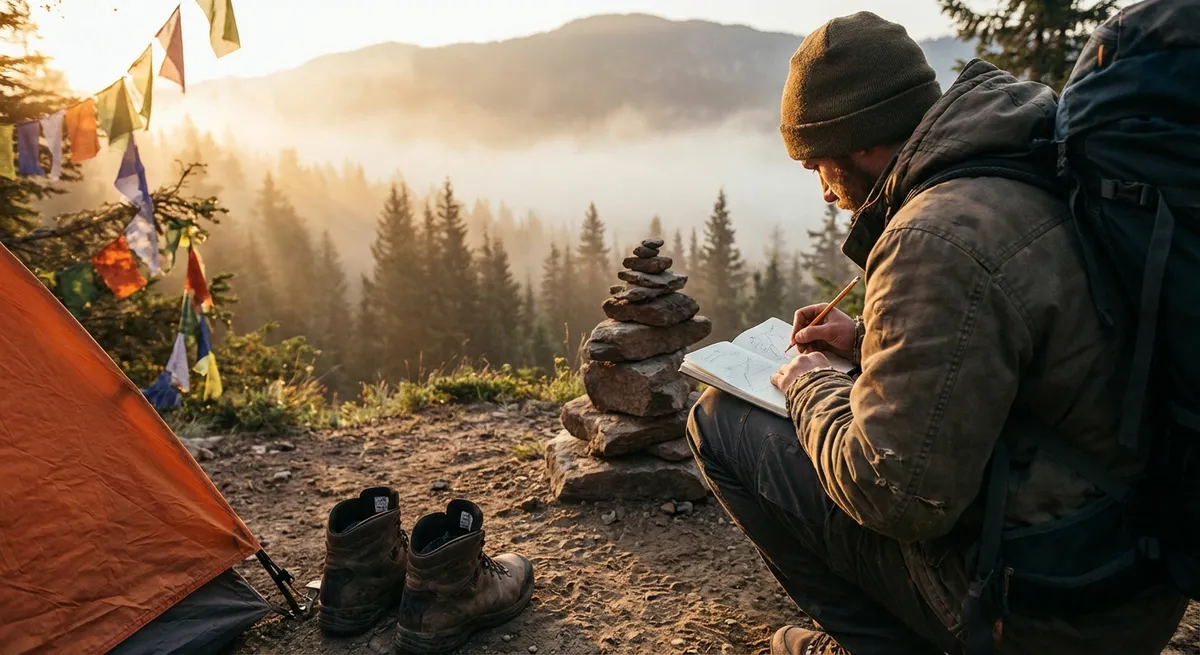
These five adventure moves aren’t about checking off “epic” destinations. They’re about turning any trip—weekend or long-haul—into a story that pulses with life, risk, and real connection.
Trade the Viewpoint for the Ridgeline
Most travelers stop where the railing starts. Adventure begins where the crowd ends.
Instead of settling for the designated viewpoint, look for the ridgeline, the side trail, or the higher contour—the places that require a little extra sweat and curiosity. This might mean taking the lesser-used trail that peels away from the main path, signing up for a local-guided trek instead of a standard bus tour, or choosing a hut-to-hut hike over a simple day walk.
On a ridgeline, the landscape opens up in 360 degrees and so does your sense of scale. Sunsets feel closer, weather feels real, and your body becomes part of the terrain rather than just a spectator. Pack smart—layers, water, basic first aid, offline maps—and know your limits, but be willing to push a little past your comfort zone.
Ask park rangers, local guides, or mountain clubs for options that are safe yet less crowded. Bring trekking poles if the terrain is steep, and always check the forecast before committing. The payoff isn’t just the view; it’s the quiet, the wind, and the realization that you earned every inch of that horizon.
Say Yes to the Unplanned Invite
Your most memorable adventures often begin with a simple sentence: “Do you want to come along?”
When a local invites you to a family celebration, a dawn fishing run, a pickup football match, or a community festival you’ve never heard of, that’s the door you’ve been waiting for. You can’t Google this stuff. These invitations are where a place stops being a backdrop and starts being a living, breathing world you’re briefly part of.
It’s natural to hesitate. You might worry about safety, language barriers, or awkwardness. Use common sense: meet in public first, share your plans with someone, trust your instincts, and keep your belongings minimal and secure. But if it feels right, say yes.
Adventures like these may not photograph well—but they’re the stories you’ll still be telling ten years from now: the improvised dance at a village festival, the shared meal on a family rooftop, the midnight motorcycle ride to watch a meteor shower from a hill outside town. The real treasure is that sudden shift from tourist to guest.
Learn a Skill Where It Was Born
Instead of just consuming a place, apprentice yourself to it—if only for a day.
Take a surf lesson where the locals grew up reading the waves. Learn traditional cooking from someone whose recipes never needed a written book. Join a climbing course in a region where people treat the crag as a second home. Try freediving where the ocean has fed communities for centuries, or sign up for a glacier walk with certified guides in a region shaped by ice.
Learning in the birthplace of a craft changes how you experience it. The surf isn’t just “fun”—it’s a conversation with the swells that carve the coast. That ceramic bowl isn’t just a souvenir—it’s hours of patient spinning and firing, guided by hands that have done this for decades.
Pick schools or guides with proper certifications and strong safety practices. For high-risk activities (diving, mountaineering, whitewater rafting), check their credentials, equipment quality, guide-to-client ratios, and reviews from experienced travelers—not just pretty social media photos. This kind of adventure gives you more than adrenaline; it sends you home with a skill that keeps reminding you of the place long after you leave.
Follow the Local Rhythm, Not the Algorithm
Algorithms send travelers to the same ten spots; adventure begins when you sync your trip to the pulse of local life instead.
Swap “Top 10 Must-See” lists for local calendars and notice boards. Visit the weekly market instead of the biggest mall. Sit in the back row of a neighborhood theater, attend a regional sports match, or wander into a courtyard where live music spills into the street. Let your day be shaped by local schedules—market days, prayer times, evening promenades—instead of only by opening hours and TikTok trends.
Start with simple moves: eat where the handwritten menu changes daily; ask your host, “If I had just one day here, where would you send me that no guidebook mentions?” Travel on public transport where it’s safe to do so—it’s an instant immersion into a place’s real rhythm.
You’re not chasing “hidden gems” as trophies; you’re learning how people actually live, commute, celebrate, and unwind. Adventure, in this sense, is less about going farther and more about going deeper. The reward is a kind of quiet awe: the feeling that, for a brief moment, you’ve slipped inside the heartbeat of somewhere new.
Build One Bold Moment Into Every Trip
Every journey—no matter how short or “ordinary”—deserves one moment that makes your pulse spike.
This doesn’t have to be extreme to be bold. It can be the first time you camp alone under a vast sky, the first night train you take across a border, your first time ordering food in a language you barely speak, or stepping into cold, glacier-fed water even though the timid part of you wants to stay dry. The scale doesn’t matter. The transformation does.
Before any trip, decide: What is my one bold moment going to be? Write it down. Maybe it’s hiking to a summit for sunrise, cycling to a neighboring town instead of taking a taxi, joining a group trek despite being an introvert, or finally trying that canyoning or via ferrata route with reputable guides.
Prepare for it: research, gear, safety checks, physical conditioning if needed. On the day itself, expect the shiver of doubt—that’s your old comfort zone trying to keep you small. Breathe, respect your limits, stay smart, and go anyway. That one moment becomes the anchor memory of your trip, the scene your mind replays when everyday life starts to flatten out again.
Conclusion
Adventure isn’t a product you buy; it’s a habit you practice.
Every time you choose the ridgeline over the viewpoint, the unplanned invite over the familiar bar, the skill over the selfie, the local rhythm over the algorithm, and that one bold moment over quiet compromise, you’re training yourself to live more awake. You’re collecting stories that don’t need filters to feel vivid.
Your next trip doesn’t need to be longer, farther, or more expensive. It just needs more intention and a little more courage. Stand at the edge of your next decision—trail fork, dinner invite, skill class, train platform—and ask yourself: Which choice makes a better story?
Then take the step that scares you just enough to feel like you’re truly alive.
Sources
- U.S. National Park Service – Hiking Safety Tips – Guidance on planning, gear, and safety considerations for trail and backcountry adventures
- UIAA – International Climbing and Mountaineering Federation – Information on mountain safety, certified equipment, and responsible climbing practices
- PADI – Choosing a Dive Shop and Instructor – Practical advice for vetting adventure operators and ensuring safe water-based activities
- CDC – Travel Health & Safety – Up-to-date health, safety, and situational awareness resources for international travelers
- UNESCO – Intangible Cultural Heritage – Insight into traditional skills, practices, and cultural expressions you can respectfully experience and learn while traveling