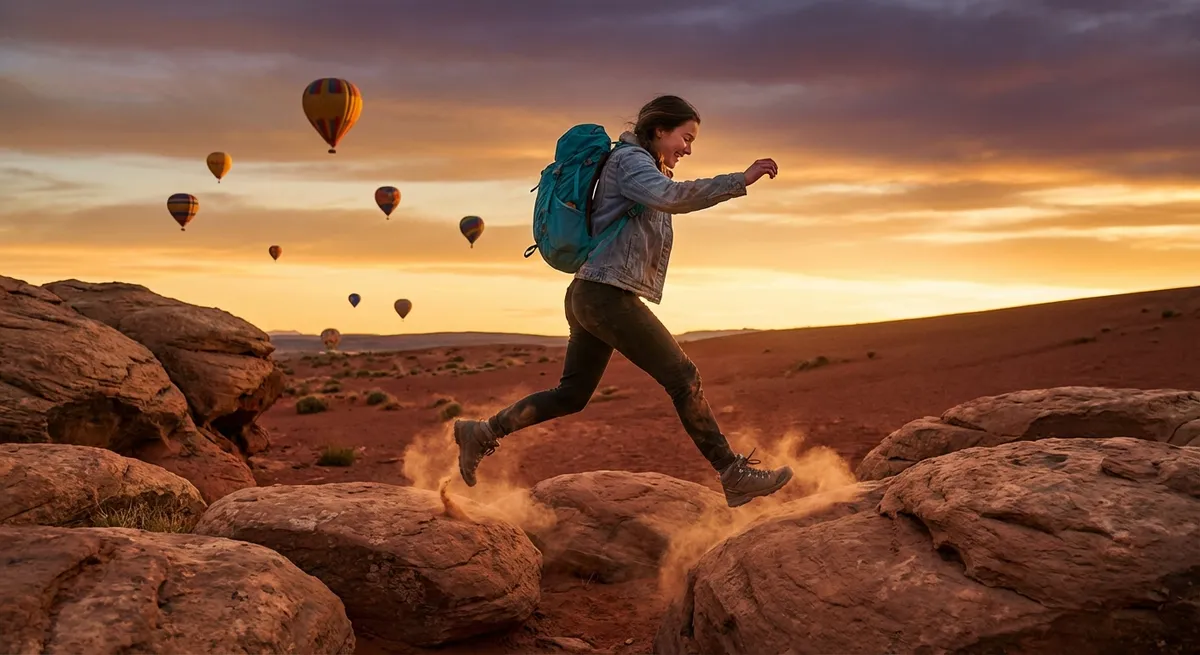
Below are five powerful adventure ideas designed to stretch your comfort zone, ignite your senses, and leave you with stories that feel almost too bold to be your own—until they are.
1. Chase First Light: Sunrise Missions Above the World
There’s a specific kind of magic that only exists before most people wake up. The air is cooler, sounds are sharper, and the world feels like it’s quietly resetting itself. Planning a sunrise mission—whether it’s a mountain overlook, a rooftop, a desert dune, or a coastal cliff—turns an ordinary day of travel into an epic chapter.
Set out in the dark with a headlamp and a thermos of something warm. As you climb or walk, you’ll feel the slow reveal of the landscape around you: silhouettes becoming ridgelines, stars fading as the sky bruises from black to deep indigo. When the horizon finally ignites, you’re no longer just “on a trip”—you’re standing in the center of a living painting you had to earn.
Practical advice: check sunrise times, scout your route in daylight the day before, and pack layers; high viewpoints can be cold even in warm climates. Tell someone where you’re going, and if you’re hiking, use a reliable app or offline map. The reward? Those first rays on your face will feel like the universe signing your permission slip to live more boldly.
2. Follow the Water: Rivers, Coasts, and Wild Swims
Water has always been a natural compass for adventure. Where there’s a river, a shoreline, a lagoon, or a hidden waterfall, there are stories waiting for you—along with a healthy rush of adrenaline. Designing part of your journey around water transforms how you move through a place.
In coastal towns, trade one museum afternoon for a sea kayak or a stand-up paddleboard session. Along rivers, join a whitewater rafting trip or a gentler float and watch how landscapes and towns reveal themselves from this liquid highway. In lakes and natural springs, cold-water dips can become a personal ritual: one deep breath, one bold plunge, one unforgettable memory.
Practical advice: always respect local safety guidelines—currents, tides, and water quality matter. Ask locals where they swim and which operators are the most safety-focused and sustainable. Pack a quick-dry towel, a dry bag for essentials, and sandals you don’t mind getting wet. You’ll come home with more than photos; you’ll carry the feeling of having moved with the pulse of the planet.
3. Step Into Someone Else’s World for a Day
Adventure isn’t only cliffs and canyons—it’s also stepping into lives very different from your own. Let your next journey include a day where the goal isn’t to “see the sights” but to briefly apprentice yourself to another way of living.
Spend a day on a small farm harvesting with local workers, learn basics of traditional fishing with a coastal family, or join an indigenous-guided walk that centers their knowledge of land and plants. Try a cooking class that visits markets at dawn, or a workshop with local artisans where you make something with your hands. These experiences turn destinations into relationships, and landscapes into living stories.
Practical advice: look for community-led or locally owned experiences rather than mass-produced tours. Read reviews, check for ethical guidelines, and ensure the experience respects local culture and pays fairly. Approach with humility, ask permission before taking photos, and remember: you’re not there to consume a culture—you’re there to connect with it.
4. Navigate by Taste: Culinary Quests as Urban Expeditions
A city looks one way on a map—and completely different when you chase flavors instead of famous monuments. Let your curiosity (and your hunger) redraw your itinerary into something more adventurous and delicious.
Pick a single local specialty—noodles, dumplings, tacos, coffee, pastries, whatever the region is proud of—and turn it into a quest. Visit a market stall that’s been there for decades, then a modern twist at a trendy spot, then a late-night stand recommended by a bartender or taxi driver. As you taste your way across the city, you’ll move through neighborhoods you might have skipped, picking up stories, smells, and sounds guidebooks never mention.
Practical advice: ask multiple locals for recommendations and look for places busy with residents, not only visitors. If you have dietary needs, learn key phrases in the local language and keep them handy. Carry cash for small spots, and be open to sitting elbow-to-elbow with strangers—that’s often where the best conversations (and secret suggestions) appear.
5. Design a Mini Expedition: 24 Hours of Intentional Challenge
You don’t need weeks in the wilderness to feel like an explorer. Set aside a single 24-hour window on your trip and declare it your “mini expedition”—a short, focused challenge that pushes you just beyond your current edge.
Maybe it’s a long day hike with a summit goal, a bike ride between two towns, a hut-to-hut trek, or camping overnight under the stars. Maybe it’s exploring an unfamiliar district on foot with no rideshares allowed, following only a paper map and local directions. The point isn’t danger; it’s deliberate effort. You plan, you prepare, you commit—and you discover you’re capable of more than you thought.
Practical advice: know your limits and choose something that’s challenging but realistic for your fitness and experience. Check weather, bring essential safety gear, and share your plan and route with someone. Pack more water and snacks than you think you’ll need. When you’re tired and tempted to quit, remember: this is the moment you came for—the edge where comfort ends and story begins.
Conclusion
Every powerful adventure starts the same way: with a single decision not to let the day be ordinary. You don’t have to quit your job, sell your belongings, or cross continents to feel alive. You simply need to choose experiences that make your heart beat faster and your world feel wider.
Chase first light. Follow the water. Step into other lives. Navigate by taste. Design your own mini expeditions. When you travel like this, you’re not just collecting stamps in a passport—you’re gathering proof that you can do difficult, beautiful, unexpected things.
The world is waiting. So is the version of you that knows how to dance with it.
Sources
- U.S. National Park Service – Hiking Safety Tips - Guidance on planning safe sunrise hikes, day treks, and outdoor adventures
- American Hiking Society – Leave No Trace Principles - Best practices for responsible exploration in natural environments
- Centers for Disease Control and Prevention – Healthy Swimming - Key information on staying safe and healthy in natural and recreational waters
- UNESCO – Intangible Cultural Heritage - Insight into community-led cultural traditions and practices around the world
- Slow Food International - Background on food culture, local gastronomy, and why culinary experiences deepen travel