These five travel moves aren’t about being perfect or “doing it like an influencer.” They’re about finding the wild, vivid edges of your own adventure—and making every mile count.
Trade “Seeing Everything” for “Seeing Deeply”
Racing from sight to sight feels productive, but it often dulls the real magic of travel: depth.
Instead of trying to conquer an entire city in a day, choose one neighborhood and let yourself sink into it. Wander side streets without a goal. Sit in the same café every morning and watch the tempo of local life unfold. Notice the way conversations rise and fall, the patterns of traffic, the smell of the bakery at 4 p.m. When you return, you won’t just have a photo of a monument—you’ll have a sense of how it feels to exist there.
Depth also changes how you plan. Zoom out from “What can I see?” to “What can I understand?” If you’re in Kyoto, that might mean one temple in the early morning and a slow walk along the river instead of a ten-stop sprint. In Mexico City, it might be a single museum followed by hours people-watching in a plaza. The fewer things you cram in, the more space you create for unscripted moments: a stranger’s recommendation, a festival you stumble into, a sunset you’re finally still enough to really notice.
When you let yourself see less, you actually experience more.
Let Curiosity, Not Algorithms, Guide Your Days
Guidebooks and apps are helpful—but they’re the trailer, not the full movie.
Use digital tools as a starting point, then deliberately step off their path. Once you’ve pinned a couple of main sights, give every day a “wildcard window”: two or three hours with no fixed plan except to follow your curiosity. Turn down the street that looks interesting. Stop in the shop with a handwritten sign. Say yes when someone suggests a place you’ve never heard of.
Curiosity also means asking better questions. Instead of “What’s the best restaurant around here?” try “If your best friend visited for one day, where would you take them?” Or “Where do you go when you’re celebrating?” These questions open doors algorithms can’t see—the tiny family-run spot with no website, the viewpoint that only locals bother climbing to at dusk.
Documenting less in the moment can deepen this curiosity. Pocket your phone for a while and treat the city like a book you’re reading, not a backdrop you’re collecting. You can take photos later; for now, pay attention to details your camera can’t capture: the tension in the air before a storm, the way conversations shift after dark, how different a place feels on Monday morning versus Saturday night.
Turn Transit Time Into Adventure Time
Most people treat transit as the boring in-between—hours to be endured. Flip that, and your trip expands without adding a single extra day.
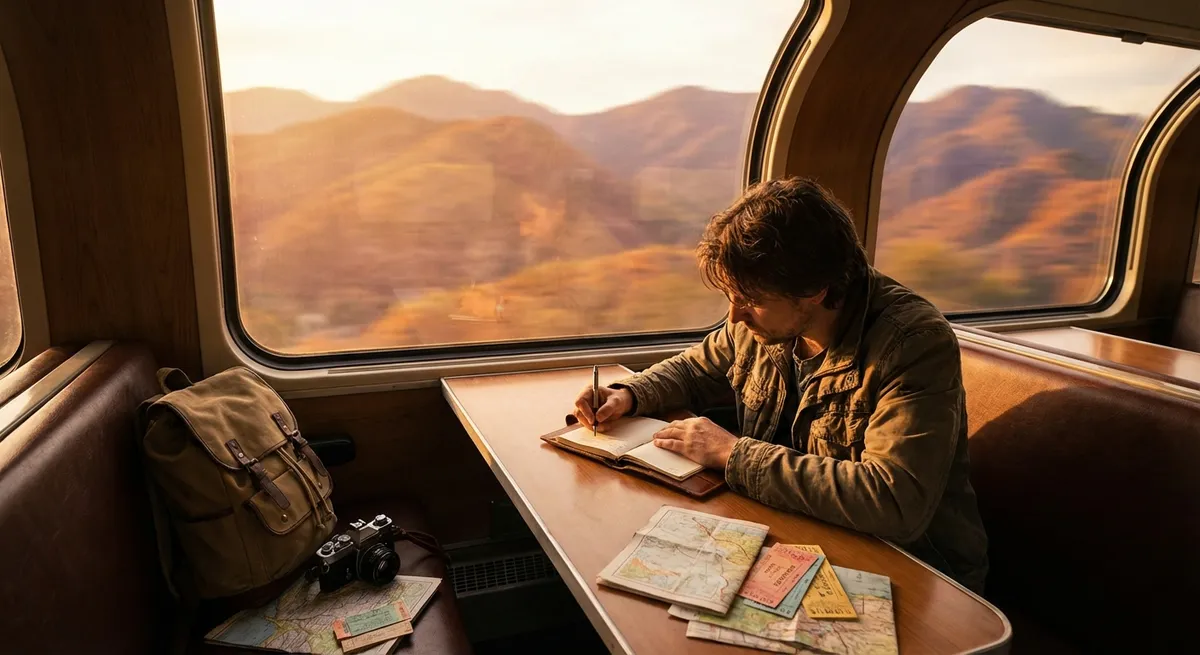
On trains, skip the noise-cancelling headphones for a while and watch the scenery like it’s a live documentary of the country’s backbone. Notice how architecture changes as you leave the city. Look for the small stories: a lone bicycle by a field, kids playing soccer in an alley, laundry strung between mismatched balconies. Jot what you see in a tiny notebook; later, those scraps of observation become some of your most vivid memories.
In airports and bus stations, create small missions. Try one local snack you can’t pronounce. Learn how to say “thank you” and “this is delicious” in the local language and actually use the phrases. Sit near windows and trace the routes of planes or buses, imagining the lives of people boarding with you. Instead of thinking, “Ugh, three hours to kill,” think, “Three bonus hours inside a different slice of this country.”
When possible, choose routes that reveal more of the landscape, even if they’re slower. An overnight bus through the mountains, a ferry between islands, a regional train instead of a short flight—these can become the parts of your trip you remember most. Movement is part of the story, not a pause in it.
Build Micro-Connections That Change How You See a Place
You don’t have to make instant best friends overseas to feel connected. Small, intentional interactions can completely reframe how a place feels.
Start with something simple: learn and actually use three local phrases beyond “hello” and “thank you.” Try “How are you?”, “This is beautiful,” or “I’m learning your language.” You’ll be surprised how often this effort softens faces and opens conversations. Even if your pronunciation is clumsy, the attempt itself is a bridge.
Eat where conversation is possible: long communal tables, food markets, small counters. Ask the person next to you, “What did you order?” or “Is there something on this menu I shouldn’t miss?” Most people love being the expert on their own home turf. These quick exchanges often lead to recommendations you’ll never find online: the park where locals gather at sunset, the bakery that sells out by 10 a.m., the tiny bar with live music in the back room.
Consider saying yes to structured micro-connections too—a neighborhood walking tour with a local guide, a cooking class in someone’s home kitchen, a language exchange meetup you find on a community board. You’re not just collecting activities; you’re collecting lenses through which to see the city more clearly. Once a place has a human face for you—a grandmother who taught you to make dumplings, a student who walked you to the metro—you stop seeing it as “foreign” and start seeing it as another version of home.
Travel With a Ritual That Anchors Every Day
New places are loud with novelty. A small personal ritual can anchor you so the experience doesn’t just wash over you—it sinks in.
Choose one simple, repeatable practice and carry it across countries: writing five lines in a journal every night, walking ten minutes alone at sunrise, sketching one thing you see each day, or recording a 30-second voice note about what surprised you. Over time, this ritual becomes a thread connecting all your journeys into one long, evolving story.
Rituals also help you notice what really matters to you as a traveler. Maybe your daily walk keeps pulling you toward parks and rivers; maybe your journal entries always mention markets and street food. These patterns reveal your personal “travel north star,” the experiences that reliably light you up. You can then design future trips around those, instead of blindly following trending must-sees.
Most importantly, a ritual slows you down just enough for gratitude to catch up. Even if the day was messy—missed trains, wrong turns, unexpected rain—your ritual asks: What was still beautiful here? What did I learn about myself in this chaos? That’s how travel stops being a temporary escape and starts becoming a tool for building a braver, wider life.
Conclusion
Adventurous travel isn’t reserved for the fearless or the wealthy; it grows out of choices any traveler can make. Choose depth over speed. Let curiosity outrun your itinerary. Treat transit as part of the adventure. Reach for small, real connections. Carry a tiny ritual that helps you see your own growth along the way.
Do this, and your trips stop feeling like breaks from your “real life.” They become proof that you are capable of more courage, more wonder, and more presence than you thought—no matter where you hop next.
Sources
- U.S. Department of State – Traveler’s Checklist - Official guidance for preparing and staying safe while traveling abroad
- BBC Travel – Why Slow Travel Is the Smartest Way to See the World - Explores the benefits of slowing down and experiencing destinations more deeply
- National Geographic – How to Be a Better Tourist - Practical advice on responsible, respectful, and immersive travel
- Harvard Business Review – How to Make the Most of Your Travel Experiences - Discusses reflection and habits that turn trips into meaningful personal growth
- Lonely Planet – Tips for Meeting People While Traveling - Suggestions for making authentic connections with locals and other travelers