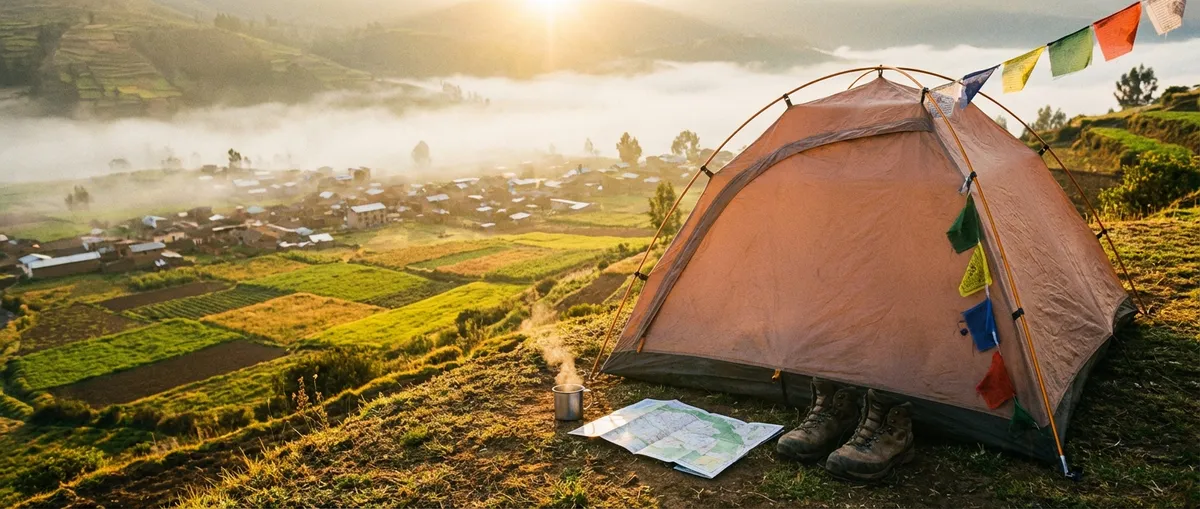
Below are five powerful shifts that turn budget limitations into adventure fuel—each one a way to travel fuller, not just farther.
Point 1: Follow the “Time-Rich, Cash-Light” Route
If money is tight, time becomes your greatest travel currency—and how you spend it can unlock experiences most rush-hour tourists never touch.
Traveling slower often means cheaper transport, lower stress, and a deeper connection to the places you pass through. Overnight buses, regional trains, and shared rides aren’t just cost-cutting tricks; they’re moving storylines. That 12-hour bus ride through mountain passes becomes a front-row seat to local life: roadside markets flickering under bare bulbs, conversations in three languages, and the soft quiet of a country before sunrise.
Instead of trying to “see everything,” choose one region and let it unfold. Rent a room for a week instead of hopping nightly. Walk instead of taking taxis. Learn the rhythm of the morning markets, the side-streets where locals actually eat, the park where everyone gathers after work. You’ll spend less and remember more because the trip stops being a checklist and starts becoming a chapter of your life.
This time-rich approach also creates room for spontaneity—saying yes to a last-minute shared ride, an invitation to a family meal, a free local festival you stumble into because you weren’t racing to the next attraction. On a budget, time isn’t what you lose—it’s what you gain.
Point 2: Turn Sleep into Strategy, Not Just Shelter
Where you sleep can define both your budget and your memories. The trick is to stop treating accommodation as a simple expense and start viewing it as a strategic part of your journey.
Hostels aren’t just bunk beds anymore—they’re communities. Many offer free walking tours, discounted excursions, shared kitchens, and sometimes even family-style dinners. Those “free extras” can easily shave days of costs off your trip while helping you meet travelers with tips you’ll never find on a booking site.
Beyond hostels, look into guesthouses, homestays, small family-run hotels, and short-term rentals outside the main tourist zones. Neighborhoods one metro stop away from the city center can be dramatically cheaper and more authentic. Some travelers even combine a few nights in a budget hotel with occasional overnight transport (trains or buses with reclining seats) to cover distance while skipping a night’s accommodation cost.
You can also trade skills for a bed and sometimes meals—teaching basic language skills, helping with social media, or volunteering at farms and hostels through vetted work-exchange platforms. When you view accommodation as part of your adventure, not just a room with Wi-Fi, your nightly rate starts paying you back in local experiences and unexpected friendships.
Point 3: Eat Like You Live There, Not Like You’re Visiting
Food is where travelers often lose their budget—and also where they can win the richest experiences. Street stalls, markets, and tiny neighborhood eateries can turn budget constraints into a culinary treasure hunt.
Instead of planning your meals around famous restaurants, plan them around where locals actually eat. Follow construction workers on lunch break, office crowds spilling into side streets, or queues at food carts that spill onto the sidewalk. These are the places where dishes are priced for repeat customers, not one-time tourists. You’ll discover flavors that never make it to glossy menus: charred skewers, steaming bowls of broth, hot bread pulled straight from clay ovens.
Make supermarkets and markets your allies. Pick up fruit, bread, cheese, and snacks for breakfasts and lunches, then splurge on one memorable dinner instead of three forgettable ones. If your accommodation has a kitchen, cook one night using local ingredients—it turns grocery shopping into a cultural quest and helps you slow down enough to absorb the surroundings.
You don’t need a food budget that “tastes expensive.” You need curiosity, an open mind, and the willingness to sit shoulder-to-shoulder on a plastic stool eating something you can’t quite pronounce but will never forget.
Point 4: Chase Experiences, Not Entry Fees
Budget travel shines brightest when you stop measuring a trip by how many tickets you buy and start measuring it by how alive you feel. The world is full of free and low-cost experiences that stay with you longer than any pricey attraction.
Hike up a hill at dawn instead of paying for an observation deck. Wander old neighborhoods, riverfronts, and public parks—these are where daily life plays out in full color. Free walking tours (where you tip what you can) offer history, context, and hidden alleys you might miss alone. Public festivals, concerts, and open-air events often cost nothing but your time—and they immerse you in the culture more than any curated show.
Museums and cultural sites frequently have discounted days or hours; plan around those when possible. Many cities offer affordable transport passes that include transit plus attraction discounts. But don’t underestimate the power of the simplest experiences: reading in a plaza, watching kids play soccer in a dusty field, getting lost and then found again with the help of a stranger.
When your budget is tight, your filter gets sharper. You start asking: “What will I remember in 10 years?” That question leads you away from overpriced “must-dos” and straight into the kind of moments that reshape how you see the world—and yourself.
Point 5: Pack Light So You Can Pivot Hard
One of the most underrated budget moves is learning to travel with less—because lighter bags mean heavier freedom.
When you’re not dragging a massive suitcase, you can walk instead of taking taxis, jump onto crowded buses without stress, and say yes to last-minute detours without worrying if your luggage will fit. Budget airlines often charge for checked bags, but a single carry-on can slip through for free or cheap. Every kilo you leave at home is money and energy you keep for exploring.
Packing light also transforms your mindset. You stop trying to bring your entire life with you and start trusting your ability to adapt. Choose versatile clothes that mix and match, quick-dry fabrics you can wash in a sink, and gear that serves multiple purposes (a scarf that becomes a blanket, a packing cube that doubles as a pillow). The goal isn’t to suffer—it’s to streamline.
When your gear is simple, your decisions become sharper and more flexible. A sudden tip about a cheap mountain guesthouse or a coastal town you’ve never heard of? With only a backpack and a free afternoon, you can pivot your whole plan in minutes. On a budget, that agility is gold.
Conclusion
Budget travel is not the consolation prize for people who “can’t afford real trips.” It’s a different philosophy entirely: one that trades velvet ropes for open doors, rigid itineraries for living stories, and expensive comfort for a deeper kind of richness.
When you slow down, sleep smart, eat like a local, chase experiences instead of entry fees, and travel light enough to turn at the slightest whisper of adventure, the world stops being a showroom and becomes a playground. You don’t need permission or perfection; you need intention, a bit of planning, and the courage to go with what you have.
The next journey doesn’t have to wait for a promotion, a windfall, or a “better year.” It can start with the savings you already hold, the time you can carve out, and the decision to live richly—no matter what your budget says.
Sources
- U.S. Department of State – Travel Advisories – Official safety and advisory information for planning international trips
- OECD – Tourism Trends and Policies – Data and analysis on tourism trends, including budget travel patterns
- Hostelling International – Practical tips and insights on hostel stays, community travel, and affordable accommodation
- Lonely Planet – Budget Travel Tips – In-depth advice on saving money on accommodation, food, and transport
- National Park Service (NPS) – Information on low-cost outdoor experiences and public lands in the United States