The trick is choosing the kinds of adventures that wake you up, stretch you, and stay with you long after the photos fade. These five pathways aren’t a checklist—they’re invitations. Say yes to even one, and your next journey will feel alive in a way your old trips never did.
1. Follow the Elements: Adventures Built Around Earth, Water, Air, and Fire
One of the most powerful ways to design an unforgettable trip is to anchor it in the raw forces of nature. Instead of asking “Where should I go?”, ask “Which element do I want to feel on my skin?”
Earth might be hiking through Iceland’s black-sand valleys, scrambling over volcanic rocks, or walking the Camino de Santiago until the rhythm of your feet becomes a moving meditation. You feel small, but grounded, like the planet is holding you up. Water could be sea kayaking along Croatia’s coastline at sunrise, when the sky is a watercolor and every stroke of your paddle sounds like a secret. Or it’s cold-plunging into a mountain lake after a long trek, that gasp of shock turning instantly into wild laughter.
Air is paragliding above the Alps, gliding in almost-silence as villages shrink below you and the world feels boundless. It’s hot air ballooning over Cappadocia’s surreal rock formations, floating in a pastel sky that looks like it was painted just for you. And fire might be a desert night under a riot of stars, gathered around a campfire with Berber guides in Morocco, trading stories in the glow of embers. Or watching molten lava glow at a safe distance on Hawaii’s Big Island, knowing you’re staring at the planet being born in real time.
Practical move: Pick one element as your theme, then build your itinerary around it. Search for “multi-day trek,” “sea kayaking expedition,” “paragliding tandem flights,” or “desert stargazing camp” in the region you’re curious about. You’re not just booking activities—you’re designing a story you’ll replay for years.
2. Chase First Light and Last Light: Adventures at the Edges of the Day
The most transformative moments of a trip often happen while the rest of the world is asleep. Dawn and dusk are nature’s quiet rebellions, when everything feels softer, stranger, and somehow more yours.
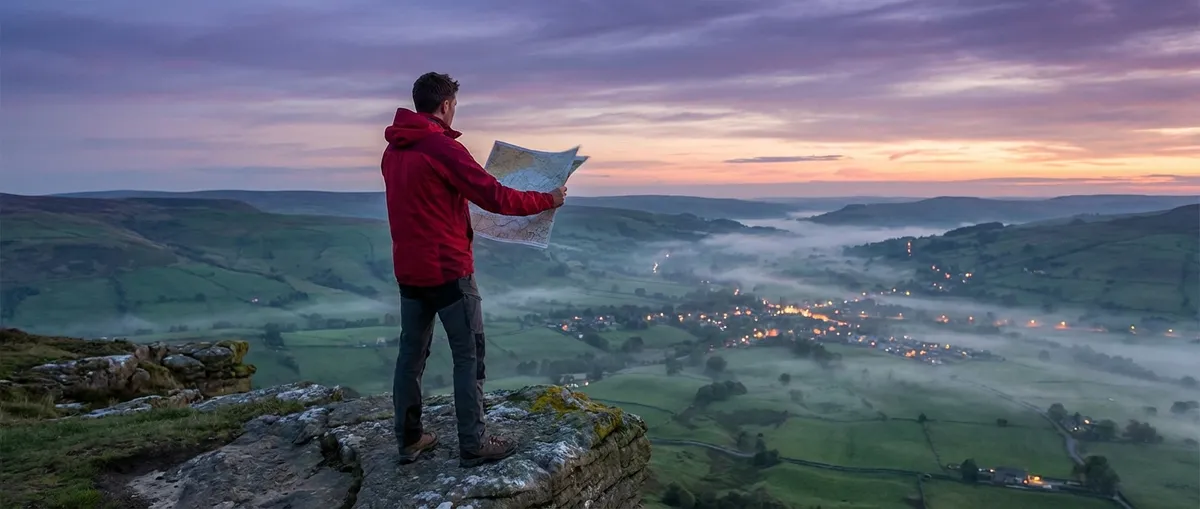
Imagine setting an alarm for 4:30 a.m. in summer, throwing on the warmest layer you packed, and hiking up a short trail in the dark to watch the sun rise over a misty valley. As the light spills over the horizon, you can feel the day assembling itself around you. Or picture biking through a nearly empty city at golden hour—Paris, Buenos Aires, or Hanoi—just as lights flicker on and the air cools, the familiar chaos replaced with a warm, cinematic glow.
In the high latitudes, this edge-of-day adventure becomes even more intense. In Norway or Alaska, midnight sun hikes feel like walking through a dream that refuses to end. In winter, chasing the aurora borealis is like hunting for a secret passage in the sky—waiting in the cold, scanning the darkness, and then suddenly, color pouring and dancing overhead.
Practical move: Wherever you go, pick at least two experiences you’ll do only at sunrise or sunset: a rooftop or hilltop viewpoint, a quiet beach, a river walk, or a short local trail. Download an app that tracks sunrise/sunset for your location and plan your day around those windows, not just tourist hours. Your camera will love it—but more importantly, so will your memory.
3. Travel by Human Power: Let Your Body Become the Vehicle
There’s something primal about moving under your own steam. When your legs, arms, and lungs become your transport, you stop skimming across the surface of a place and start inhabiting it.
Think of cycling from town to town in Portugal or Vietnam instead of catching the bus—feeling each hill, each change in the wind, each smell from roadside kitchens. Or renting a kayak for a few hours to explore a rugged coastline, slipping into tiny coves boats can’t reach. Walking a little-used trail in a national park instead of driving to the viewpoint means you’ll hear birds instead of engines, your breath instead of a tour guide’s microphone.
Human-powered travel doesn’t have to be extreme. A day of urban exploration on foot—abandoning public transport, following side streets, chasing the smell of street food or the echo of music—can feel just as adventurous as a major trek. The key is this: the slower you move, the more of the world leaks into your day.
Practical move: On your next trip, choose one segment that you’ll do entirely by human power: a one-day bike route between two towns, a kayak rental along a river or coastline, or a full day of “no vehicles, just walking.” Pack light, carry water, and download offline maps. Expect sore muscles—and a mind buzzing with details you’d have otherwise flown right past.
4. Say Yes to Local Skills: Adventures That Teach You Something New
Some adventures don’t involve cliffs or rapids but still push you way out of your comfort zone: they ask you to become a beginner again.
Imagine learning traditional freediving techniques in the Philippines, where instructors teach you to relax into the water instead of fight it. Or joining a small group to learn bread baking in a mountain village in Georgia, your hands buried in dough while elders share stories you won’t find on any website. Maybe it’s a surf lesson at a beginner-friendly break in Costa Rica, where you spend the afternoon wiping out, laughing, and finally catching that first clean wave that feels like flying.
These adventures stick because they involve friction: the awkwardness of trying something unfamiliar, the humility of being bad at it, and the joy when something finally clicks. The place isn’t just scenery—you’re absorbing skill, tradition, and rhythm from people who live it.
Practical move: Before you go, search for small-group or locally run classes: climbing, surf schools, ceramic workshops, indigenous-led foraging walks, freediving, traditional dance, or cooking with families instead of big-box experiences. Aim for sessions that last at least a few hours; depth makes the memory. You’re not just “doing an activity”—you’re collecting a new piece of yourself.
5. Sleep Somewhere That Changes the Story, Not Just the View
Where you sleep can turn an ordinary trip into a full-immersion adventure. Your bed can be a basecamp for extraordinary days—or it can be part of the experience itself.
Picture spending the night in a mountain hut in the Alps, where you arrive at dusk, share a long table with muddy-booted hikers, and wake to clouds spilling over the peaks. Or staying in a ger (yurt) with a nomadic family in Mongolia, listening to the wind scrape across the steppe and realizing there are no city lights for hundreds of miles. Even closer to home, camping near a desert canyon, a forest trailhead, or along a long-distance cycling route means you wake already inside the adventure, not commuting to it.
It doesn’t have to be remote or “wild” to feel daring. An overnight train in India or Europe turns travel into a moving sleepover with strangers and landscapes scrolling past your window. A houseboat on Kerala’s backwaters or a simple beach hut in Thailand turns your entire perimeter—porch, deck, hammock—into front-row seats to the elements.
Practical move: When planning your trip, choose at least one night in an unconventional stay: mountain hut, eco-lodge, desert camp, overnight train, houseboat, rural homestay, or certified farm stay. Read reviews for safety and ethical practices, pack a lightweight sleep mask and earplugs, and say yes to shared meals if offered. These are the nights you’ll talk about a decade from now.
Conclusion
Adventure doesn’t always look like a postcard or a stunt. Most of the time, it’s a set of small, deliberate choices: wake up for the sunrise, follow the water, move under your own power, be a beginner again, sleep somewhere that rewires your sense of place.
You don’t have to quit your job, sell everything, or vanish for a year. You just have to tilt your next trip a few degrees toward the unknown—toward the path that feels slightly too bold, too early, too far, too new. That’s where your pulse picks up. That’s where you meet the version of yourself that’s been waiting.
Your map is already in your hands. Now it’s time to step off its edge and see what finds you there.
Sources
- National Park Service – Hiking and Outdoor Safety - Guidance on planning safe hikes and human-powered adventures in natural areas
- UN World Tourism Organization – Adventure Tourism Insights - Overview of how adventure travel is evolving globally and why immersive experiences matter
- REI Co-op – How to Plan a Backpacking Trip - Practical tips that apply to trekking, hut stays, and human-powered travel
- Leave No Trace Center for Outdoor Ethics - Essential principles for minimizing your impact during nature-based adventures
- Lonely Planet – Staying in Mountain Huts - Insight into what to expect from hut-to-hut and alpine overnight adventures