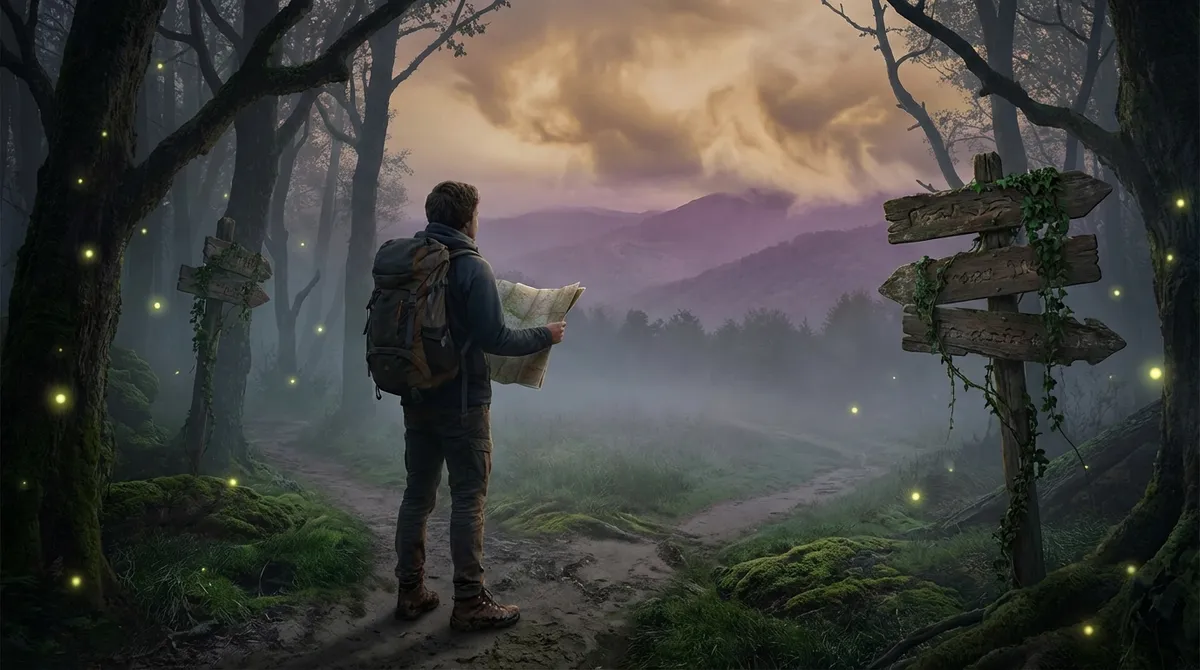
Below are five adventure sparks—moments and mindsets—that turn any journey into a living, breathing story. Pack your courage, your curiosity, and a bit of common sense, and let the map get just a little bit fuzzy.
Follow the First Left Turn You Can’t Explain
There’s a particular kind of magic in walking with no destination and choosing your next turn based purely on instinct. Maybe it’s the alley lined with mismatched doors. Maybe it’s the stairway that disappears under a canopy of bougainvillea. Whatever pulls you, follow it—just for a while.
Start in a safe, walkable neighborhood—ask locals or your hotel/hostel staff where that might be. Give yourself an hour where the only rule is: no backtracking. Turn left when you’d normally turn right. Climb the hill instead of staying on the main road. You may stumble into a neighborhood market, a park where kids are learning to skateboard, or a quiet square where old friends gather at dusk.
Keep your phone charged and a map app handy so you can always reorient if needed. Drop pins when you find places that make your heart spark—an unmarked bakery, a riverside bench perfectly angled for sunset, a mural that tells a whole history in paint. This small experiment in getting “lost” trains your brain to notice details you usually rush past, and it turns an ordinary afternoon into your own unscripted expedition.
Chase the Edge of Daylight: Sunrise and Sunset as Your Compass
There’s something primal about organizing your day around the sun instead of your itinerary. Sunrise and sunset are the traveler’s reset buttons—twice a day, the world offers you a front-row seat to wonder, often for free.
Wake before the city does and watch a destination yawn into its day. Early morning light softens everything: fishermen ready their boats, bakers pull bread from ovens, runners claim car-free streets. Use this time to visit iconic sights with fewer crowds, or find a patch of water or a hilltop where you can watch the sky transform. At sunrise, even a simple urban park can feel like a secret.
At sunset, let the golden hour guide you. Aim for viewpoints—rooftops, bridges, seaside promenades, temple steps, or a simple meadow beyond town. Ask locals, “Where do you go to watch the sunset?” You may be pointed toward cliff edges, riverbanks, or even a supermarket roof with a legendary view. Bring a light jacket, a small snack, and your most present self. Twice a day, the sky reminds you why you left home in the first place.
Say Yes to One Invitation You’d Usually Decline
Adventures often show up disguised as slightly uncomfortable offers. “Come to this community festival.” “Join us for a home-cooked lunch.” “We’re hiking to the waterfall tomorrow at dawn—want to come?” Your reflex might be to protect your schedule or your energy, but saying yes (when it feels safe) can crack open a whole new layer of a place.
To do this wisely, trust your intuition and pay attention to context. Public, group settings are often a great place to start: local tours, language exchanges, cooking classes, or neighborhood events. If a vendor invites you to a celebration they’re clearly attending with friends or family, or a hostel mate proposes a group outing, consider accepting—these are bridges, not sales pitches.
Carry small “yes tools”: a packable towel and swimsuit, a headlamp or small flashlight, a scarf or light layer that lets you step respectfully into religious spaces or unexpected ceremonies. Saying yes may lead you into a shared meal under string lights, an improvised roadside dance, or a late-night conversation that shifts how you see the world. With a few boundaries and a curious heart, one well-chosen yes can rewrite an entire trip.
Turn Everyday Tasks into Micro-Adventures
Adventure isn’t only in mountain passes and jungle trails; it hides in the “boring” logistics too. Instead of treating errands as dead time, use them as portals into the local rhythm.
Skip the big supermarket once and find the nearest open-air market or tiny corner shop. Buy fruit you don’t recognize and ask the vendor how to eat it. Take the local bus or tram at least once, even if a rideshare is easier. Study the route map, watch how people signal stops, and feel the heartbeat of the city between stations. Laundry day? Search for a laundromat where locals congregate, grab a coffee nearby, and people-watch while your clothes spin.
Approach ATMs, post offices, and ticket counters as navigation challenges in a new “game level.” Can you figure out the system based on context and body language? If you need help, ask. These small, low-stakes missions reinforce your confidence: you’re not just floating through a place—you’re participating in its patterns. Over time, these micro-adventures stitch together into a feeling that you truly belonged there, even if just for a moment.
Let Weather Rewrite Your Plans, Not Ruin Them
Perfect weather makes pretty photos; unpredictable weather makes great stories. Rain, fog, wind, or heat waves can feel like obstacles, but if you let them, they’ll redirect you toward experiences you never would have planned.
When the sky changes, shift your lens instead of your mood. Sudden downpour? Duck into a family-run café you hadn’t noticed, visit that museum you were “saving for later,” or sit under a covered market stall and listen to the storm drum on the roof. Overcast skies often mean softer, moody light—perfect for photography, long walks, or calm bike rides without harsh sun. Mist and fog can turn a regular hike into something out of a myth.
Pack for possibility: a compact rain jacket, a quick-dry layer, a small dry bag for electronics, and shoes that can handle puddles. Change your question from “How do I avoid this weather?” to “What does this weather make possible?” The answer might be a thermal bath in a mountain town, a hot drink with strangers telling storm stories, or a deserted beach that suddenly feels like your own private kingdom.
Conclusion
Adventures aren’t locked inside distant peaks or exotic islands—they’re hiding in the corners of ordinary days, waiting for you to loosen your grip on the plan. When you follow the turn you can’t explain, rise with the sun, say yes to the right invitations, elevate the mundane, and dance with the weather instead of fighting it, every trip becomes a living story.
You don’t have to be fearless; you just have to be willing. The world is wider and kinder than it looks on a screen. Step out the door, let your map blur at the edges, and give your next journey enough space to surprise you.
Sources
- U.S. Department of State – Traveler’s Checklist - Practical guidance on safety, documents, and preparations for international adventures
- Centers for Disease Control and Prevention – Travelers’ Health - Up-to-date health advice, vaccinations, and destination-specific considerations for travelers
- National Park Service – Plan Your Visit - Tips on exploring U.S. national parks, including weather preparedness and safety in outdoor adventures
- BBC Travel – How to Travel Like a Local - Insights into connecting with local culture and turning everyday experiences into meaningful travel moments
- Harvard Business Review – The Power of Saying Yes - Explores decision-making around when to say yes or no, useful for evaluating invitations and opportunities on the road