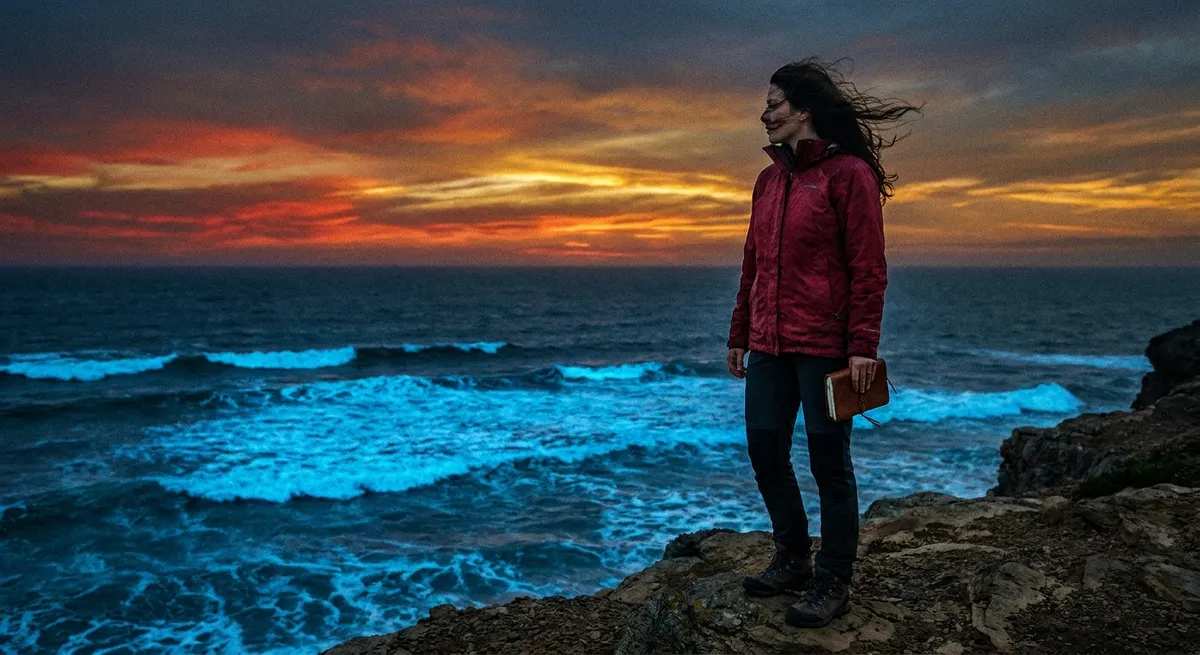
Below are five vivid, soul-stirring kinds of adventures—each with practical tips—meant to pull you out of the familiar and drop you into something that feels powerfully, unmistakably alive.
1. Follow the Night Sky: Adventures Guided by the Stars
When city lights fade behind you, the sky stops being a ceiling and becomes a map. Step into a world where the Milky Way is bright enough to cast a shadow, and you’ll understand why humans once crossed oceans using nothing but starlight.
Dark-sky reserves and remote national parks aren’t just for astronomers—they’re for anyone ready to feel small in the best possible way. Picture hiking to a quiet overlook before sunset, brewing a simple camp-stove coffee as the horizon fades from gold to ink. You spread out a blanket, let your phone go dark, and suddenly the sky blooms into thousands of stars you never knew were there.
For a truly immersive adventure, time your trip with meteor showers like the Perseids (August) or Geminids (December). Bring a red-light headlamp to protect your night vision, extra layers for temperature drops, and offline stargazing apps that help you identify constellations without cell service.
The practical payoff: night-sky adventures often pair perfectly with camping or simple cabins, which keeps costs low. Book well ahead if you’re visiting popular parks, and always check park regulations—some areas require permits for overnight stays. Your reward is a kind of silence and awe that no city rooftop can imitate.
2. Chase Wild Water: From Gentle Paddles to Roaring Rapids
Rivers are restless stories in motion, and riding them rewrites how you think about movement, risk, and rhythm. Whether you’re drifting through a glassy canyon lake at sunrise or punching through whitewater with your heart in your throat, water has a way of waking every sense.
Not every water adventure needs to be extreme. A sunrise paddleboard on a calm bay lets you glide across mirrored water while herons lift off from the reeds. Sea kayaking near rugged coastlines puts you eye-level with cliffs and caves you’d never see from land. For adrenaline-lovers, guided whitewater rafting trips turn fear into exhilaration, one rapid at a time.
Choose your adventure to match your comfort zone—but be ready to let it stretch. Start with a reputable outfitter that includes safety briefings and proper gear. Ask about required skill levels, water conditions for the season, and what happens if weather shifts mid-trip. Wear synthetic layers (not cotton) that dry quickly, and always secure essentials in a dry bag.
The magic of water adventures is how they demand presence. You can’t doomscroll in a kayak; your hands are busy, your body is engaged, and your eyes are wide open. By the time you step back on shore, even a half-day on the water can feel like you’ve lived a whole new chapter.
3. Walk Into the Unknown: Long Trails and Day Hikes with Purpose
There’s something profoundly honest about moving through a landscape at the speed of your own feet. Trails—whether they’re hour-long loops or multi-day treks—don’t just connect points on a map; they connect the version of you who started with the one who finishes.
You don’t need to thru-hike a famous trail to taste this transformation. Start with a day hike that pushes your usual limits—extra distance, a steeper climb, or a route with more exposure than you’re used to. Make the summit (or the halfway viewpoint) your “reset point,” where you pause, breathe deep, and deliberately leave behind one thing you’re ready to outgrow: an outdated belief, an old fear, a stale narrative.
For those ready to step further, consider a hut-to-hut route or a short multi-day trek supported by refuges or hostels. This lets you travel light while still feeling far from the everyday. Plan carefully: check seasonal trail conditions, read recent trip reports, and learn the difference between “moderate” and “strenuous” in the region’s grading system (they’re not always the same worldwide).
Gear wisely: broken-in shoes, layered clothing, sun protection, and a basic first-aid kit are non-negotiable. Download offline maps and learn the basics of trail markers before you go. On the trail, practice the “unhurried mindset”—give yourself enough time that stopping to watch clouds crawl across a ridge feels like part of the plan, not a delay.
In the end, the real souvenir isn’t a photo at the summit; it’s the quiet confidence of knowing you moved yourself across the earth, one deliberate step at a time.
4. Eat Your Way Into a Culture: Culinary Adventures Beyond the Menu
Adventure doesn’t always involve cliffs or rapids—sometimes it starts with a simple question: “What do locals eat when no tourists are watching?” Food is one of the fastest ways to dissolve the barrier between visitor and place, and a plate can carry more story than a guidebook.
Instead of only chasing the most “Instagrammable” spots, look for where the chairs wobble a little and the menu is handwritten. Join a street-food tour guided by locals, or better yet, take a cooking class in someone’s home. Ask vendors about their specialties, how long they’ve been there, and what they eat on their days off. You’re not just buying a snack; you’re stepping into their everyday life.
To make culinary adventures smoother, do a bit of homework on local customs: how to order respectfully, what tipping looks like, and how to handle shared dishes. Learn a handful of food phrases in the local language—“What do you recommend?” is often the key to dishes not even on the printed menu.
If you have dietary restrictions, research the region’s staples and write your needs down in the local language beforehand. Many tourism boards and reputable travel blogs provide guides to eating safely and inclusively in different destinations. Take standard food safety precautions—look for high turnover stalls, busy tables, and freshly cooked dishes.
The greatest gift of eating adventurously isn’t just flavor; it’s humility. You discover that a bowl of something untranslatable, served on a plastic stool at midnight, can feel more unforgettable than a five-course meal with a skyline view.
5. Say Yes to the Unknown: Micro-Adventures That Flip Your Routine
Not every adventure demands a plane ticket or two weeks off. Some of the most powerful shifts happen when you disrupt your normal life in small, deliberate ways—what explorer Alastair Humphreys popularized as “microadventures.”
Think: catching an overnight train just to watch the sunrise in a different city, pitching a tent (or sleeping under the stars) within an hour of your home, or biking to a nearby town you usually drive past without noticing. These compact journeys are perfect when time or budget is tight but your spirit is restless.
Start by choosing a theme: “24 hours without a screen,” “explore only by public transport,” or “follow one river as far as I can in a day.” Give your adventure a clear start and end, like leaving straight from work on a Friday and returning by Saturday afternoon. Pack light but thoughtfully: snacks, water, basic layers, and whatever you need for safety depending on your activity and season.
The key is intentional discomfort—the right amount of unfamiliar to shake you awake without putting you in real danger. Tell a friend your plan and share your location if you’re going solo. Embrace low expectations and high curiosity. When you stop requiring adventures to be “epic,” you’ll find magic in train platforms at dawn, empty bus seats at midnight, and the eerie quiet of streets you’ve only seen in daylight.
These micro-adventures quietly train a muscle: the ability to choose wonder over autopilot. That same muscle will eventually help you say yes when the bigger, wilder opportunities appear.
Conclusion
Adventure doesn’t wait for “someday.” It hides in dark-sky horizons, river bends, steep trails, crowded food stalls, and spontaneous 24-hour escapes. You don’t have to be fearless; you just have to be willing—willing to trade certainty for curiosity, comfort for motion, routine for a story you haven’t heard yet.
Pick one of these five paths and give it a date, not just a dream. Book the night train, save the stargazing map, message the local guide, block a weekend for a long trail, or sign up for that cooking class. The world is bigger than your current circle—and the version of you waiting out there is braver than you think.
Sources
- [International Dark-Sky Association](https://www.darksky.org/our-work/conservation/idsp/places/) – Overview of certified dark-sky parks and reserves around the world
- [U.S. National Park Service – Safety & Tips](https://www.nps.gov/subjects/trails/hiking-safety.htm) – Practical guidance on hiking safety, planning, and trail basics
- [American Whitewater – Safety Code](https://www.americanwhitewater.org/content/Wiki/safety:start) – Key principles for safe whitewater paddling and river trips
- [CDC – Food and Water Safety While Traveling](https://wwwnc.cdc.gov/travel/page/food-water-safety) – Evidence-based advice for eating and drinking safely in unfamiliar destinations
- [Alastair Humphreys – Microadventures](https://alastairhumphreys.com/microadventures-3/) – Background and inspiration on the microadventure concept and how to start