This isn’t about thrill‑seeking at any cost. It’s about trading passive fear for active awe. If the world’s apex predators are today’s headline, consider this your invitation to meet them on their turf—responsibly, ethically, and with your sense of wonder turned all the way up.
Track Apex Legends On Foot (With A Local By Your Side)
The news list of nature’s top predators—think lions, leopards, wolves, polar bears—reads like a roll call for some of the planet’s most exhilarating on‑foot adventures. Imagine pre‑dawn in Botswana’s Okavango Delta, walking behind an expert tracker who reads stories in the dust: fresh lion prints, the scuff of a hyena, the sharp imprint of antelope hooves fleeing in the night. Or following wolf tracks in Yellowstone in winter, your breath turning to mist as a guide points out a distant silhouette on a ridge. These experiences are the purest antidote to screen‑time numbness: your senses sharpen, your body remembers what it’s for, and suddenly the phrase “top predator” is no longer abstract. Practical move: book with locally owned outfits that cap group sizes, use certified guides, and share clear safety briefings—if an operator brags more about adrenaline than ethics, walk away.
Turn Shark‑Week Hype Into Ocean Reality
Great whites, tiger sharks, orcas—many of the predators in the “most dangerous” list live where most of us feel smallest: the open ocean. Instead of consuming them through jump‑cut fear montages, imagine watching a reef shark glide past while you hover weightless above a coral shelf in French Polynesia or the Bahamas. Cage‑diving with great whites off South Africa or Mexico’s Guadalupe (when permitted and regulated) lets you feel the raw presence of a 15‑foot hunter without disturbing its rhythm, provided you choose operators that avoid bait‑dumping circuses and follow science‑based guidelines. You don’t need to be an elite diver, either—snorkeling in protected marine reserves can bring you nose‑to‑nose with barracuda, rays, and reef sharks in crystal‑clear water. Practical move: research whether your chosen operator partners with marine biologists or conservation NGOs; if they support tagging, data collection, or no‑take zones, you’re turning your adventure into a small, meaningful vote for the ocean.
Chase The Arctic’s Ghosts: Polar Bears, Orcas, And Ice
Polar bears and orcas sit comfortably on any list of top predators, and their realm—the polar regions—is ground zero for climate change. That makes high‑latitude adventure both a privilege and a responsibility. Picture this: you’re on a small expedition vessel off Svalbard or in Canada’s Hudson Bay, bundled in a parka, scanning an ice edge where a polar bear patrols for seals. Or you’re in Norway’s fjords in winter, watching orcas cooperatively herd herring into tight shimmering balls before striking as a team. These are apex predators as ecosystem architects, just like the article says—and seeing them in action rewires how you understand “food chain” and “survival.” Practical move: choose polar operators with strict wildlife‑distance protocols, low‑impact shore landings, and transparent carbon‑offset or reduction plans. Ask specifically how close they allow guests to approach bears or whales; if the answer sounds like a chase, skip it.
Sleep Where The Hunters Roam (Without Becoming The Headline)
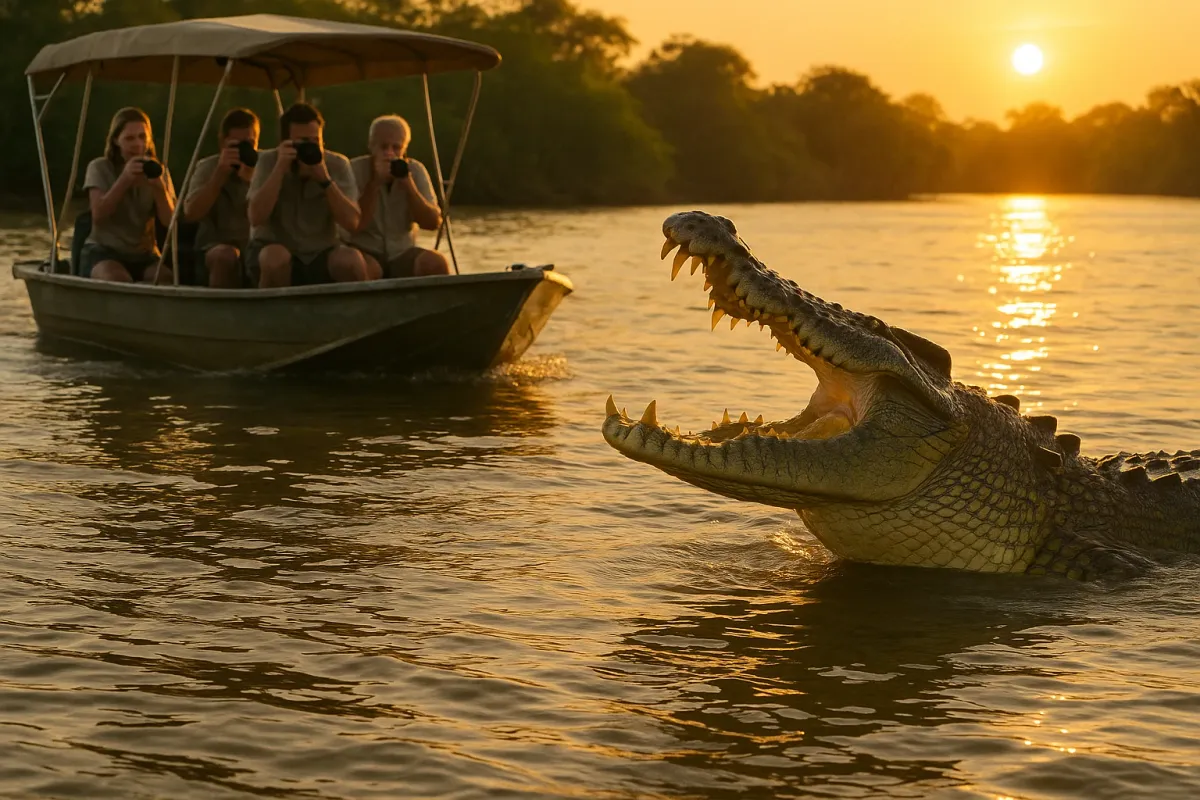
One of the wildest shifts you can make as a traveler is to stop treating predators as something you “spot” for a quick photo, and instead share the night with them. Around many of the animals in that viral predator list, adventure stays are evolving beyond beige hotel rooms. Try canvas tents overlooking a hippo‐ and croc‑filled river in Zambia, where you fall asleep to hyenas calling and wake up to lion roars vibrating in your chest. In Alaska, you might stay in a remote lodge reachable only by floatplane, where brown bears patrol salmon streams just a short, chaperoned hike away. Even in more accessible places like the Pantanal in Brazil—jaguar country—riverside lodges pair boat safaris with night sounds that remind you: you are not at the top of the food chain here. Practical move: look for camps with elevated walkways, trained wildlife guards, and clear “after dark” rules. The point isn’t to flirt with risk; it’s to let the presence of powerful animals shape your day’s rhythm and your humility.
Swap Souvenirs For Stewardship
The article about Earth’s most dangerous hunters emphasizes a truth hardcore travelers already feel: predators keep wild places wild. Without them, ecosystems unravel. So if these animals are inspiring your next big trip, weave conservation into your itinerary from the first click. Instead of buying airport trinkets, funnel some of that budget into vetted projects: big‑cat research in Kenya, anti‑poaching patrol support in Namibia, wolf coexistence programs in Montana, or shark‑tagging initiatives in the Pacific. Many operators now offer “citizen science” add‑ons—help set camera traps for elusive carnivores, log shark sightings for research databases, or assist with scat surveys that help scientists map predator movements. Practical move: before you book, search for your destination + “predator conservation NGO” and see which groups have long‑term boots on the ground. Ask your tour company directly if any portion of your fee supports those efforts; if enough of us ask, that question becomes the new normal.
Conclusion
Today’s headline about the world’s most dangerous predators could easily push you deeper into fear—or it can do something wilder: remind you that you’re alive on a planet where lions still hunt, sharks still rule the deep, and bears still patrol salmon rivers under neon dusk. Adventure isn’t about trying to out‑tough those animals or collecting reckless stories; it’s about stepping into their worlds with reverence, curiosity, and just enough fear to keep you honest.
Plan the trip that puts you within respectful earshot of a roar, a splash, or a howl—and then let that encounter change how you move through every “normal” day that follows. The predators are already out there, reshaping landscapes and headlines. The real question is: will you keep watching from a distance, or will you answer the call and meet them, eyes open, on their own wild turf?