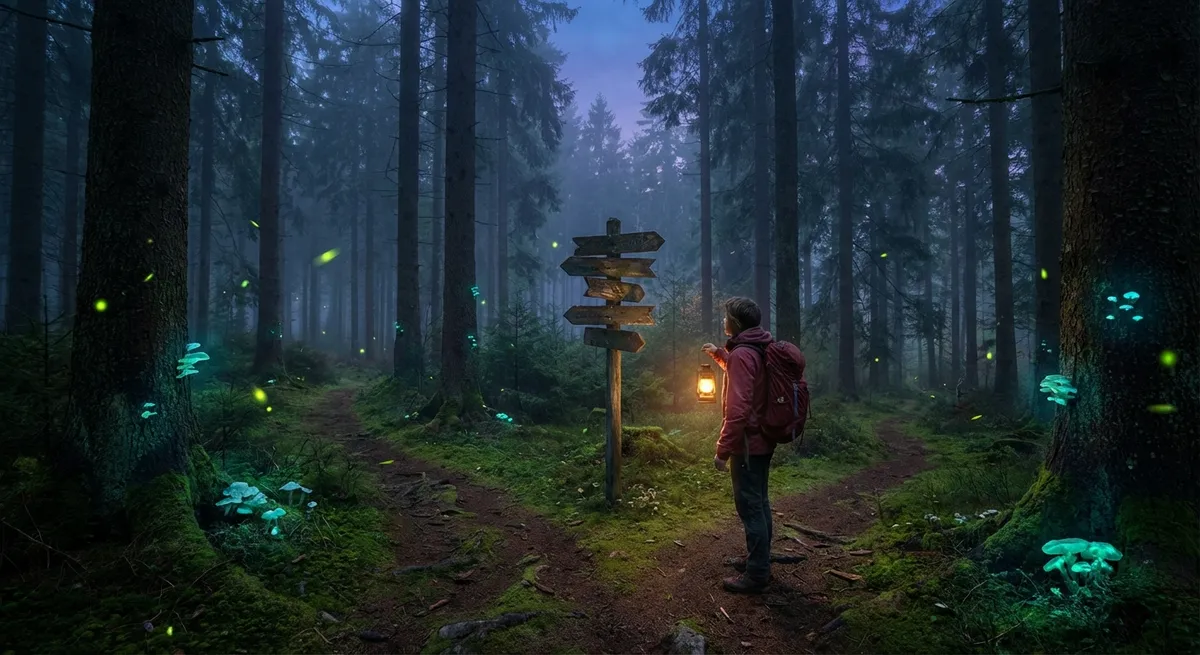
This isn’t about chasing thrills for a highlight reel; it’s about choosing experiences that rewire how you see the world—and yourself. Below are five powerful kinds of adventures that don’t just fill your camera roll; they change your inner compass.
1. Follow a Line on the Map Until It Becomes a Story
There’s a certain magic in pointing at a thin, twisting line on a map—a river, a ridgeline, a coastline—and deciding to follow it, step by step, until the abstract becomes intimate. On paper, it’s a squiggle. In real life, it’s mud on your boots, wind on your cheeks, and strangers who turn into guides.
Pick a route that calls to you: a long-distance trail, a coastal road, a train line cutting through mountains. Research the basic logistics—weather, distance, safety—but leave deliberate space for detours. The goal isn’t to conquer distance; it’s to let the landscape introduce itself slowly: a bakery that only locals know, a bridge humming with traffic at dawn, a canyon that doesn’t show up in any guidebook.
Traveling along a single “line” changes how you experience place. Instead of hopping from attraction to attraction, you feel the terrain shift under your feet: languages soften or sharpen, food changes spice by spice, and the air itself feels different as you move. You begin to notice tiny details—signs in different dialects, variations in roof tiles, the way people greet each other.
Practical advice: Download offline maps, note emergency contacts, and learn a few local phrases. Share your general route with someone back home. Then, once the basics are covered, let your curiosity—not your schedule—set the day’s pace. When in doubt, go a little further than you planned. That’s usually where the story starts.
2. Trade Spectating for Participating in Local Traditions
Watching from behind a camera is safe. Stepping into a local celebration—hands stained with spices, feet learning unfamiliar rhythms—is where the real adventure begins. Cultures are not museum pieces to be observed; they’re living, breathing tapestries that invite you to add a few stitches of your own.
Instead of timing your trip around “peak season,” consider aligning it with a regional festival, harvest, or tradition that resonates with you: grape harvests in vineyard regions, lantern festivals, coastal fishing seasons, or indigenous art gatherings. Reach out in advance to community centers, cultural organizations, or local guides for opportunities that welcome respectful participation.
Picture yourself helping prepare a festival meal at a long table, listening as elders explain why certain dishes matter. Or standing in a town square at dusk, joining a simple line dance, your steps clumsy but your grin unstoppable. These moments are humbling and humanizing—they’re not about performing but about showing up with genuine curiosity.
Practical advice: Learn cultural etiquette before you arrive—dress norms, photography rules, religious customs. Ask permission before taking part, and be ready to listen more than you speak. Offer help where it’s needed: tidying after an event, sharing photographs with hosts, or donating to community projects. When you travel as a participant instead of a spectator, the world feels less like a stage and more like a shared home.
3. Let a Skill Be Your Compass, Not a Destination
Some of the most transformative adventures don’t revolve around a place at all—they revolve around what you learn there. When you travel with the intention to learn a skill, the journey gains structure, purpose, and a rhythm that goes beyond hitting landmarks.
Imagine a month organized around surf lessons at sunrise, language classes in the afternoon, and wandering local markets in the evenings. Or a week dedicated to learning wilderness navigation, rock climbing basics, or traditional crafts like weaving or pottery. The landscapes become classrooms; the people you meet become teachers, mentors, and sometimes lifelong friends.
Choosing a skill anchors you. It gives you something to practice when you’re unsure what to do with an afternoon. It opens doors, too—locals are often excited to share knowledge with someone who’s willing to put in effort and show respect for their expertise. What begins as a hobby can turn into a new way of understanding a region: learning to cook local dishes, you’ll stumble into family stories and regional histories; learning to free dive, you’ll start reading currents, reefs, and tides like sentences in a book.
Practical advice: Before you go, identify reputable schools or guides. Look for certifications (where relevant), reviews from previous travelers, and safety standards. Bring a notebook or journal just for the skill you’re learning—documenting your progress turns the experience into a tangible arc of growth. Instead of returning home with souvenirs, you return with competence and confidence you can carry anywhere.
4. Chase Silence and Dark Skies Where Noise and Neon Can’t Follow
In a world that never really quiets down, choosing to seek silence is a radical form of adventure. There are places where the loudest sound is wind in alpine grass, where the sky is so ink-dark that the Milky Way looks like a river you could fall into. Traveling to experience those spaces is not about escapism—it’s about recalibrating your senses.
National parks, remote deserts, high plateaus, forest cabins, off-grid islands: these are sanctuaries where your internal volume finally adjusts downward. At first, the quiet can be unsettling. Without constant notifications and traffic noise, your thoughts get louder. Given a few days, though, a new awareness creeps in: the crunch of frost under boots, the layered chorus of birds at sunrise, the way night feels thicker without city lights.
Dark-sky reserves and remote wilderness areas offer unrivaled stargazing. Lying on your back, wrapped in a borrowed blanket or your own sleeping bag, you start to feel time in a different way. Constellations become more than dots; they’re a reminder of how small and wildly lucky we are to stand on a planet that allows us to look up at all.
Practical advice: Research stargazing sites, dark-sky reserves, and quiet national parks or wilderness areas. Pack warm layers, a red-light headlamp to protect night vision, and download offline star maps. If you’re going somewhere remote, leave a trip plan with someone you trust and check local safety advisories. Turn your phone to airplane mode for a night or a weekend. Let the absence of noise become its own kind of adventure.
5. Design a Micro-Expedition That Fits Between Your Calendars
You don’t have to cross an ocean to live adventurously. Some of the most powerful journeys are short, intense, and close to home—what you might call “micro-expeditions.” They ask little in time but a lot in intention. Instead of waiting for a perfect future moment, you carve adventure into the margins of your current life.
A micro-expedition could look like a single overnight hike to a viewpoint you’ve only ever seen in pictures, cycling from your front door to the next town and back, paddle camping on a nearby lake, or taking a train to the last stop on the line and walking back over two days. What matters is that it stretches your comfort zone while staying within your experience level and safety limits.
Because these adventures are short, they demand focus. You feel the chill of dawn more intensely, the weight of your backpack more acutely, the satisfaction of reaching your improvised campsite more deeply. You return home on a Sunday night or after a long weekend, tired but charged, your familiar streets now part of a wider map instead of the whole story.
Practical advice: Start by choosing a theme: “My city to the sea,” “The river from source to bridge,” “One night above the city lights.” Plan realistically around your fitness and experience. Check local rules regarding camping or access, and have a bailout option. Pack light but smart—first-aid essentials, navigation tools, extra warmth, enough food and water. Share your plan, then treat your 24–72 hours with the seriousness you’d give a longer trip. It trains you to see your everyday surroundings as a playground, not just a backdrop.
Conclusion
Adventure is not a personality trait you either have or don’t. It’s a series of choices: to follow a line on a map until it has a heartbeat, to participate instead of just observe, to let new skills guide your route, to seek out quiet and starlight, and to carve micro-expeditions into the edges of your calendar.
You don’t have to wait for “someday.” The world is already out there, waiting—not just for you to arrive, but for you to arrive differently: more curious, more present, more willing to be changed by what you encounter.
Open your map—digital or paper—and put your finger down. Ask yourself: if I treated this not as a place to pass through, but as a chance to become someone braver, what could happen next? Then take the first step. The rest of the story you’ll write on the way.
Sources
- National Park Service – Dark Sky Parks and Stargazing - Overview of U.S. national parks with excellent night-sky viewing and tips for stargazing.
- International Dark-Sky Association – Find a Dark Sky Place - Directory of certified dark-sky reserves and parks around the world.
- Leave No Trace Center for Outdoor Ethics - Essential guidelines for minimizing impact during outdoor adventures and micro-expeditions.
- U.S. Forest Service – Trip Planning and Safety - Practical advice for planning safe, responsible trips into wilderness areas.
- BBC Travel – The Rise of Microadventures - Explores the concept of short, local adventures and how they can transform everyday life.