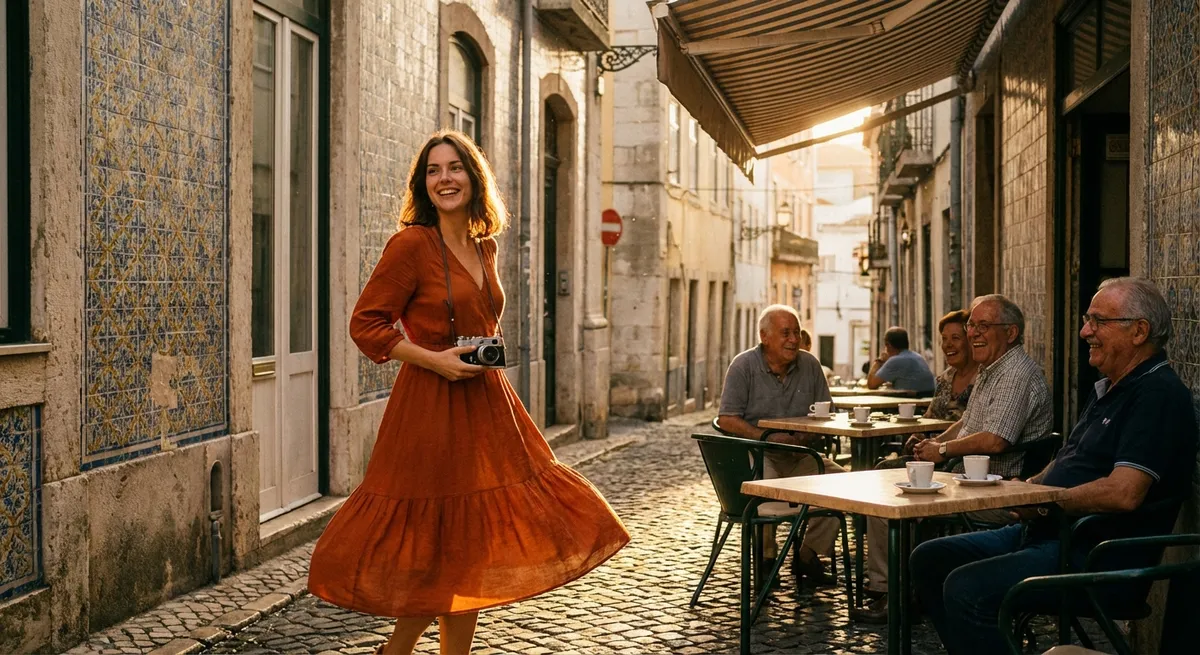
If you’re ready to feel less like a visitor and more like the main character in your own epic, these five travel shifts will help you step into the story, not just skim the surface.
1. Trade Checklists for Curiosity Trails
Most itineraries are built like grocery lists: landmark, landmark, landmark—done. But the most electric travel moments usually happen in the unscripted gaps.
Instead of planning every stop, design “curiosity trails”: loose routes built around what genuinely fascinates you. Love coffee? Map your day by local cafés instead of monuments. Obsessed with street art, jazz, or old libraries? Let those be your anchors, and watch how the city rearranges itself around your interests.
Leave at least a third of each day completely unplanned. Wander off the main avenue when you hear live music. Follow the smell of bread baking down a side street. Notice which neighborhoods wake up early and which only come alive after dark. Ask a barista where they’d bring a friend with one day in town—and actually go there.
You’ll still see the “must‑dos,” but you’ll also stumble into the moments guidebooks can’t predict: the backyard market, the tiny gallery that just opened, the family-run restaurant that doesn’t even have a sign. That’s where a place stops being a backdrop and starts feeling like a living character in your story.
2. Turn Ordinary Transit Into Your Secret Superpower
Flights and buses can feel like dead space between “real” adventures—unless you flip the script and make transit part of the experience.
Before you depart, download offline maps and a couple of podcasts or audiobooks set in or about your destination. Listen on the plane so your mind starts to tune itself to the culture you’re about to step into. On trains, sit by the window and treat the landscape like a slow‑moving documentary: What’s being built? What’s abandoned? How does the scenery change with the people getting on and off?
On metros and buses, put your phone away for at least a few stops. Watch how locals carry bags, tap cards, navigate doors. You’ll silently pick up unwritten rules—where to stand, how close is too close—and blend in faster.
Use layovers and long rides as “creative sprints.” Jot down first impressions, sketch the skyline out the window, write a quick note to your future self about what you hope this trip changes. Soon you’ll look forward to the so‑called “in‑between” because that’s when you notice your own evolution: the nervousness on the first flight, the calm competence by the third.
3. Unlock the City With Five Local Phrases and One Brave Question
You don’t need fluency to transform how a place receives you. You just need a handful of phrases—and the courage to use them.
Before you arrive, learn:
- Hello
- Please
- Thank you
- Excuse me / Sorry
- Do you recommend…?
Practice them out loud, not just in your head. When you order food, buy a ticket, or ask for directions, lead with the local greeting. You’ll feel a subtle shift in energy: people soften. They see effort, not entitlement.
Then keep one brave question in your pocket:
“What’s something most visitors never see, but you think they should?”
Ask it to a bartender, hostel worker, museum guard, or the person sitting next to you on the train. You’ll collect micro‑maps that no algorithm can generate: a bridge with the best sunrise, a cheap rooftop café with the city’s soul in its soundtrack, a quiet park where older locals play chess at sunset.
Yes, you might stumble over words. Yes, you might get some things wrong. That’s fine. Owning your awkwardness is far more powerful than hiding behind English and hoping for the best.
4. Pack for the Life You Want to Live, Not the Photos You Want to Post
Your bag is more than luggage; it’s a prediction of the trip you’re about to have. Heavy suitcase? Expect to be tethered to taxis and major streets. Light backpack? Expect to say yes to more stairs, more side alleys, more last‑minute detours.
Instead of asking, “What might I need?” ask, “What will I be doing most of the time?” If you dream of long city walks, pack shoes you could happily wear for 15,000 steps. If you’re planning beach days and night markets, bring outfits that can handle sweat, spills, and spontaneity—not just selfies.
Think in layers, not outfits. A light jacket, a scarf, and neutral basics can adapt to shifting weather and culture. Choose fabrics that dry quickly so you can wash them in the sink and rewear them. Slip a compact, reusable tote into your bag; it becomes your best friend for markets, day trips, and snacks you “accidentally” buy.
And leave room—literally—for surprises. An overstuffed bag means you have no space for the book from that tiny shop, the local craft you fall in love with, or even just the freedom of moving through a city without dragging a small wardrobe behind you. When your gear supports movement, your days get more adventurous by default.
5. Capture Moments Like a Filmmaker, Not a Collector
There’s a thin line between documenting your journey and outsourcing your memory to your camera roll. The goal isn’t to snap everything; it’s to notice more deeply.
When something amazes you—a view, a dish, a tiny interaction—pause for ten slow seconds before you take a photo. Breathe. Name three details in your head: the smell of the air, a sound you can hear, and a color that stands out. Then, if you still want the shot, take it.
Think in “scenes,” not single images. Grab a wide shot (the street or landscape), a medium shot (your table, your travel companion, or your own shoes on that new ground), and a close‑up (the ticket stub, the coffee cup, the fabric pattern). Later, these sequences will replay the rhythm of a day, not just its Instagram highlights.
At least once per day, deliberately leave your device in your bag for a full hour. Wander, sit in a square, watch people. Let your senses do the recording. Those are the memories that will still feel vivid 10 years from now—the ones you didn’t interrupt to find the perfect angle.
Paradoxically, the less you chase content, the more your content will resonate. People don’t just want to see where you went; they want to feel what it was like to be you, in that exact moment.
Conclusion
Travel doesn’t have to be about conquering bucket lists or proving you were “there.” It can be a series of small, brave choices: to wander instead of rush, to ask instead of assume, to carry less so you can live more.
When you trade rigid plans for curiosity, turn transit into story time, speak even imperfect local phrases, pack for movement, and capture scenes with intention, every trip stops being a blur of landmarks and becomes a lived, layered chapter of your life.
Your next boarding pass isn’t just a ticket out—it’s an invitation in. Step through the gate like a main character who knows the best stories aren’t found; they’re co‑created with every person, street, and sunrise you’re willing to meet halfway.
Sources
- U.S. Department of State – Travel Advisory & Preparation Guidance - Official safety, documentation, and preparation information for travelers
- Centers for Disease Control and Prevention – Traveler’s Health - Health advice, vaccines, and destination‑specific guidance for international trips
- BBC – Why Getting Lost Is Good for You - Explores the psychological benefits of wandering and unstructured exploration
- Harvard Business Review – How to Spend Your Money to Maximize Happiness - Discusses why experiences like travel often create deeper satisfaction than possessions
- Lonely Planet – Responsible Travel Tips - Practical guidance for engaging respectfully and meaningfully with local cultures