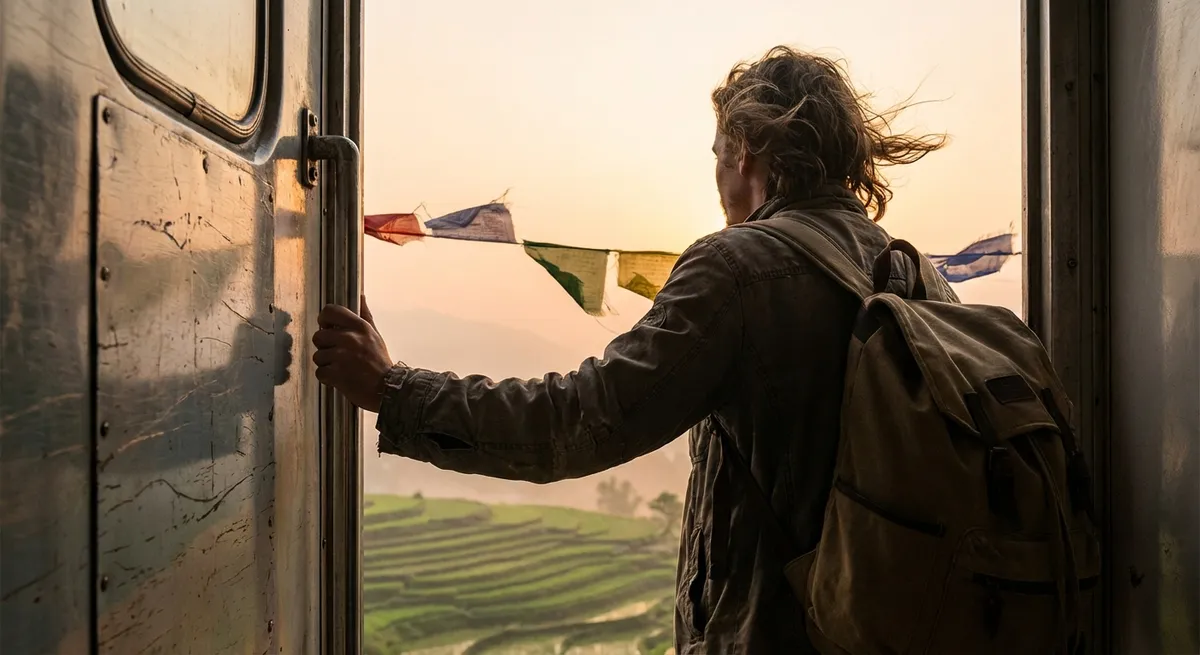
Below are five adventure-ready travel tips—part mindset shift, part practical strategy—that can turn your next trip into a journey you actually feel in your bones.
Treat Every City Like a Living Map, Not a Checklist
Instead of racing through “must-see” sights, move through a new place like you’re reading a story written in real time. When you arrive, don’t rush to the main attraction—walk a few blocks past it. Notice where the sidewalks crack, where locals linger, and where the noise grows or fades. Switch off turn-by-turn navigation for a while and use landmarks—the river, a specific tower, a market—to orient yourself.
This kind of wandering builds a mental map far richer than any guidebook. You’ll discover the café where office workers line up at 8:00 a.m., the tiny park where elderly neighbors play cards, the alley that smells like grilled skewers long after midnight. Practical payoff: you become less dependent on your phone, more confident walking after dark (because you actually know the layout), and better at spotting local gems you’d never find on an “attractions” list.
A bonus move: once per day, pick a direction, set a 20-minute timer, and just walk. When time’s up, grab a coffee, snack, or tea wherever you end up. Ask the person serving you, “If you had one free afternoon here, where would you go?” That single question can unlock the kind of recommendations no algorithm can replicate.
Pack a “Friction Kit” to Keep Adventures Rolling
Travel doesn’t fall apart because of big disasters nearly as often as it does from tiny, fixable annoyances: a dead phone, sore feet, a headache at 12,000 feet, or a translation gap when you desperately need directions. A small, intentional “friction kit” in your day bag can turn potential trip-ruiners into non-events.
Think in categories: health, power, comfort, and communication. Health might mean bandages, blister patches, pain reliever, and a few rehydration salts for long, hot days. Power is a lightweight battery pack, universal adapter, and a short cable. Comfort can be earplugs, a compact scarf (that becomes a blanket, head cover, or towel), and a tiny bag of snacks you actually like. Communication might be a translation app downloaded offline, your accommodation address written on a card in local language, and a small notebook with key phrases.
This kit isn’t about fear—it’s about freedom. When you trust that you can handle small problems, you say “yes” more: to a sunrise hike, a last-minute bus, or a local festival that runs three hours later than you planned. You’re not waiting for ideal conditions; you’re equipped to create them.
Learn a City’s Rhythm Before You Chase Its Highlights
Every destination has a daily heartbeat: markets that bloom before sunrise, commuter waves, siesta lulls, evening street food rushes, and late-night energy in plazas or bars. If you sync with that rhythm, everything from safety to satisfaction improves.
Start by observing your first full day as “data gathering.” When do cafés fill up? When do families appear in parks? When are trains or buses packed? When does the noise change? Note it. Then adjust your plans: visit major attractions during local “down times,” and reserve peak local hours for people-watching and street life. You’ll face shorter lines at popular sights and more authentic encounters when everyone is out living their daily stories.
This rhythm-awareness also helps you respect local culture. In some places, midday closures are sacred rest—don’t fight them; plan around them. In others, dinner at 6:00 p.m. marks you as wildly early; embrace a later meal and snack strategically. Travel feels less like pushing against a city and more like flowing through it when you let its tempo set the pace.
Turn Food Into Your Fastest Cultural Shortcut
You don’t have to be a foodie to use food as a bridge into a place. Think of each meal as a conversation with the culture. Skip the international chain that looks like home and follow simple clues instead: short menus, handwritten signs, locals eating in work clothes, or plastic stools spilling out onto sidewalks.
Start small—order one familiar dish and one wildcard chosen by asking, “What’s your favorite thing here?” or “What do people from this city order?” Even if you’re nervous about new flavors, you can explore gently: sample street food at busy stalls (high turnover usually means fresher food), or take a basic food tour to get oriented to local staples and etiquette.
Beyond taste, watch how meals happen. Is coffee a quick transaction or a slow ritual? Do friends share plates or guard their own? Are meals loud and communal or quiet and formal? These observations hand you subtle cultural cues that will serve you well in conversations, homestays, and social situations. Food becomes more than fuel—it becomes a map of values, history, and daily life.
Build Micro-Connections That Outlast the Trip
The most unforgettable travel moments often come from the briefest encounters: a stranger pulling you onto a dance floor, a shopkeeper drawing a map on a napkin, a train companion sharing music through one earbud. You don’t need perfect language skills or extrovert energy; you just need a few deliberate habits.
Carry one or two “conversation objects” ready to spark interaction: a small instant camera and a few prints to gift, a pin or patch from your home city, or a tiny phrasebook you can show and laugh over when you mispronounce words. Ask specific, human questions instead of generic small talk: “What’s your favorite place to escape in this city?” or “What did you love doing as a kid around here?”
When someone helps you—gives directions, offers advice, shares time—write their name and one detail in your notes app. Later, mention them when journaling or posting about your day. These simple acknowledgments train your memory to hold onto people, not just places. Travel stops being a string of anonymous views and becomes a network of real, fleeting connections that shape how you see the world long after your plane lands.
Conclusion
Travel isn’t a performance for social media; it’s a practice—a set of skills, choices, and habits that turn the unknown from intimidating into irresistible. When you treat cities like living maps, carry your own friction-reducing toolkit, sync with local rhythms, use food as your cultural compass, and seek micro-connections instead of perfect moments, you start to travel like you mean it.
You won’t control every delay, missed turn, or surprise storm. But you’ll be ready to adapt, notice, and say yes—again and again—to the unscripted moments that transform a trip into a turning point. The world is already moving. The question is: how will you move through it next?
Sources
- U.S. Department of State – Traveler’s Checklist - Practical guidance for documents, safety planning, and preparation before international trips
- Centers for Disease Control and Prevention – Traveler’s Health - Up-to-date health advice, vaccinations, and disease prevention tips for destinations worldwide
- World Tourism Organization (UNWTO) – Tourism Data and Insights - Global tourism trends and insights that highlight how and where people travel
- Lonely Planet – Travel Tips and Articles - Field-tested advice from experienced travelers on packing, safety, and cultural awareness
- Harvard Business Review – How Vacations Affect Your Happiness - Research-backed look at how travel and time off influence well-being and satisfaction